Why getting a COVID-19 vaccine is more complicated
Advertisement
Read this article for free:
or
Already have an account? Log in here »
To continue reading, please subscribe:

Digital Subscription
One year of digital access for only $205*
- Enjoy unlimited reading on winnipegfreepress.com
- Read the E-Edition, our digital replica newspaper
- Access News Break, our award-winning app
- Play interactive puzzles
*First annual payment billed as $205.00 + GST for one year. This annual subscription will automatically renew at $233.00 + GST every 52 weeks (10% off the regular annual price of $259.35). Offer available to new and qualified returning subscribers only. Cancel any time.
To continue reading, please subscribe:
Add Free Press access to your Brandon Sun subscription for only an additional
$1 for the first 4 weeks*
- Enjoy unlimited reading on winnipegfreepress.com
- Read the E-Edition, our digital replica newspaper
- Access News Break, our award-winning app
- Play interactive puzzles
*Your next Brandon Sun subscription payment will increase by $1.00 and you will be charged $17.95 plus GST for four weeks. After four weeks, your payment will increase to $24.95 plus GST every four weeks.
Read unlimited articles for free today:
or
Already have an account? Log in here »
Hey there, time traveller!
This article was published 27/08/2025 (415 days ago), so information in it may no longer be current.
Will you get a COVID-19 vaccine? That has become a complicated question for many people.
The answer may depend on your age, insurance coverage, health and finding a health care professional who will give you the shot.
A once-straightforward seasonal vaccine process has become muddled this year because of new federal guidance on who the shots are approved for. It raises questions about whether pharmacists will provide the shots and if insurers will cover them.
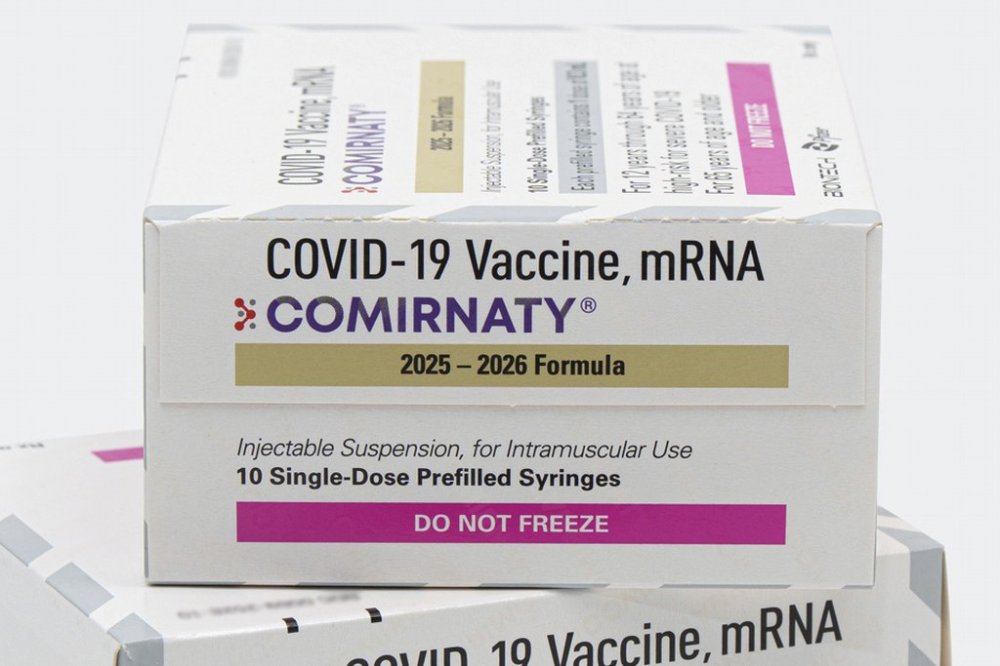
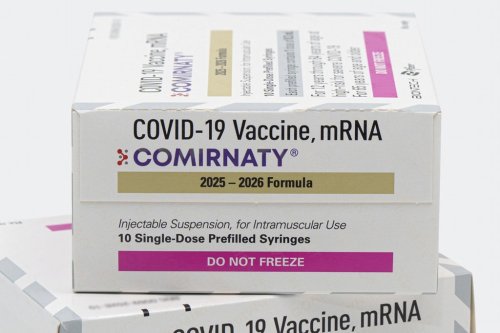
The U.S. Food and Drug Administration has OK’d new shots from Pfizer, Moderna and Novavax, but the approvals came with some new caveats. And it’s not clear yet how that will play out.
What has changed?
The shots were approved for people who are 65 and older and those who are younger and have a health condition that makes them vulnerable to severe COVID-19.
That includes people with asthma, cancer, heart or lung problems, obesity, depression, a history of smoking or physical inactivity.
“A high proportion of people would qualify for these vaccines even if they’re not over 65,” said Dr. Paul Sax, clinical director of the Division of Infectious Diseases at Brigham and Women’s Hospital in Boston.
Until now, the U.S. — following guidance from independent experts who advise the Centers for Disease Control and Prevention — has recommended yearly COVID-19 vaccinations for everyone age 6 months and older.
But Health Secretary Robert F. Kennedy Jr. fired every member of that Advisory Committee on Immunization Practices earlier this year. The replacements he selected have yet to make new recommendations.
Where can I get a shot?
Most Americans visit drugstores to get their COVID-19 vaccines, according to the CDC. It’s not clear yet how easy that will be this fall, depending on where you live.
Nineteen states have laws or regulations that only let pharmacists administer vaccines recommended by ACIP, according to the American Pharmacists Association.
In those states, pharmacies may not be able to dole out shots even for people who fit the FDA’s narrowed range until the committee makes its recommendation.
Plus some pharmacists may be reluctant to give shots to customers who fall outside the FDA’s approval range, said Brigid Groves, a pharmacist and vice president with the American Pharmacists Association.
Will COVID-19 vaccines be covered by insurance?
For people age 65 and older, the FDA’s decision means Medicare will cover the shots.
For everyone else, the answer is still evolving. Check with your insurer or the employer that provides coverage.
Employers and insurers have been covering the full bill for the shots because they have been recommended by ACIP.
Some may continue to do so. Walmart will cover the shots for employees and the health system Kaiser Permanente, which provides coverage for more than 12 million people, says it will keep covering them too.
Why might the shots still be covered?
They can save money by preventing expensive medical care like hospital stays.
The vaccines can keep workers from getting sick and spreading the virus to colleagues. Companies also are concerned about health care affordability, especially for their lower-paid workers, said Beth Umland, director of health and benefits research for the benefits consultant Mercer.
The shots can cost $150 or more without insurance.
Insurers say they look at more than just that CDC committee’s recommendation when deciding coverage. Some also may consider the opinions of doctor groups like the American Medical Association, which strongly encourages vaccinations.
Sorting conflicting opinions
In May, Kennedy — a longtime leader in the anti-vaccine movement — announced COVID-19 vaccines would no longer be recommended for healthy children and pregnant women.
Since then, the American College of Obstetricians and Gynecologists has said pregnant women should continue to get the shots — counter to what Kennedy announced. The American Academy of Pediatrics is continuing to recommend them for all children ages 6 months to 2 years, another contradiction to Kennedy’s decision.
Conflicting advice like this has stirred a lot of questions from patients about what guidance they should follow, Groves said.
“There’s just a lot of confusion out there,” she said. “People are thinking, ‘Why should I get it?’”
Do we still need a vaccine?
People who want shots typically seek them in the fall to prepare for a possible winter surge in cases.
The vaccinations are strongly recommended for older people and those with a health condition, said Sax, the Brigham and Women’s physician.
Doctors and researchers say most people have some immunity from either previous COVID-19 infections or vaccines. But an annual shot is still a good idea.
The built-up immunity means your body will respond faster to an infection than it did in the pandemic’s early days, said Andrew Pekosz, a virus expert at Johns Hopkins University.
That’s one reason COVID-19 hospitalizations have gone down, he said.
“Population immunity is high,” Pekosz said. “But population immunity isn’t perfect, and it does wane over time.”
___
AP Medical Writer Mike Stobbe contributed to this report.
___
The Associated Press Health and Science Department receives support from the Howard Hughes Medical Institute’s Science and Educational Media Group. The AP is solely responsible for all content.