Peace of mind
Toews grapples with what drives her to write in insightful, emotionally generous memoir

Advertisement
Read this article for free:
or
Already have an account? Log in here »
To continue reading, please subscribe:

Digital Subscription
One year of digital access for only $205*
- Enjoy unlimited reading on winnipegfreepress.com
- Read the E-Edition, our digital replica newspaper
- Access News Break, our award-winning app
- Play interactive puzzles
*First annual payment billed as $205.00 + GST for one year. This annual subscription will automatically renew at $233.00 + GST every 52 weeks (10% off the regular annual price of $259.35). Offer available to new and qualified returning subscribers only. Cancel any time.
To continue reading, please subscribe:
Add Free Press access to your Brandon Sun subscription for only an additional
$1 for the first 4 weeks*
- Enjoy unlimited reading on winnipegfreepress.com
- Read the E-Edition, our digital replica newspaper
- Access News Break, our award-winning app
- Play interactive puzzles
*Your next Brandon Sun subscription payment will increase by $1.00 and you will be charged $17.95 plus GST for four weeks. After four weeks, your payment will increase to $24.95 plus GST every four weeks.
Read unlimited articles for free today:
or
Already have an account? Log in here »
Hey there, time traveller!
This article was published 30/08/2025 (408 days ago), so information in it may no longer be current.
In this sometimes harrowing, often hilarious hybrid memoir, Miriam Toews is asked by a cultural conference in Mexico City to consider the question “Why do I write?” The author of eight novels and one non-fiction work ends up offering a paradoxical response.
This book itself is hard evidence of her profound need to “rearrange words,” as Toews calls it. Still, the onetime Winnipegger, who now lives in Toronto, resists any easy or obvious answers to what drives this need. In fact, she never manages to satisfy the conference’s disapproving director.
A Truce That Is Not Peace will more than satisfy Toews’ readers, though. Insightful, emotionally generous and written with a very Prairie form of self-deprecating brilliance, it seamlessly merges earthy, everyday domestic details with philosophical investigations into language, narrative and the nature of memory. It is both playfully roundabout and startlingly direct.
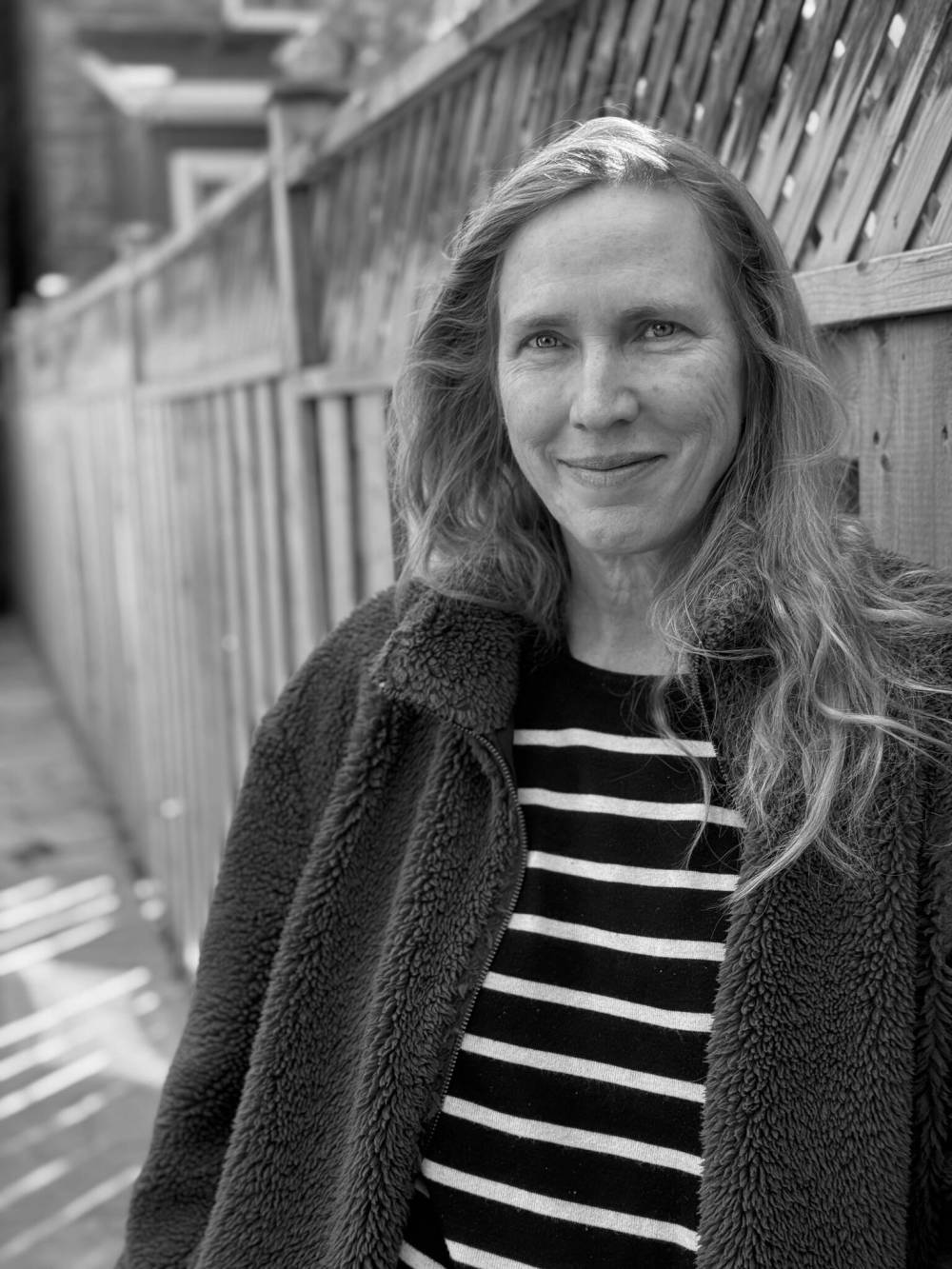
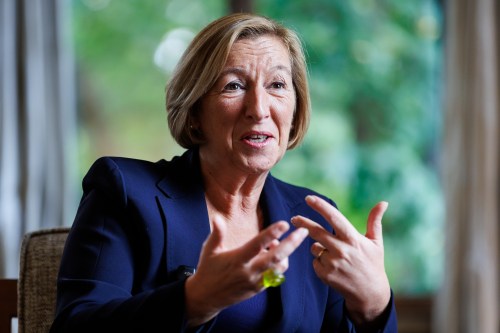
Marc Boucher photo
Miriam Toews acknowledges the limits of language, and is achingly aware of the responsibility involved in using words to try to describe someone else’s life — or even one’s own.
Toews has often worked with autobiographical elements in her fiction, in such works as 2004’s A Complicated Kindness and 2014’s All My Puny Sorrows. Here she faces a more factual account of her family history, in particular the deaths by suicide of her father and her sister Marj, to whom this book is dedicated.
Toews’ creative non-fiction includes reconstructed letters to her sister, excerpts by other writers — especially the poet and essayist Christian Wiman, whose words give the book its title — the abrupt insertion of odd historical facts as well as intermittent musings about a “Museum of Wind” she’d like to open.
Everything circles back, however, to her sister’s death and Toews’ sense of grief and loss, which she draws into the “Why do I write?” theme.
Both her father and sister retreated into long stretches of silence, and Toews connects this to her own compulsion to use words — to observe, to remember, to explain, to hold on to her world through language.
Writing about taking on her father’s voice to write Swing Low, the 2000 work in which she recounts his experience of bipolar disorder and his eventual suicide, she wonders if that book was “a creative act from a deep, dark hole, a well of fear: Would I do it, too?
“If I could become my father, I would understand. And if I could understand why and how, I could understand why not and how not.”
Ultimately, Toews sees the two modes — silence and words — not as oppositions, but as close relatives. “Was my sister’s silence an attempt to translate something? Something that couldn’t be said?” she asks.
She acknowledges the limits of language. This may be a memoir, but Toews is achingly aware of the responsibility involved in using words to try to describe the enormity and complexity of someone else’s life, or even one’s own.
There are difficult discussions in Truce, but even dark moments are shot through with humour.
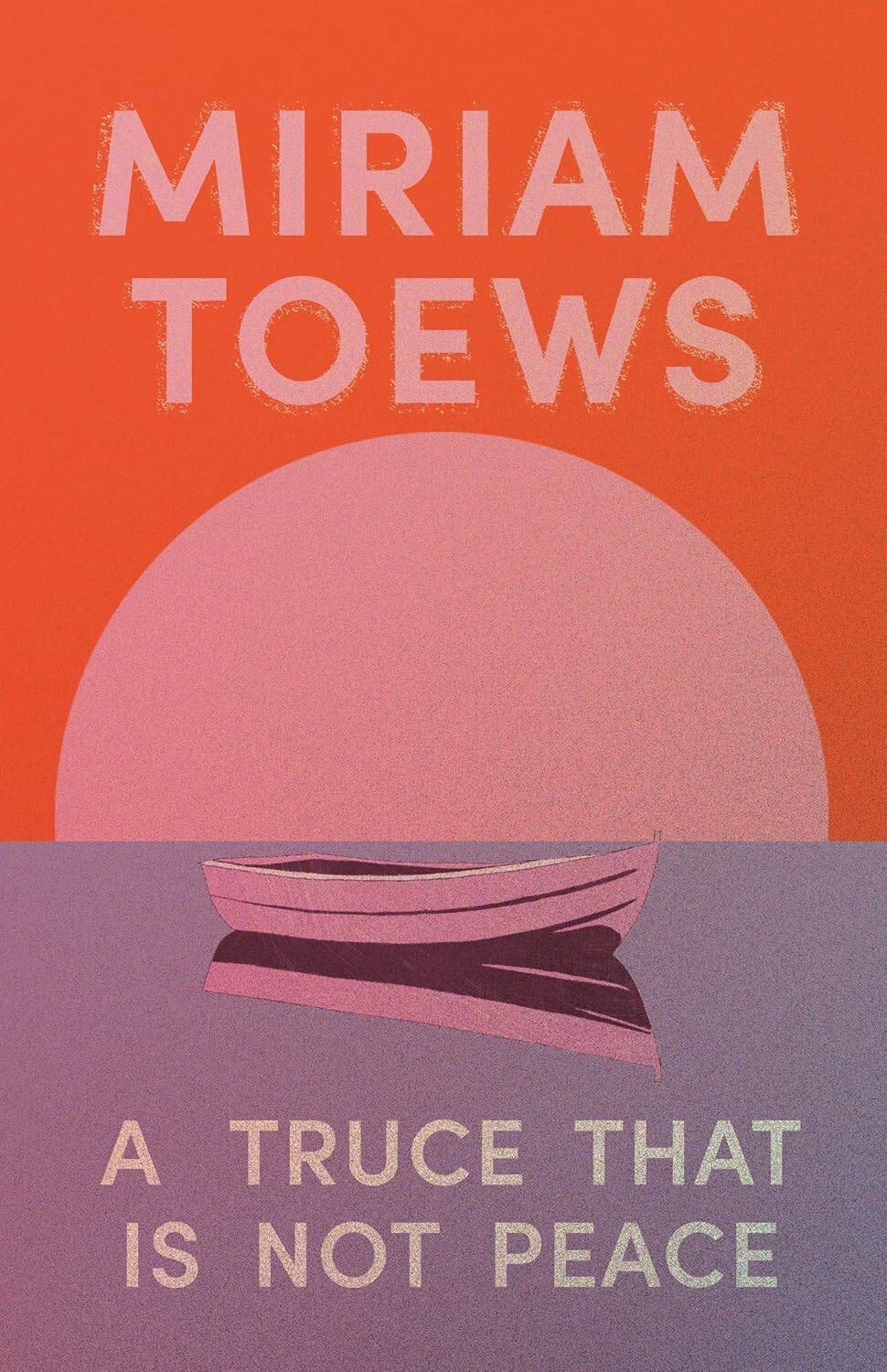
A Truce That Is Not Peace
Toews’ childhood in Steinbach is seen briefly in comic glimpses, an era of Lee jeans and North Star runners and The Partridge Family. There are anecdotes about the zaniness of her current four-generation household in Toronto, where she lives with her astonishing, irrepressible mother, her daughter, her daughter’s partner, some grandkids, and occasional drop-ins by a distempered skunk trying to claw its way into the house through a window well.

There’s a whole laugh-out-loud middle section recounting a trip to Europe with a somewhat humourless boyfriend, Wolfie, when they are both very young and very broke. In Ireland, he takes her on a solemn literary pilgrimage to the burial place of William Butler Yeats, mansplaining the words on the poet’s gravestone (“Horseman, pass by!”).
“I asked Wolfie if he found it funny that Yeats was imploring us from his grave to leave and yet we were lying on top of him all afternoon,” Toews writes in a letter to her sister. He tells her to stop being literal.
In the end, Toews casts a warm eye on life, on death. Held together by her distinctive narrative voice — intimate, frank, funny, occasionally furious — her memoir dives into the mess of human sorrow and loss and resolves to keep going, to keep writing.
Alison Gillmor also had Lee jeans and a pair of North Star runners.
Miriam Toews will launch A Truce That Is Not Peace at McNally Robinson Booksellers’ Grant Park location on Thursday, Oct. 16. at 7 p.m.
Studying at the University of Winnipeg and later Toronto’s York University, Alison Gillmor planned to become an art historian. She ended up catching the journalism bug when she started as visual arts reviewer at the Winnipeg Free Press in 1992.
Our newsroom depends on a growing audience of readers to power our journalism. If you are not a paid reader, please consider becoming a subscriber.
Our newsroom depends on its audience of readers to power our journalism. Thank you for your support.
A Truce That Is Not Peace
By Miriam Toews
Alfred A. Knopf Canada, 192 pages, $34
Studying at the University of Winnipeg and later Toronto’s York University, Alison Gillmor planned to become an art historian. She ended up catching the journalism bug when she started as visual arts reviewer at the Winnipeg Free Press in 1992.
Our newsroom depends on a growing audience of readers to power our journalism. If you are not a paid reader, please consider becoming a subscriber.
Our newsroom depends on its audience of readers to power our journalism. Thank you for your support.
Related Articles
Celebrated Manitoban author Miriam Toews attempts to unpack why she writes in latest work
Advertisement Advertise With Us
Advertisement Advertise With Us