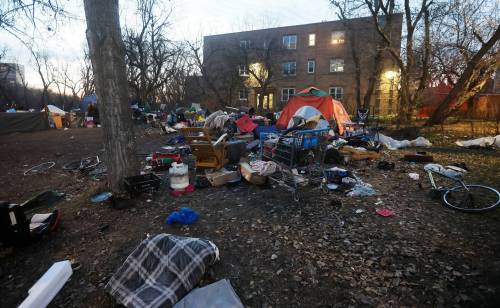
Home, compassionate home Main Street Project’s low-barrier Mainstay transitional housing is helping to get people off the street into a dignified, supportive place to live
Read this article for free:
or
Already have an account? Log in here »
To continue reading, please subscribe:
Digital Subscription
One year of digital access for only $1.44 a week*
- Enjoy unlimited reading on winnipegfreepress.com
- Read the E-Edition, our digital replica newspaper
- Access News Break, our award-winning app
- Play interactive puzzles
*Billed as $5.77 plus GST every four weeks. After 52 weeks, price increases to the regular rate of $19.95 plus GST every four weeks. Offer available to new and qualified returning subscribers only. Cancel any time.
To continue reading, please subscribe:
Add Free Press access to your Brandon Sun subscription for only an additional
$1 for the first 4 weeks*
- Enjoy unlimited reading on winnipegfreepress.com
- Read the E-Edition, our digital replica newspaper
- Access News Break, our award-winning app
- Play interactive puzzles
*Your next Brandon Sun subscription payment will increase by $1.00 and you will be charged $17.95 plus GST for four weeks. After four weeks, your payment will increase to $24.95 plus GST every four weeks.
Read unlimited articles for free today:
or
Already have an account? Log in here »
Hey there, time traveller!
This article was published 02/09/2025 (410 days ago), so information in it may no longer be current.
Ryan knew he had been, by his own admission, “an asshole.”
A heated argument the day before had left the 41-year-old full of regret. This time, he thought, he’d gone too far. An eviction notice felt inevitable.
Ryan, who was guarded and suspicious when he was first housed, said he had lashed out at Main Street Project’s housing services program manager, Kelly Guetre, over something trivial. He doesn’t shy away from the admission. He messed up — badly, he feared.
“I thought that was it. I was like, ‘Argh, I’m done,’” he says, swaying back and forth as a cigarette smoulders in the fingers of his right hand. “I’m out of here.”
The following evening, when he saw Guetre again, he made sure to get her attention. He needed to apologize — and did. What followed, he says, has stayed with him ever since.
Ryan told her he was sorry, that he regretted how things unfolded, that he could have handled it differently, with less anger.
Ruth Bonneville / Free Press Main Street Project housing client Ryan came to Winnipeg after the 2022 flood in Peguis First Nation.
“‘It’s OK, it’s OK,’” Ryan recalls her telling him. “You’re still learning.”
He walked with Guetre as she was leaving for the day, thanking her for her patience and for not responding in kind.
“She said, ‘In the end’ — and it still brings tears to my eyes,” he says, “‘in the end, we’re here for you, and we care about you.’”
For Ryan, who came to Winnipeg after the 2022 flood in Peguis First Nation, those words carried a different weight.
“It was something different, because we have been overlooked by everybody,” he says. “For someone like Kelly, who is just getting to know us, the workers just getting to know us, it’s one of the — it’s at the top of the list — is to trust what they’re saying. To really believe that they do care.”
Ryan had moved into Main Street Project’s unassuming transitional housing unit on Sargent Avenue in the depths of winter, after three years living in an encampment.
“I was so used to being cold… The way I would keep myself warm was to cover myself with my whole sleeping bag and keep warm using my own breath.”
“I was so used to being cold,” he says. “The way I would keep myself warm was to cover myself with my whole sleeping bag and keep warm using my own breath.”
His arrival coincided with the launch of Manitoba’s Your Way Home strategy, unveiled in January to end chronic homelessness by 2031. The plan seeks to move roughly 700 people from tents into safe housing, paired with supports meant to prevent a return to homelessness.
Since the initiative began, MSP has housed most of the 77 people who are no longer living on the street.
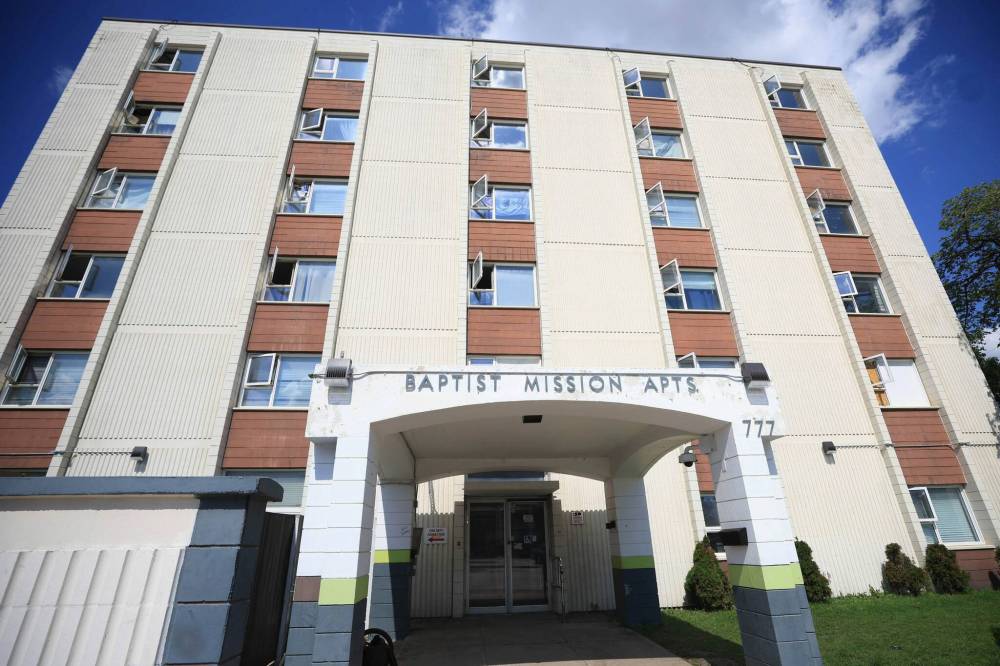
And inside the six-storey building on Sargent, residents say the program’s approach — quick to listen, slow to anger — offers a kind of hope many never expected to feel.
Ryan arrived with both an addiction and a temper. Instead of being turned away, he says, he found something surprising: people who care.
“Out there (on the street), if someone helped you, you were scared there was an ulterior motive,” he says. “ Not here. And I’m still here. And it just means that they do care.”
Meeting people where they are sits at the core of MSP’s philosophy, long before housing is ever offered.
Outreach teams complete Your Way Home applications with people in encampments, feeding into a waiting list of about 200.
When a unit opens, the van outreach team recommends three people most in need. Internal referrals from shelters, case managers and partners are also reviewed before the best fit is chosen for Mainstay, MSP’s “low-barrier” supportive housing program on Sargent Avenue.
Once selected, residents meet with staff to learn expectations and set housing goals — anything from securing permanent housing to reconnecting with family. Ideally, they’ll stay six to 12 months before moving up the housing ladder.
Mainstay currently houses 32 people, most under the Your Way Home strategy, though some arrive via shelters or health referrals.
Staff refer to residents as participants, many of whom arrive carrying years of trauma, addiction and having experienced the harsh realities of surviving on the streets with one goal: make it to tomorrow.
Ruth Bonneville / Free Press Main Street Project housing case manager co-ordinator Emma Riddell, left, and Kelly Guetre, Main Street Project Housing Manager, in one of the suites being used as an office.
Find food. Find a fix. Find warmth. Trust almost no one.
The rules here are manageable. That’s where the “low-barrier” part of the equation comes into play.
“The biggest rule,” says Guetre, “is simply to ‘work with us in a good way.’ We want them to stay.”
Residents can use substances, supported by harm reduction, meaning safe, clean supplies, such as needles.
“Housing first” is at the heart of MSP’s housing approach. It means meeting people where they are and recognizing that once someone has a safe place to live, they’re in a much better position to make positive choices and move forward with their life. That includes sobriety.
Guetre pushed back on the idea that the approach enables addiction.
“We’re dealing with a symptom of trauma,” she says. “It’s not enabling. Step into their shoes.”
Housing case manager co-ordinator Emma Riddell says for many, addiction is a coping mechanism.
“We’re dealing with a symptom of trauma … It’s not enabling. Step into their shoes.”
“One of the things that stuck with me when I first started here was that people will use meth because they’re cold. It keeps them warm, it keeps them distracted enough to not feel cold,” Riddell says.
“They’re trying to cope with some of the harshest conditions in the city, or the trauma and rejection they’ve experienced in their lives. Their goals are not dependent of the sobriety. It’s not a condition to enter our housing.”
For Ryan, it was a revelation.
“That’s what I loved about coming here: they didn’t judge you, even if you had a habit,” he says, adding he wouldn’t otherwise have a roof over his head.
Very few housing programs in Winnipeg walk alongside individuals battling addiction, and that’s a big reason that encampment living is so prevalent.
MSP’s priority is to make sure people are as safe as they can be. Workers don’t want to see one more chronic health condition caused by sharing needles, for example.
“We meet people where they are at, truly,” Riddell says.
That, however, means residents have to accept hourly well-being checks. Even overnight.
“That can be one thing that’s challenging for folks to understand and agree to,” Riddell says.
Ruth Bonneville / Free Press Emma Riddell: “We meet people where they are at, truly.”
And for those who do, the checks eventually become an annoyance, Guetre says, but adds that as relationships become stronger, residents are not as quick to put up a guard.
Many, as Ryan did, fear they’ll lose their housing over mistakes.
“They’re so nervous that if they do anything wrong, it will be taken away,” Riddell says.
The key for staff who find themselves navigating challenging, sometimes stressful situations, is focusing on building trust, Guetre says.
“When someone has lived in survival mode for so long, there needs to be some patience and compassion,” she says.
That survival mode sometimes gives way to survivor’s guilt in the people who’ve left the streets. Some share their meals with people in the encampments. Others struggle with visitor rules, which staff say sometimes drain time needed for a deeper connection.
“That’s their family, their community,” Guetre says.
“One of the things that stuck with me when I first started here was that people will use meth because they’re cold. It keeps them warm, it keeps them distracted enough to not feel cold.”
Since launching earlier this year, Mainstay has maintained a 100 per cent retention rate.
The rules at Mainstay are designed to allow people to push back a little bit and not suffer a devastating consequence.
“It’s about making someone feel safe, and you can’t successfully house someone unless they feel that safety, and it comes with a lot of trust,” MSP executive director Jamil Mahmood says.
“A lot of what our work is is undoing a lot of the harm that was caused by systems, whether it was the child-welfare system, justice, going back to colonization and the residential school system — there are all of these harms that were done by systems. They all lead people to not trust the system, which in some way has directly or indirectly impacted their housing situation.”
Mahmood says MSP staff frequently encounter people who have experienced how a single mistake dramatically impacts their housing and their lives.
“If we can give people a chance to make a mistake and learn from, and grow from it, if you’re willing to try and change and work, we are always open to second chances,” he says. “People need that to be successful.”
“Wraparound supports” is a phrase people hear often, but in practice, it means a complex network of moving parts working together.
Take medication support, for example. Before a resident can even begin, they must first be connected with a family doctor.
“Every moving part has a ton of pieces,” Guetre says, adding that nearly everyone arriving from encampments has at least one untreated health condition — often several— including serious illnesses.
The health-care process begins when a resident moves in. They are assigned a case manager, who helps connect them with a doctor. Appointments and transportation need to be arranged. Prescriptions are delivered to the residence, where staff can distribute them and offer reminders, if requested, so properly timed doses aren’t forgotten.
Success story
One of the stories staff at Main Street Project love to share is about a man who, after overcoming addiction, is now living independently in Manitoba Housing.
When he first arrived at MSP’s Mainstay program two years ago, he was isolated, had lost his housing due to untreated mental-health challenges and was no longer in touch with his children.
Over the next two years, his life changed dramatically — from frequent outbursts to living on his own, taking charge of his health and reconnecting with family.
One of the stories staff at Main Street Project love to share is about a man who, after overcoming addiction, is now living independently in Manitoba Housing.
When he first arrived at MSP’s Mainstay program two years ago, he was isolated, had lost his housing due to untreated mental-health challenges and was no longer in touch with his children.
Over the next two years, his life changed dramatically — from frequent outbursts to living on his own, taking charge of his health and reconnecting with family.
“We saw, as time went on, they became a lot gentler, very soft-spoken, very kind,” housing case manager co-ordinator Emma Riddell said.
That transformation showed in the way he began to trust others and access services. He needed multiple dental appointments to repair teeth that had been neglected while surviving on the streets.
He gradually gained independence with appointments, first being driven and accompanied by staff, then managing visits on his own and advocating for himself.
The biggest breakthrough came with family.
“One day I was driving him to another dentist appointment and he said to me, ‘Oh, by the way, I’m going to be gone for the weekend… I’m going to the cabin with my family,’” Riddell said.
A few months later, when he moved into Manitoba Housing, his family helped him furnish his new home.
“They left in such a good way,” Riddell said. “He was just so different from the person he was when we first met.”
Meeting the challenge
To show the lengths MSP goes to avoid evictions, staff shared the story of a resident who is currently living at his partner’s home while a safe space is being prepared for him at Mainstay on Sargent.
The man — who isn’t, and likely will never be a candidate for independent living — suffers from destructive bouts of psychosis and had to be moved for his safety and that of staff and other residents, after a significant incident MSP declined to share details about.
“We’ve been supporting this person since our previous building,” Main Street Project’s housing services program manager Kelly Guetre said.
The man caused a lot of damage — doors and other fixtures needed repeated repairs. When he moved to a new building on Sargent, the same patterns continued. The trauma and psychosis he experienced carried over.
“We did our best to support him, creating a space designed to minimize anything that could cause him harm,” she said. “To keep him safe during moments of psychosis, we removed the kitchen, covered wiring, and made adjustments so he could move around without harming himself.”
It’s not an ideal situation, but for the time being the man is staying with his partner. He continues to access services at Mainstay almost daily.
In the meantime, the program is designing a room on the building’s main floor, which they figure will be better in terms of managing those moments of psychosis.
“It feels really good, because he deserves the support,” Guetre said. “It’s amazing we can jump through whatever we can do to help him. It’s enabling. It’s harm-reduction.”
— Scott Billeck
“They don’t want to take their medications at 8 a.m., and then they find they miss the window of taking that medication. So the case manager then reaches out to the doctor, the pharmacy, what have you, and seeing if you can move the time that medication is taken, so they aren’t missing the window, but accommodating their lifestyle… so they can be more successful,” Guetre says.
“That’s just one wraparound support.”
Another is MSP’s meal program, something that didn’t exist when Guetre started in 2018.
“It was the hardest thing for me, because your entire shift was people hungry and trying to scrounge up anything you could,” she said. “It was really hard. Really hard.”
The meal program was a game-changer for staff and residents across MSP’s network — shelters, detox facilities, and transitional housing.
“Everywhere,” Guetre says.
The program is based out of a couple of kitchens that prepare all the food for each location. A driver then delivers the meals three times a day. Breakfast, lunch and supper. Dietary needs — soft foods only and diabetes management are two examples — must be navigated. Snacks are also available for people who may have slept through a meal.
The program, officials say, has done wonders for building relationships, especially at one of their permanent housing residences.
“It set the stage for that sense of community and belonging, bringing everyone down to the common space, where everybody eats together,” Guetre says.
“It’s just incredible. They’re not hungry anymore. We’ve met that need. There is less tension from being hungry. But the most important thing is that it brought everybody together. They come like clockwork for their meals, and they stay. They don’t leave with their meals.”
The people at MSP feel they have the model to reach the province’s goals. Mahmood says it’s complicated to come up with the exact number of supportive housing units needed, but he estimates about 1,500, which would include everyone seeking shelter.
“Not everyone who is homeless needs (what we do),” he says. “But at least half, I think would, if I’m being realistic. Not all at the same intensity. Different supportive housing models could be used. Not everyone needs the highest level of support, but some do. We need more supportive housing… period.”
Another resident, who doesn’t want to be identified, is as well-spoken as they come. His words are deliberate, never wasted.
“I come from structure,” the self-assured 41-year-old says.
He says in a previous chapter of his life, he criss-crossed the country with a psychology degree, urging young people not to follow the same destructive paths he once did.
On this day, he sits at a round table with a piece of half-eaten blueberry pie in front of him. By his account, he was successful. But in 2018, when his father died, so did his sobriety. A decade of clean living disappeared under the weight of that loss.
“A part of me died with him,” the man says, explaining he and his father were close. “I fell off the wagon and hit the ground hard.”
Ruth Bonneville / Free Press Main Street Project housing client in his bachelor suite. 
It wasn’t long before he was homeless. The thought of the hypocrisy he’d be living if he were using while telling kids not to be like him wasn’t something he could stomach.
He arrived at MSP just a few months ago. For the first time in more than six years, he was no longer living on the streets.
“I feel appreciated here,” he says, something exceedingly rare for those living in encampments.
The transition, he says, has been mostly smooth, although the first week was difficult.
During his first few nights he opted to sleep on the floor, despite the presence of a bed that had been provided for him.
“It was just what I was used to,” he says. “After you learn to live on a cement floor, and you do it day in and day out, for some reason it’s hard to break the habit.”
“People view homelessness as the lazy way out. I’ll tell you, I’ve done a lot of jobs. Being homeless is the hardest job.”
He was hesitant about moving back into housing. He had tried before, but barriers got in the way, including the need to call daily to check for openings. Without a phone of his own, the chance never came.
“Society has completely run from any concept of community,” he said. “I couldn’t walk into a store and ask to use a phone. ‘No,’ was the answer I got, especially given I was homeless when, visibly, I hadn’t had a shower in weeks.
“People view homelessness as the lazy way out. I’ll tell you, I’ve done a lot of jobs. Being homeless is the hardest job, because you’re trying to figure s—t out every single day. There’s no continuity, no consistency… especially when you’re a drug addict. Forget about chasing a place to sleep, you’re chasing how to get the money to buy (drugs).”
He’s dealing with an ongoing opiate addiction and says if he hadn’t been given the opportunity to get off the street a few months ago, he doesn’t believe he’d be alive.
Born and raised in Winnipeg, he says he has three sons. He hasn’t seen them since his sobriety ended.
Winnipeg is facing a deepening homelessness crisis.
The latest figures from End Homelessness Winnipeg’s 2024 census found 2,469 people living on the street last fall. Two-thirds were chronically homeless, meaning they had spent at least 18 months without a home over the past three years.
The number on the street was the highest since EHW began conducting its census in 2015. The organization, which advocates for prevention, harm reduction and long-term solutions, extended this year’s count to a full week rather than a single day, so higher numbers were expected.
“We knew the number would be much larger; this gives us a benchmark for success,” says Tessa Blaikie Whitecloud, Premier Wab Kinew’s senior adviser on homelessness.
The average age of the people EHW surveyed was 41, many of them experienced homelessness starting at the age of 18. More than one in four were older than 50. More than half had been homeless for more than six months of the past year.
Indigenous people made up the vast majority of the people surveyed, with 63 per cent identifying as First Nations and another 15 per cent as Métis. Nearly half of all respondents had been involved in the child-welfare system as a youth.

The number of homeless newcomers has risen sharply. In 2022, two per cent of survey respondents were immigrants and less than one per cent were refugees. By 2024, 13 per cent were newcomers, nearly half of them refugees.
Critics say the province’s housing strategy has moved far too slowly. But experts note that creating low-barrier housing takes time, especially when serving people coming directly from encampments.
“As soon as there is an actual unit to offer somebody, that is clean, that is dignified, that has the right support services, people move and want to be housed,” Blaikie Whitecloud says. “But people don’t currently believe that those units are going to be available to them. We have to build them as fast as we can, but with dignity and durability.”
In the spring, the province reported that just 16 of the roughly 700 housing units needed had been built since the NDP formed government in 2023. Another 155 were under construction, with 521 more planned. In addition, 300 transitional housing units had been acquired for people leaving encampments.
Housing Minister Bernadette Smith has repeatedly emphasized that the work is not just about housing people, but also ensuring they have consistent support.
The difference between simply having “four walls and a roof,” and having four walls and a roof with wraparound supports, is immense, MSP officials say.
“Creating a sense of belonging, and coming at that from a very genuine place,” says Guetre. “It’s helping people remove that lack of trust that’s built up over their whole lives.”
scott.billeck@freepress.mb.ca
Ruth Bonneville / Free Press
The Main Street Project housing block at 777 Sargent.

Scott Billeck is a general assignment reporter for the Free Press. A Creative Communications graduate from Red River College, Scott has more than a decade’s worth of experience covering hockey, football and global pandemics. He joined the Free Press in 2024. Read more about Scott.
Every piece of reporting Scott produces is reviewed by an editing team before it is posted online or published in print — part of the Free Press‘s tradition, since 1872, of producing reliable independent journalism. Read more about Free Press’s history and mandate, and learn how our newsroom operates.
Our newsroom depends on a growing audience of readers to power our journalism. If you are not a paid reader, please consider becoming a subscriber.
Our newsroom depends on its audience of readers to power our journalism. Thank you for your support.
Related Articles
Politics at play as NDP stalls supervised consumption site