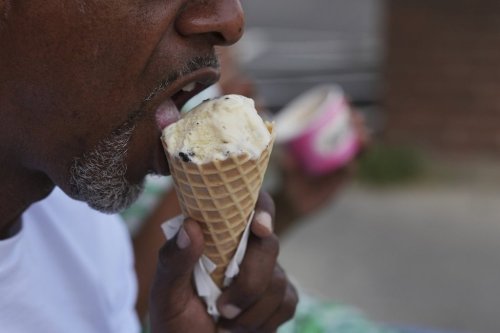
As world gets hotter, Americans are turning to more sugar, study finds
Advertisement
Read this article for free:
or
Already have an account? Log in here »
To continue reading, please subscribe:

Digital Subscription
One year of digital access for only $205*
- Enjoy unlimited reading on winnipegfreepress.com
- Read the E-Edition, our digital replica newspaper
- Access News Break, our award-winning app
- Play interactive puzzles
*First annual payment billed as $205.00 + GST for one year. This annual subscription will automatically renew at $233.00 + GST every 52 weeks (10% off the regular annual price of $259.35). Offer available to new and qualified returning subscribers only. Cancel any time.
To continue reading, please subscribe:
Add Free Press access to your Brandon Sun subscription for only an additional
$1 for the first 4 weeks*
- Enjoy unlimited reading on winnipegfreepress.com
- Read the E-Edition, our digital replica newspaper
- Access News Break, our award-winning app
- Play interactive puzzles
*Your next Brandon Sun subscription payment will increase by $1.00 and you will be charged $17.95 plus GST for four weeks. After four weeks, your payment will increase to $24.95 plus GST every four weeks.
Read unlimited articles for free today:
or
Already have an account? Log in here »
Hey there, time traveller!
This article was published 08/09/2025 (382 days ago), so information in it may no longer be current.
WASHINGTON (AP) — Global warming in the United States is amping up the country’s sweet tooth, a new study found.
When the temperature rises, Americans — especially those with less money and education — drink lots more sugary beverages and a bit more frozen desserts. It amounts to more than 100 million pounds of added sugar (358 million kilograms) consumed in a year, compared to 15 years earlier, according to a team of researchers in the U.S. and United Kingdom writing in Monday’s Nature Climate Change.
“Climate change is shaping what you eat and how you eat and that might have a bad effect on your health,” said study co-author Duo Chan, a climate scientist at the University of Southampton.
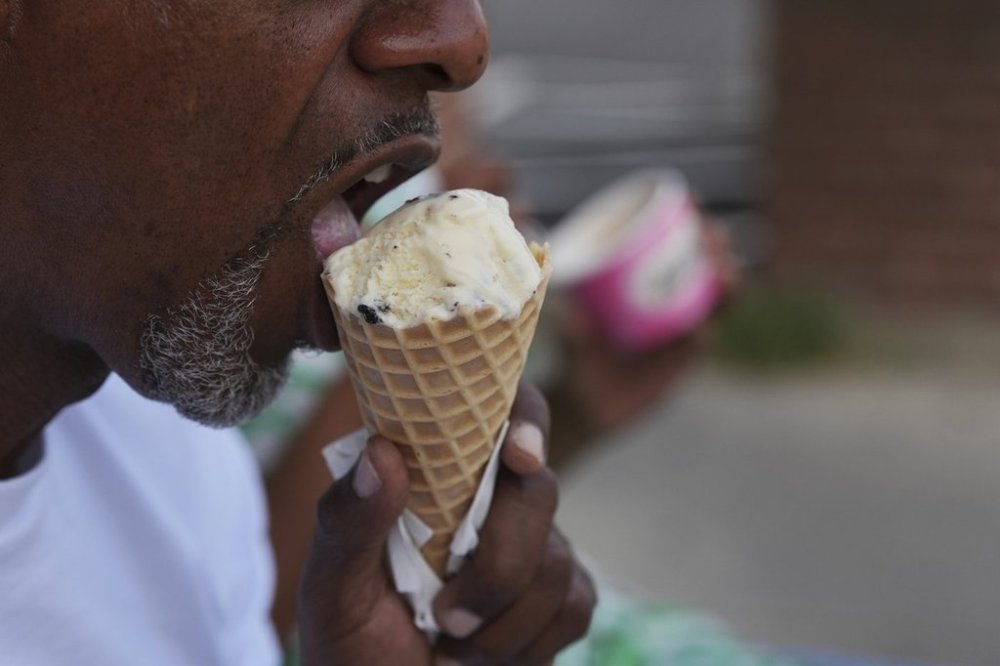
“People tend to take in more sweetened beverages as the temperature is getting higher and higher,” Chan said. “Obviously under a warming climate that would cause you to drink more or take in more sugar. And that is going to be a severe problem when it comes to health.”
A little added sugar every day adds up
By tracking weather conditions and consumer purchases, the researchers found that sugar consumption rose as temperatures moved between 54 and 86 degrees Fahrenheit (about 12 and 30 Celsius). And the warmer it got, the more sugar was consumed, until appetites began to lessen when it grew warmer than 86 degrees.
The daily difference from higher temperatures doesn’t amount to even a single candy bar for the average person. But it adds up over time and has a big effect, said University of California San Francisco endocrinology professor Dr. Robert Lustig, a specialist in pediatrics and obesity who wasn’t part of the study.
Lustig wrote in an email that among poorer Americans, just one added can of sugary soft drink per day increases diabetes risk by 29% — and temperature-related thirst plays a big part in America’s obesity epidemic.
The United States’ average annual temperature has gone up about 2.2 degrees (1.2 degrees Celsius) since 1895, according to the National Oceanic and Atmospheric Administration.
To chart the impact on sugar consumption, researchers compared it to the American Heart Association recommendations: limiting daily intake to 36 grams for men and 25 grams for women.
The team then compared wind, precipitation and humidity records to the detailed purchase records of 40,000 to 60,000 American households from 2004 to 2019, not using any data after the pandemic hit. Then they looked at the nutritional information of the items bought. That allowed them to eliminate other factors to make a causal link and come up with a calculation for how much extra sugar is consumed per person per degree, said lead author Pan He, an environmental scientist at Cardiff University.
Researcher He said she started thinking about the study when she noticed that people in the U.S. tend to grab sugary soda when they are thirsty: “From a perspective of nutrition science or environmental science, that could be a problem,” she said.
Sugar consumption can vary with gender, income and education
The researchers found that men consumed more sugary soft drinks, and that the amount of added sugar consumed during hot weather was several times higher for low- and very low-income families than for the wealthiest, the study found.
People who work outside drank more sugary drinks than those who work inside, and the same went for families where the head of the household was less educated. White people have the highest added sugar effect, while Asian Americans showed no significant change in added sugar in the heat.
Lustig said sugary drinks are marketed and priced in a way to attract the poor, and in many disadvantaged communities the water tastes funny because of chemicals in them. Poor people are also less likely to have air conditioning and are more likely to work outside and need more hydration, Lustig and He said.
“It should concern us that the rate of the impact is larger in households where people make less money or are less educated,” said Dr. Courtney Howard, vice chair of the Global Climate and Health Alliance. “These groups tend to have lower baseline health status, so this is an area where climate-related changes appear to magnify existing health inequalities.”

Howard, an emergency room physician, was not part of the study.
The amount of sugar consumed is likely to soar in the future with more warming, Chan said.
But University of Washington health and climate scientist Kristie Ebi, who wasn’t part of the research, said as temperatures increase with human-caused climate change “there will be other issues of more importance than a small increase in sugary beverages.”
___
The Associated Press’ climate and environmental coverage receives financial support from multiple private foundations. AP is solely responsible for all content. Find AP’s standards for working with philanthropies, a list of supporters and funded coverage areas at AP.org.