

Three wait times, one patient: resources matter
Advertisement
Read this article for free:
or
Already have an account? Log in here »
To continue reading, please subscribe:

Digital Subscription
One year of digital access for only $205*
- Enjoy unlimited reading on winnipegfreepress.com
- Read the E-Edition, our digital replica newspaper
- Access News Break, our award-winning app
- Play interactive puzzles
*First annual payment billed as $205.00 + GST for one year. This annual subscription will automatically renew at $233.00 + GST every 52 weeks (10% off the regular annual price of $259.35). Offer available to new and qualified returning subscribers only. Cancel any time.
To continue reading, please subscribe:
Add Free Press access to your Brandon Sun subscription for only an additional
$1 for the first 4 weeks*
- Enjoy unlimited reading on winnipegfreepress.com
- Read the E-Edition, our digital replica newspaper
- Access News Break, our award-winning app
- Play interactive puzzles
*Your next Brandon Sun subscription payment will increase by $1.00 and you will be charged $17.95 plus GST for four weeks. After four weeks, your payment will increase to $24.95 plus GST every four weeks.
Read unlimited articles for free today:
or
Already have an account? Log in here »
Manitoba announced at least $127 million for a 60-bed hospital, with expanded emergency and surgical space, dialysis and chemotherapy. It will serve surrounding communities and a town with more than 5,600 residents of Neepawa.
The opening plan does not include a CT scanner.
Imagine a patient arriving at Neepawa’s new emergency department after its planned opening in 2027. A physician assesses the patient and orders a computed tomography scan, or CT. This diagnostic infrastructure is accessed in another hospital down the road in Brandon.
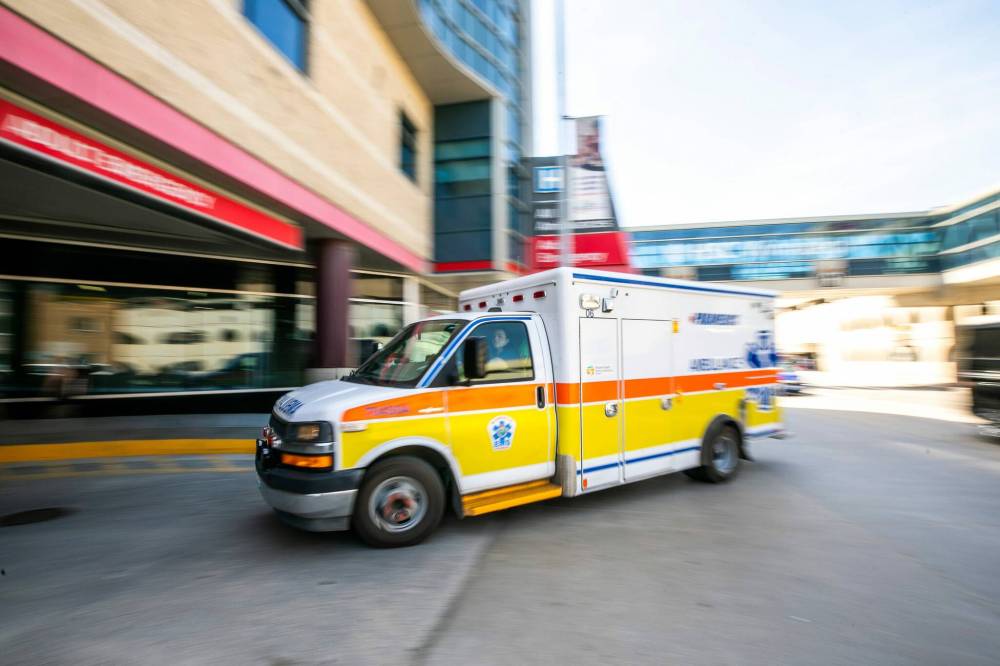
MIKAELA MACKENZIE / FREE PRESS
Increasing wait times for ambulances are only one issue caused by failing to properly analyze health care resource need, Rafiq Andani writes.
The patient needs monitoring during the journey, about 77 kilometres away, so staff arrange an ambulance.
The wait to see a doctor has ended; the patient now waits for transport. The Neepawa physician remains responsible for the patient’s overall care, a responsibility that now extends along the highway to imaging nearly an hour away.
This is the first wait.
The ambulance comes from a service with staffing shortages of its own. In December 2025, Shared Health had 60 vacant primary-care paramedic positions in its West Zone, a vacancy rate of approximately 43 per cent.
Virden paramedic Wayne Chacun described crews crossing between communities to cover gaps. “It really just depends on who’s available at the time and who’s closest,” he told the Free Press.
In Brandon, another group of patients is waiting for scheduled CT examinations. The waiting list at Brandon Regional Health Centre contained 2,438 examinations in June 2026.
That is the second wait.
The Neepawa physician reviews the CT result and determines that treatment can continue locally, so the patient returns by ambulance. While the crew remains committed to the transfer, someone calling 911 elsewhere may have to wait for an ambulance coming from farther away.
That is the third wait.
Western Manitoba lacks paramedic labour and has people waiting for imaging. Moving patients between those constraints creates capacity in neither service and consumes both.
Celebrating Swan Valley’s scanner in May 2024, Premier Wab Kinew said residents “shouldn’t have to leave to receive diagnostic care.” The announcement also identified reduced ambulance pressure and additional appointments elsewhere.
That same month, Shared Health assessed Neepawa and concluded a scanner would be underused. Its criteria include patient needs, nearby equipment and staff competency. The province celebrated care closer to home and reduced ambulance pressure in Swan River; Shared Health now needs to explain why Neepawa’s new hospital is set to open with patients still waiting for a ride to the same test.
Swan Valley performed 3,318 scans in 2025–26. Consider a hypothetical Neepawa service averaging nine patients per calendar day, each receiving one scan: 3,285 annually. Test the case in which half avoid complete ambulance transfers solely for imaging; the remainder attend as outpatients without an ambulance.
With three hours per complete transfer, including the return, and two paramedics per crew, local imaging would release nearly 5,000 ambulance-hours and 9,900 paramedic-hours annually.
Using Shared Health’s 2,184 annual base hours per position, that equals four-and-a-half positions’ annual hours, or 7.5 per cent of the hours represented by the 60-position vacancy gap. The existing workforce would carry less transport demand.
At an assumed average cost of $1,500 per complete transfer, those journeys represent roughly $2.5 million in annual transport activity. Crews and vehicles remain funded; their capacity becomes available for other work.
Using Swan Valley’s historical funding as a planning reference, allow $3 million upfront and $400,000 annually. Over ten years at a three per cent discount rate, that means approximately $750,000 annually, including capital and operations.
The scanner would require additional funding. Its return would include better use of ambulance resources Manitoba already pays for.
What could that availability do for rural 911 response times?
If one-third of the model’s outpatient appointments came from Brandon referrals, Neepawa would absorb about 550 examinations annually, capacity equivalent to 22 per cent of Brandon’s June queue.
In May 2026, Health Minister Uzoma Asagwara emphasized workforce needs. Neepawa’s assessment must cost the staff, training, maintenance and service hours required for CT, and examine how delayed imaging affects rural ER recruitment and retention.
With additional diagnostic staffing and retained ambulance coverage, the investment could buy earlier diagnostic decisions in rural emergency departments, earlier regional appointments and faster 911 responses.
Shared Health recorded more than $2 billion in expenses and a $115.4-million operating deficit in 2024–25. Treating additional diagnostic spending simply as another expense would be a blunt fiscal response. Rejecting new spending can preserve costly transport work while patients continue waiting.

The diagnostic service would need funding, while other services could gain capacity. Institutional risk shifting occurs when one program contains expenditure while other services absorb work and patients absorb waiting.
Shared Health’s provincial coordination mandate demands that broader view. Its executive leadership should publish the comparisons before the hospital opens. Compare staffed local CT with the best feasible transport arrangement for the patients Neepawa actually serves, including those from neighbouring health regions. Distinguish additional funding, actual cash savings and clinical capacity released.
Use clinical and dispatch records to estimate each wait: hours from the rural doctor’s CT order to a result, weeks from referral to a scheduled scan, and minutes from a 911 call to ambulance arrival. Explain which delays they accept and what better use of the money justifies that choice.
Manitobans already pay for the hospital, ambulances and diagnostic care. Before another patient starts waiting for a ride, Shared Health needs to show how they did the math.
Rafiq Andani is an assistant professor of family medicine at the University of Manitoba and holds a master’s degree in health economics, policy and management from the London School of Economics. His book, The Canadian Health Care Paradox, will be available in January 2027.