A primer on what the high seas treaty is and how it will work

Advertisement

Advertise with us

The approval of a high seas treaty means new protections will be possible in international waters for the first time.

Read this article for free:


or

Already have an account? Log in here »

To continue reading, please subscribe:

Subscribe and receive a limited-edition Free Press branded hat or tote.

Digital Subscription

One year of digital access for only $205*

  • Enjoy unlimited reading on winnipegfreepress.com
  • Read the E-Edition, our digital replica newspaper
  • Access News Break, our award-winning app
  • Play interactive puzzles

*First annual payment billed as $205.00 + GST for one year. This annual subscription will automatically renew at $233.00 + GST every 52 weeks (10% off the regular annual price of $259.35). Offer available to new and qualified returning subscribers only. Cancel any time.

To continue reading, please subscribe:

Add Free Press access to your Brandon Sun subscription for only an additional

$1 for the first 4 weeks*

  • Enjoy unlimited reading on winnipegfreepress.com
  • Read the E-Edition, our digital replica newspaper
  • Access News Break, our award-winning app
  • Play interactive puzzles
Start now

*Your next Brandon Sun subscription payment will increase by $1.00 and you will be charged $17.95 plus GST for four weeks. After four weeks, your payment will increase to $24.95 plus GST every four weeks.

Hey there, time traveller!
This article was published 19/09/2025 (339 days ago), so information in it may no longer be current.

The approval of a high seas treaty means new protections will be possible in international waters for the first time.

Here’s a rundown of what the treaty is, why it matters and what is still to come.

It’s the first agreement to protect marine diversity
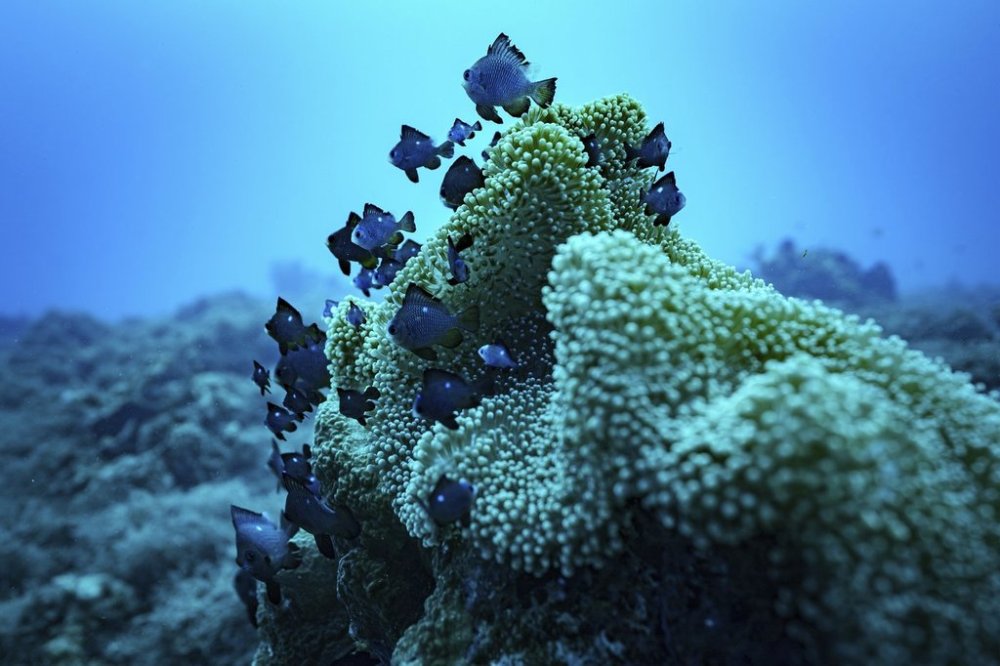
FILE - Fish swim at Havannah Harbour, off the coast of Efate Island, Vanuatu, July 20, 2025. (AP Photo/Annika Hammerschlag, File)

Formally known as the Agreement on Biodiversity Beyond National Jurisdiction, the treaty is the first legally binding agreement aimed at protecting marine biodiversity in international waters. These areas, which lie beyond the jurisdiction of any single country, account for nearly two-thirds of the ocean and nearly half of Earth’s surface.

Until now, no comprehensive legal framework existed to create marine protected areas or enforce conservation on the high seas.

Climate change and other threats to the seas

Despite their remoteness, the high seas are under growing pressure from overfishing, climate change and the threat of deep-sea mining. Environmental advocates warn that without proper protections, marine ecosystems in international waters face irreversible harm.

“Until now, it has been the wild west on the high seas,” said Megan Randles, global political lead for oceans at Greenpeace. “Now we have a chance to properly put protections in place.”

The treaty is also essential to achieving what’s known as the global “30×30” target — an international pledge to protect 30% of the planet’s land and sea by 2030.

How the treaty works

The treaty creates a legal process for countries to establish marine protected areas in the high seas, including rules for potentially destructive activities like deep-sea mining and geoengineering. It also establishes a framework for technology-sharing, funding mechanisms and scientific collaboration among countries.

Crucially, decisions under the treaty will be made multilaterally through what’s called a conference of the parties rather than by individual countries acting alone.

What comes next
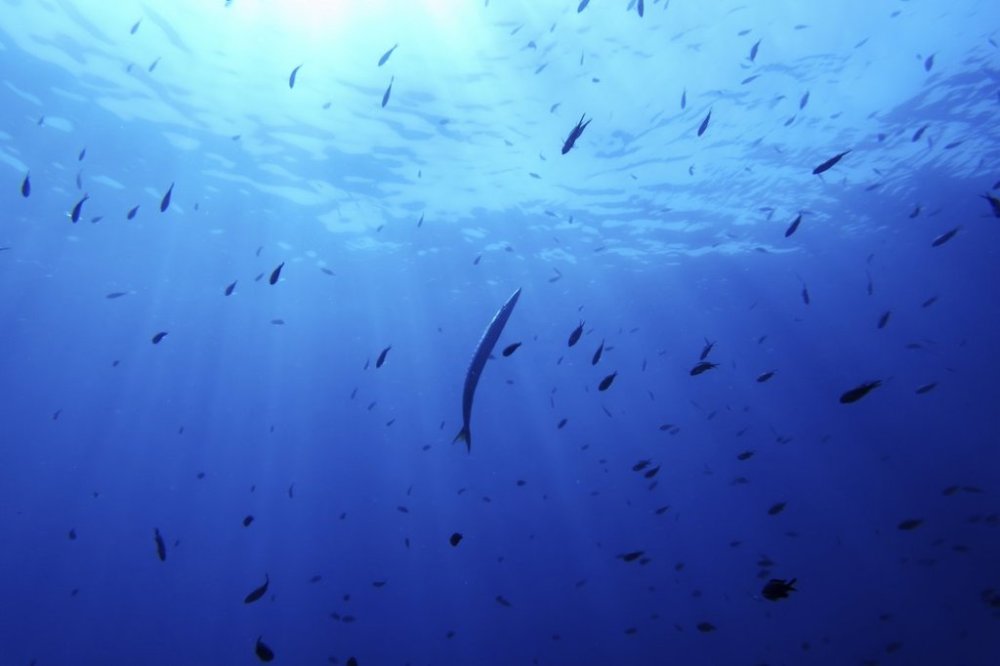
FILE - A barracuda, center, swims in the protected area of France's Porquerolles National Park ahead of the U.N. Ocean Conference on June 6, 2025. (AP Photo/Annika Hammerschlag, File)

Ratification Friday by a 60th nation triggered a 120-day countdown before the treaty enters into force. Countries can already begin planning high seas protected areas, but formal proposals will only move forward once oversight mechanisms and decision-making rules are established.

The first conference of the parties must be held within a year of the treaty taking effect. It will lay the groundwork for implementation, including decisions on governance, financing and the creation of key bodies to evaluate marine protection proposals.

Environmental groups are pushing for even more countries to ratify the treaty and to do so quickly — the more countries that ratify, the stronger and more representative the treaty’s implementation will be. There’s a carrot for countries to do so. Only those that ratify by that first conference will be eligible to vote on critical decisions that determine how the treaty will operate.

___

Follow Annika Hammerschlag on Instagram @ahammergram

___

The Associated Press receives support from the Walton Family Foundation for coverage of water and environmental policy. The AP is solely responsible for all content. For all of AP’s environmental coverage, visit https://apnews.com/hub/climate-and-environment
Report Error Submit a Tip

More Stories

Executive exodus continues at Shared Health with three recent departures

Chris Kitching 5 minute read Preview

Executive exodus continues at Shared Health with three recent departures

Chris Kitching 5 minute read Updated: Yesterday at 10:15 AM CDT

Manitoba’s provincial health authority is looking for its fourth chief financial officer since 2023 and additional replacements after the recent departures of three executives.

Read
Updated: Yesterday at 10:15 AM CDT

The good, bad and record setting performance in Bombers loss to Elks

Joshua Frey-Sam 7 minute read Preview

The good, bad and record setting performance in Bombers loss to Elks

Joshua Frey-Sam 7 minute read Saturday, Aug. 22, 2026

The Winnipeg Blue Bombers’ 22-19 defeat at the hands of the Edmonton Elks at Commonwealth Stadium in Alberta on Friday was fitting for all the wrong reasons.

The Bombers looked reinvigorated as they jumped out to a 16-point lead in the first half. Then some bad habits reared their ugly head, as the Elks roared back with 19 straight points before kicker Vincent Blanchard walked it off with a 40-yard field goal.

A night that began with so much promise left many fans to wonder what the ceiling actually is for this team in 2026.

On offence, Zach Collaros completed 19 of 30 passes for 219 yards, one touchdown and an interception; Brady Oliveira amassed 118 yards on 16 carries and added a pair of catches for 11 yards; and Nic Demski secured five grabs for 80 yards.

Read
Saturday, Aug. 22, 2026

Woman pleads guilty in toddler’s death

Erik Pindera 4 minute read Preview

Woman pleads guilty in toddler’s death

Erik Pindera 4 minute read 6:00 AM CDT

A woman who pleaded guilty to failing to provide the necessaries of life after her 13-month-old son died of an drug overdose in their Sherbrook Street apartment will serve a sentence of house arrest.

Latasha Stewart, in her mid-30s, was given the conditional sentence order of two years less a day by provincial court Judge Malcolm McDonald last Wednesday over the Dec. 29, 2022 death of her son Romeo.

“The circumstances in this case are truly tragic. As a result of an adult’s careless drug use, a 13-month-old boy lost his life,” said McDonald.

“It’s hard to imagine a clearer … lesson in the dangers of street-drug use in a household with young children present (than) in this case.”

Read
6:00 AM CDT

Five Things: PM Carney explains why Canada left the U.S. negotiating table

David Baxter, The Canadian Press 5 minute read Preview

Five Things: PM Carney explains why Canada left the U.S. negotiating table

David Baxter, The Canadian Press 5 minute read Saturday, Aug. 22, 2026

OTTAWA - Canada is preparing to hit the U.S. with dollar-for-dollar tariffs in response to new 50 per cent duties on $28 billion worth of Canadian products that took effect when talks between the two nations collapsed as negotiations neared the finish line. 

Prime Minister Mark Carney was quiet publicly during the final days of negotiations, but now has now explained his rationale for telling the Canadian negotiating team, led by Canada-U.S. Trade Minister Dominic LeBlanc and chief negotiator Janice Charette, to leave the table.

Restrictions on further trade deals

"The U.S. Introduced at the last hours, in the last hours, efforts to restrict our ability to have other trade deals. You heard me say a moment ago, what we've accomplished in the past year, 20 new deals, economic and security partnerships, the prospect of doubling our market access because we believe in free trade. We're the partner of choice in many respects for countries around the world and the Americans wanted to restrict that. They had language that what they wanted to restrict that, unacceptable," Carney said during a press conference on Parliament Hill.

Read
Saturday, Aug. 22, 2026

A primer on what the high seas treaty is and how it will work

Annika Hammerschlag, The Associated Press 3 minute read Preview

A primer on what the high seas treaty is and how it will work

Annika Hammerschlag, The Associated Press 3 minute read Friday, Sep. 19, 2025

The approval of a high seas treaty means new protections will be possible in international waters for the first time.

Here's a rundown of what the treaty is, why it matters and what is still to come.

It's the first agreement to protect marine diversity

Formally known as the Agreement on Biodiversity Beyond National Jurisdiction, the treaty is the first legally binding agreement aimed at protecting marine biodiversity in international waters. These areas, which lie beyond the jurisdiction of any single country, account for nearly two-thirds of the ocean and nearly half of Earth’s surface.

Read
Friday, Sep. 19, 2025

Community rallies around family devastated by fire

Tiago Resko 4 minute read Preview

Community rallies around family devastated by fire

Tiago Resko 4 minute read 6:00 AM CDT

Dennis Lafreniere and his wife didn’t expect to celebrate 27 years of marriage Thursday in a Selkirk hotel room while reeling from a recent house fire.

The couple and their two daughters lost their home last Sunday in a raging fire that left nothing behind, but overwhelming support from multiple communities has kept them afloat.

“It’s devastating when you don’t have any clothes, any medication, all of that stuff, and it’s just so overwhelming the next morning. It’s just nasty,” Lafreniere said.

Investigators suspect the fire was caused by a fridge, freezer and battery charger that were all plugged into the same electrical line that got overheated. The house, located on Highway 59 between Selkirk and Libau, is a farmhouse built in 1943, and investigators think worn-out electrical lines also contributed to the fire, said Lafreniere.

Read
6:00 AM CDT