A primer on what the high seas treaty is and how it will work

Advertisement

Advertise with us

The approval of a high seas treaty means new protections will be possible in international waters for the first time.

Read this article for free:


or

Already have an account? Log in here »

To continue reading, please subscribe:

Subscribe and receive a limited-edition Free Press branded hat or tote.

Digital Subscription

One year of digital access for only $205*

  • Enjoy unlimited reading on winnipegfreepress.com
  • Read the E-Edition, our digital replica newspaper
  • Access News Break, our award-winning app
  • Play interactive puzzles

*First annual payment billed as $205.00 + GST for one year. This annual subscription will automatically renew at $233.00 + GST every 52 weeks (10% off the regular annual price of $259.35). Offer available to new and qualified returning subscribers only. Cancel any time.

To continue reading, please subscribe:

Add Free Press access to your Brandon Sun subscription for only an additional

$1 for the first 4 weeks*

  • Enjoy unlimited reading on winnipegfreepress.com
  • Read the E-Edition, our digital replica newspaper
  • Access News Break, our award-winning app
  • Play interactive puzzles
Start now

*Your next Brandon Sun subscription payment will increase by $1.00 and you will be charged $17.95 plus GST for four weeks. After four weeks, your payment will increase to $24.95 plus GST every four weeks.

Hey there, time traveller!
This article was published 19/09/2025 (339 days ago), so information in it may no longer be current.

The approval of a high seas treaty means new protections will be possible in international waters for the first time.

Here’s a rundown of what the treaty is, why it matters and what is still to come.

It’s the first agreement to protect marine diversity
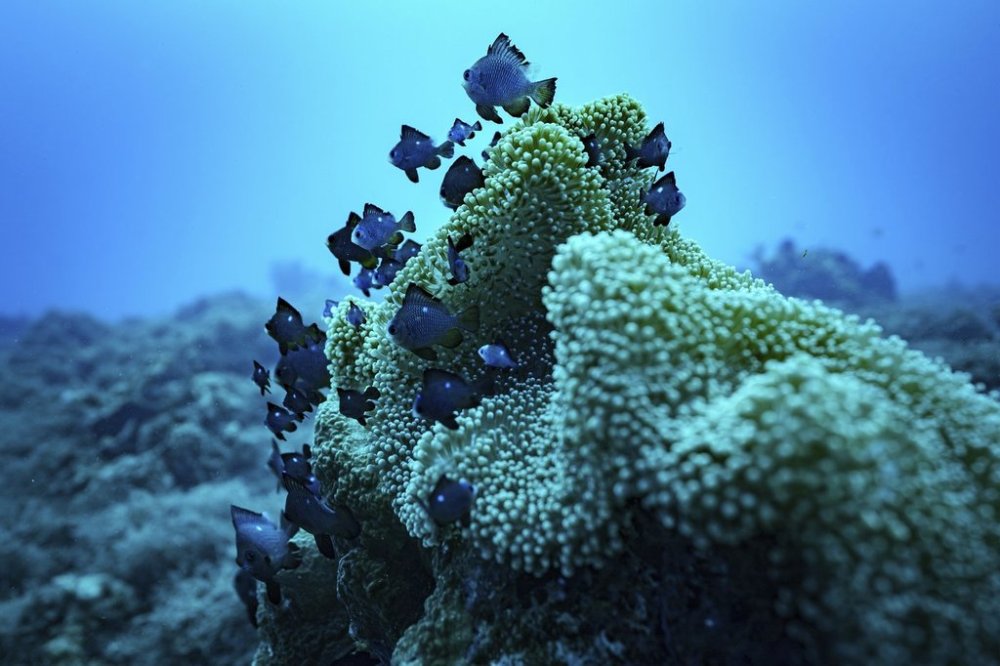
FILE - Fish swim at Havannah Harbour, off the coast of Efate Island, Vanuatu, July 20, 2025. (AP Photo/Annika Hammerschlag, File)

Formally known as the Agreement on Biodiversity Beyond National Jurisdiction, the treaty is the first legally binding agreement aimed at protecting marine biodiversity in international waters. These areas, which lie beyond the jurisdiction of any single country, account for nearly two-thirds of the ocean and nearly half of Earth’s surface.

Until now, no comprehensive legal framework existed to create marine protected areas or enforce conservation on the high seas.

Climate change and other threats to the seas

Despite their remoteness, the high seas are under growing pressure from overfishing, climate change and the threat of deep-sea mining. Environmental advocates warn that without proper protections, marine ecosystems in international waters face irreversible harm.

“Until now, it has been the wild west on the high seas,” said Megan Randles, global political lead for oceans at Greenpeace. “Now we have a chance to properly put protections in place.”

The treaty is also essential to achieving what’s known as the global “30×30” target — an international pledge to protect 30% of the planet’s land and sea by 2030.

How the treaty works

The treaty creates a legal process for countries to establish marine protected areas in the high seas, including rules for potentially destructive activities like deep-sea mining and geoengineering. It also establishes a framework for technology-sharing, funding mechanisms and scientific collaboration among countries.

Crucially, decisions under the treaty will be made multilaterally through what’s called a conference of the parties rather than by individual countries acting alone.

What comes next
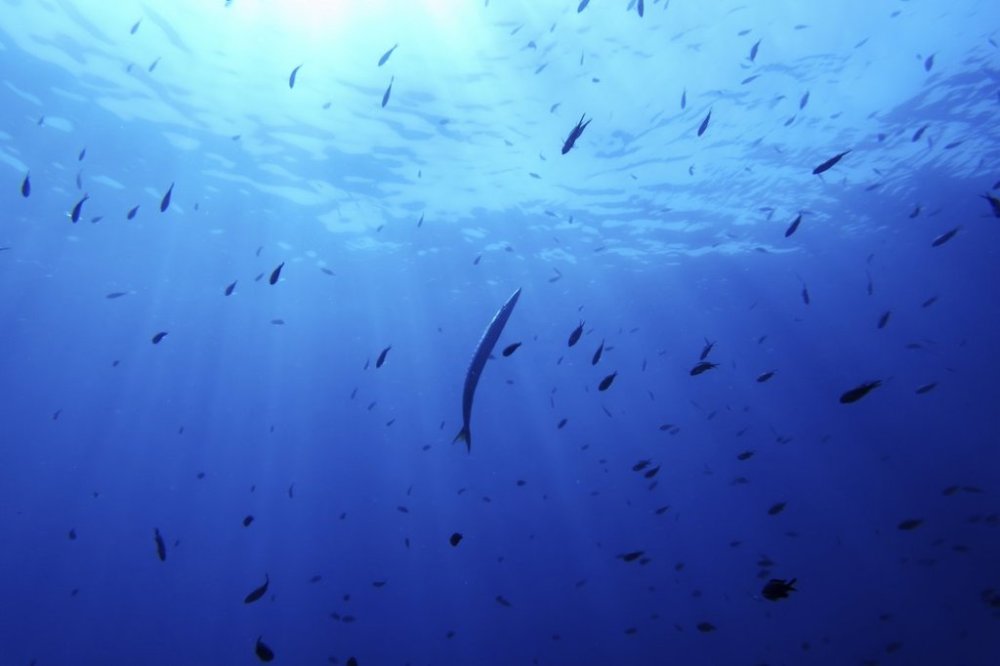
FILE - A barracuda, center, swims in the protected area of France's Porquerolles National Park ahead of the U.N. Ocean Conference on June 6, 2025. (AP Photo/Annika Hammerschlag, File)

Ratification Friday by a 60th nation triggered a 120-day countdown before the treaty enters into force. Countries can already begin planning high seas protected areas, but formal proposals will only move forward once oversight mechanisms and decision-making rules are established.

The first conference of the parties must be held within a year of the treaty taking effect. It will lay the groundwork for implementation, including decisions on governance, financing and the creation of key bodies to evaluate marine protection proposals.

Environmental groups are pushing for even more countries to ratify the treaty and to do so quickly — the more countries that ratify, the stronger and more representative the treaty’s implementation will be. There’s a carrot for countries to do so. Only those that ratify by that first conference will be eligible to vote on critical decisions that determine how the treaty will operate.

___

Follow Annika Hammerschlag on Instagram @ahammergram

___

The Associated Press receives support from the Walton Family Foundation for coverage of water and environmental policy. The AP is solely responsible for all content. For all of AP’s environmental coverage, visit https://apnews.com/hub/climate-and-environment
Report Error Submit a Tip

More Stories

Executive exodus continues at Shared Health with three recent departures

Chris Kitching 5 minute read Preview

Executive exodus continues at Shared Health with three recent departures

Chris Kitching 5 minute read Updated: Yesterday at 10:15 AM CDT

Manitoba’s provincial health authority is looking for its fourth chief financial officer since 2023 and additional replacements after the recent departures of three executives.

Read
Updated: Yesterday at 10:15 AM CDT

Five Things: PM Carney explains why Canada left the U.S. negotiating table

David Baxter, The Canadian Press 5 minute read Preview

Five Things: PM Carney explains why Canada left the U.S. negotiating table

David Baxter, The Canadian Press 5 minute read Saturday, Aug. 22, 2026

OTTAWA - Canada is preparing to hit the U.S. with dollar-for-dollar tariffs in response to new 50 per cent duties on $28 billion worth of Canadian products that took effect when talks between the two nations collapsed as negotiations neared the finish line. 

Prime Minister Mark Carney was quiet publicly during the final days of negotiations, but now has now explained his rationale for telling the Canadian negotiating team, led by Canada-U.S. Trade Minister Dominic LeBlanc and chief negotiator Janice Charette, to leave the table.

Restrictions on further trade deals

"The U.S. Introduced at the last hours, in the last hours, efforts to restrict our ability to have other trade deals. You heard me say a moment ago, what we've accomplished in the past year, 20 new deals, economic and security partnerships, the prospect of doubling our market access because we believe in free trade. We're the partner of choice in many respects for countries around the world and the Americans wanted to restrict that. They had language that what they wanted to restrict that, unacceptable," Carney said during a press conference on Parliament Hill.

Read
Saturday, Aug. 22, 2026

Woman stabbed in Spence neighbourhood

1 minute read Yesterday at 4:08 PM CDT

A woman was stabbed in the Spence neighbourhood Saturday and Winnipeg police are investigating.

The stabbing happened before 4:45 p.m. Aug. 22 in the 600 block of Ellice Avenue, and a passerby called 911 when the injured victim, in her 30s, asked for help. The victim was taken to hospital in unstable condition with an upper-body wound and was later upgraded to stable.

General patrol officers canvassed the area and the Winnipeg Police Service's major crimes unit took over the investigation. Police are asking anyone with information to contact major crimes at 204-986-6219, or leave an anonymous tip at Crime Stoppers: 204-786-8477 or winnipegcrimestoppers.org.

Winnipeg team behind national LGBT monument spent six years bringing it to fruition

Nicole Buffie 5 minute read Preview

Winnipeg team behind national LGBT monument spent six years bringing it to fruition

Nicole Buffie 5 minute read Yesterday at 6:05 PM CDT

The Winnipeg team behind a national monument recognizing the LGBT Purge were in Ottawa to celebrate its official unveiling Friday.

Thunderhead is the work of local artists Shawna Dempsey and Lorri Millan, Liz Wreford and Peter Sampson of Public City Architecture, and knowledge keeper Albert McLeod, who served as cultural adviser for the project.

The team beat out 31 international submissions for the project, which is permanently located at 201 Wellington St. in Ottawa along the Ottawa River, in view of Parliament.

“We are a beacon internationally around the world of what democracies can do about inclusion, about human rights,” McLeod said.

Read
Yesterday at 6:05 PM CDT

Free Press literary editor picks noteworthy Canadian fiction and non-fiction titles to watch for this fall

Ben Sigurdson 8 minute read Preview

Free Press literary editor picks noteworthy Canadian fiction and non-fiction titles to watch for this fall

Ben Sigurdson 8 minute read Saturday, Aug. 22, 2026

For many book lovers, summer means relaxing at the beach, in the backyard or at the cottage with fun, warm-weather page-turners — easy-going romance novels, gripping thrillers or even a dishy biography.

And some may long for the summer months to slow down, fall books season always offers up some of the most compelling reads for bookworms.

Here are 10 works of fiction and 10 non-fiction titles from Canadian authors slated to be published in the coming months — from Olympians to separatists, draft dodgers, plutocrats, prime ministers, bird-men and beyond, the characters in these forthcoming titles run the gamut.

FICTIONEliza Sunshine

Read
Saturday, Aug. 22, 2026

Conservatives call on government to release U.S. trade offer details

Nick Murray, The Canadian Press 4 minute read Preview

Conservatives call on government to release U.S. trade offer details

Nick Murray, The Canadian Press 4 minute read Updated: Yesterday at 3:17 PM CDT

OTTAWA - Federal conservatives are calling on the government to release the full details of the trade offer from the United States that Canada rejected this week.

In a letter to Trade Minister Dominic LeBlanc, Canada-U.S. relations critic Shuvaloy Majumdar said while his party supports the government's decision to reject the deal, Parliament is in the dark on what was on the table.

"If there was a draft text of any agreement that both governments have seen, please release it. The U.S. administration has seen it. Your government has seen it. Canadians deserve to see it," Majumdar wrote.

"Even after addressing Canadians and the media, the public and Members of Parliament still remain in the dark on your government's demands in negotiations with the Trump administration.

Read
Updated: Yesterday at 3:17 PM CDT