MacIntyre blows dust off Tudor’s role in war

Advertisement
Read this article for free:
or
Already have an account? Log in here »
To continue reading, please subscribe:

Digital Subscription
One year of digital access for only $205*
- Enjoy unlimited reading on winnipegfreepress.com
- Read the E-Edition, our digital replica newspaper
- Access News Break, our award-winning app
- Play interactive puzzles
*First annual payment billed as $205.00 + GST for one year. This annual subscription will automatically renew at $233.00 + GST every 52 weeks (10% off the regular annual price of $259.35). Offer available to new and qualified returning subscribers only. Cancel any time.
To continue reading, please subscribe:
Add Free Press access to your Brandon Sun subscription for only an additional
$1 for the first 4 weeks*
- Enjoy unlimited reading on winnipegfreepress.com
- Read the E-Edition, our digital replica newspaper
- Access News Break, our award-winning app
- Play interactive puzzles
*Your next Brandon Sun subscription payment will increase by $1.00 and you will be charged $17.95 plus GST for four weeks. After four weeks, your payment will increase to $24.95 plus GST every four weeks.
Read unlimited articles for free today:
or
Already have an account? Log in here »
Hey there, time traveller!
This article was published 13/10/2025 (295 days ago), so information in it may no longer be current.
The Irish War of Independence, which saw hundreds killed and wounded in clashes between Irish Republican Army (IRA) forces and Britain’s Royal Irish Constabulary (RIC) and the British army between 1919 to 1921, laid the foundation for conflicts that would persist in the republic for decades.
In his latest book, The Accidental Villain: A Soldier’s Tale of War, Deceit and Exile, veteran Canadian journalist Linden MacIntyre shines a light on the much-overlooked major general Sir Hugh Tudor, who commanded British police and military forces in Ireland.
A longtime friend of Winston Churchill, Tudor and his legacy in the military would be forever tainted by the copious bloodshed in Ireland’s conflict.
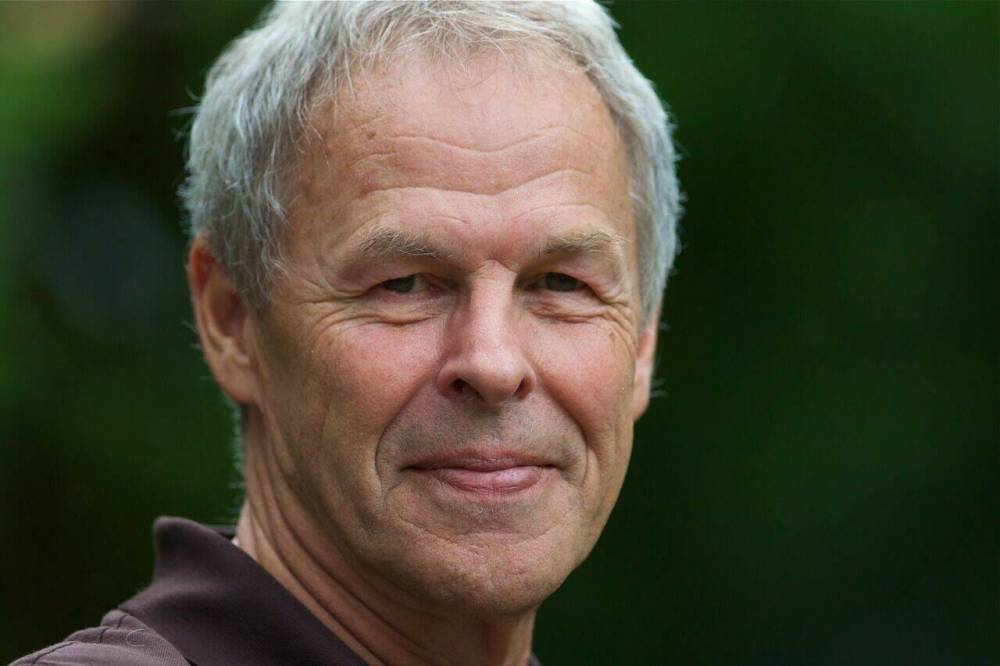
Joe Passaretti / Canadian Press files
Linden MacIntyre
Tudor’s name came to MacIntyre’s attention while reading about a secret meeting in 1941 between Churchill and then-U.S. president Franklin Roosevelt aboard naval vessels stationed at Placentia Bay, N.L.
“In the middle of this significant meeting, Churchill sent a message to St. John’s to somebody to contact his friend and hopefully bring him over to the battleship,” MacIntyre says from Toronto in advance of Tuesday’s Winnipeg launch of The Accidental Villain, where he’ll be joined in conversation by Reg Sherren.
For MacIntyre, 82, Tudor’s story was a chance to put a bow on his writerly career.
“This was going to be my 10th book, and I thought it was a nice, round number to top off all my years of journalism and writing books of fiction and non-fiction,” he says.
Among his fiction output is the Giller Prize-winning novel The Bishop’s Man and Punishment, while his non-fiction books include The Wake: The Deadly Legacy of a Newfoundland Tsunami and Causeway: A Passage from Innocence.
The main problem for MacIntyre was that there was little writing by or about Tudor after 1918.
“Tudor left a big chunk of information about his involvement in the First World War, but nothing about his involvement in Ireland. I realized that was on purpose — he wasn’t proud his involvement,” MacIntyre says.
MacIntyre scoured memoirs and journals of adjacent players in the Irish War of Independence.
“There were people to whom he reported, those he had dealt with a lot — a couple of associates, like Ormonde Winter, his second in command — who had written memoirs. Tudor showed up in those memoirs on the periphery; I went to all those sources and hoovered up little bits and pieces,” he says.
Another valuable source was Churchill’s writing — he and Tudor had written letters to each other for years.
Tudor’s involvement in the Irish War of Independence came about when Churchill, as secretary of state for war, tapped him to help quell the unrest in Ireland.
“He was recruited by Churchill to take charge of the Royal Irish Constabulary, which was to suppress what was turning into a war of independence by the IRA, Sinn Féin and the Irish volunteers,” MacIntyre says, adding the result wasn’t what Britons had hoped for.
“The outcome of that war was Irish independence, basically, but for Tudor, it was exile.”
Among the troops under Tudor’s command were the notorious Black and Tans, a feared group of RIC soldiers whose ruthless behaviour in the conflict included the burning of houses, late-night arrests, beatings and executions.
The IRA’s fighting techniques had informed Tudor on how to combat the group.
“He was unfamiliar with the guerrilla activities going on in Ireland. The enemy didn’t wear a uniform. The enemy could be the fellow that’s bringing you your beer or your milk in the morning,” MacIntyre says.
“Tudor realized if there was any chance, (the RIC) had to fight fire with fire, assassination with assassination, terror with terror.”
The eventual truce in July 1921 stopped the war, but would lead to more grisly conflict in the decades-long Irish civil war known as the Troubles. Tudor was reassigned to Palestine, where he led British forces briefly before his departure.
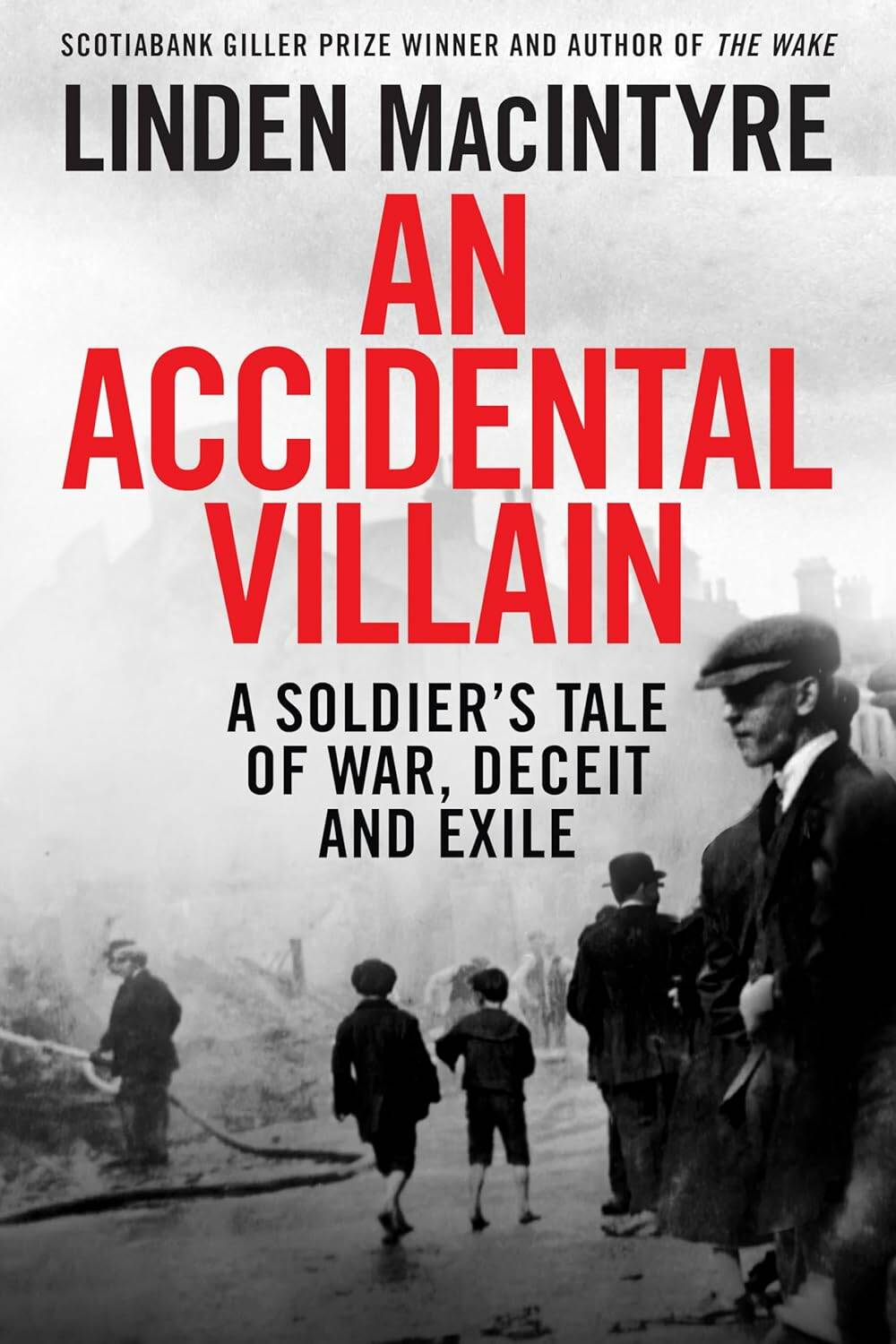
The Accidental Villain
His family life had disintegrated; Tudor essentially abandoned his wife and children, crossing the pond to settle down in Newfoundland. He had fought alongside soldiers from the small island nation in the First World War and reckoned it was as good a place as any to start a new life.
It was Tudor’s post-Ireland years in Newfoundland that proved most challenging for MacIntyre — and most insightful.
One valuable source was Carla Emerson, later Carla Emerson Furlong, one of the few still-surviving people who knew Tudor.
“She’s 103 years old as we speak — and reading the book,” MacIntyre says, laughing. “She became a great source of information.”
Emerson provided previously unknown details about Tudor’s quiet life in Newfoundland, including his relationship with Monica McCarthy, a nurse who lived with and cared for him in his later years.
Their relationship was less than clear; Emerson revealed that Tudor asked McCarthy to marry him once his long-estranged wife, Lady Eva Tudor (who refused to divorce him), died in the 1950s.
“Carla said, ‘It’s just between you and me — you can’t use that in the book. I said, ‘Are you kidding me?’ ‘No, no, no,’ she said, wagging a bony finger at me. ‘People will assume it meant more than it did.’ I said ‘What did it mean?’ And she said (Tudor) needed somebody to leave his things to. It was estate-management sort of stuff,” MacIntyre says.
Tudor, who died in 1965 at age 94, seemingly tried to keep his role in the Irish War of Independence under wraps.
“He’s been demonized. He’s in the history books as a sort of a brief passing reference. Some historians say that’s because he was insignificant, and others it was because he was so sinister that he did not leave much of his fingerprints on history,” MacIntyre says.
The author sees it differently, viewing Tudor as a morally complicated individual — not a cold-blooded killer, but one who had a ferocious and sentimental loyalty to Winston Churchill.

“He didn’t know anything about Irish history, but he cared about the Empire, and understood that if Ireland broke out, it would touch off a domino effect.”
There are modern-day parallels MacIntyre sees between the Irish War of Independence and current events, particularly south of the border.
“It should become a cautionary tale for people in the military and the police and public service — they’re being used in an unconventional, probably illegal manner by (Donald) Trump and the other political masters.
“When the reckoning begins, the people doing exactly what Trump wants are the ones who will be judged most harshly by historians.”
ben.sigurdson@freepress.mb.ca
Ben Sigurdson
Literary editor, drinks writer
Ben Sigurdson is the Free Press‘s literary editor and drinks writer. He graduated with a master of arts degree in English from the University of Manitoba in 2005, the same year he began writing Uncorked, the weekly Free Press drinks column. He joined the Free Press full time in 2013 as a copy editor before being appointed literary editor in 2014. Read more about Ben.
In addition to providing opinions and analysis on wine and drinks, Ben oversees a team of freelance book reviewers and produces content for the arts and life section, all of which is reviewed by the Free Press’s editing team before being posted online or published in print. It’s part of the Free Press‘s tradition, since 1872, of producing reliable independent journalism. Read more about Free Press’s history and mandate, and learn how our newsroom operates.
Our newsroom depends on a growing audience of readers to power our journalism. If you are not a paid reader, please consider becoming a subscriber.
Our newsroom depends on its audience of readers to power our journalism. Thank you for your support.
Book launch
Linden MacIntyre
An Accidental Villain: A Soldier’s Tale of War, Deceit and Exile
In conversation with Reg Sherren
● McNally Robinson Booksellers (1120 Grant Ave.)
● Tuesday, 7 p.m.
● Free
Ben Sigurdson
Literary editor, drinks writer
Ben Sigurdson is the Free Press‘s literary editor and drinks writer. He graduated with a master of arts degree in English from the University of Manitoba in 2005, the same year he began writing Uncorked, the weekly Free Press drinks column. He joined the Free Press full time in 2013 as a copy editor before being appointed literary editor in 2014. Read more about Ben.
In addition to providing opinions and analysis on wine and drinks, Ben oversees a team of freelance book reviewers and produces content for the arts and life section, all of which is reviewed by the Free Press’s editing team before being posted online or published in print. It’s part of the Free Press‘s tradition, since 1872, of producing reliable independent journalism. Read more about Free Press’s history and mandate, and learn how our newsroom operates.
Our newsroom depends on a growing audience of readers to power our journalism. If you are not a paid reader, please consider becoming a subscriber.
Our newsroom depends on its audience of readers to power our journalism. Thank you for your support.
Advertisement Advertise With Us
Advertisement Advertise With Us