Nations meet to consider regulations to drive a green transition in shipping
Advertisement
Read this article for free:
or
Already have an account? Log in here »
To continue reading, please subscribe:

Digital Subscription
One year of digital access for only $205*
- Enjoy unlimited reading on winnipegfreepress.com
- Read the E-Edition, our digital replica newspaper
- Access News Break, our award-winning app
- Play interactive puzzles
*First annual payment billed as $205.00 + GST for one year. This annual subscription will automatically renew at $233.00 + GST every 52 weeks (10% off the regular annual price of $259.35). Offer available to new and qualified returning subscribers only. Cancel any time.
To continue reading, please subscribe:
Add Free Press access to your Brandon Sun subscription for only an additional
$1 for the first 4 weeks*
- Enjoy unlimited reading on winnipegfreepress.com
- Read the E-Edition, our digital replica newspaper
- Access News Break, our award-winning app
- Play interactive puzzles
*Your next Brandon Sun subscription payment will increase by $1.00 and you will be charged $17.95 plus GST for four weeks. After four weeks, your payment will increase to $24.95 plus GST every four weeks.
Read unlimited articles for free today:
or
Already have an account? Log in here »
Hey there, time traveller!
This article was published 13/10/2025 (359 days ago), so information in it may no longer be current.
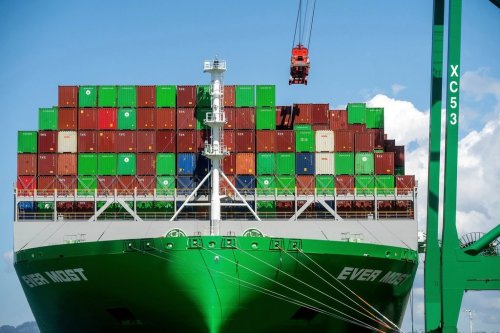
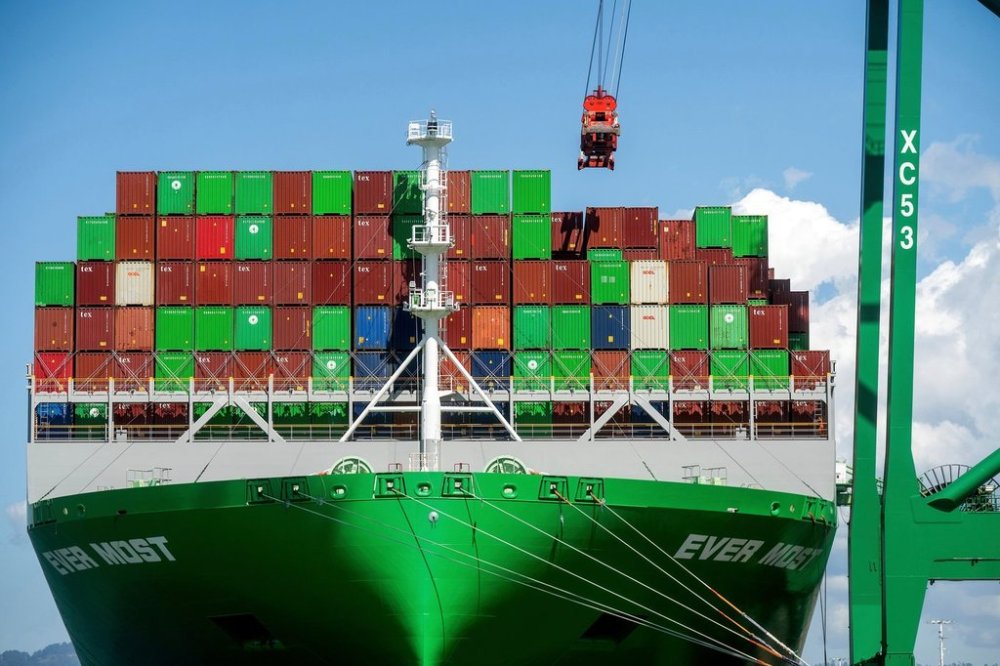
The world’s largest maritime nations gathered in London on Tuesday to consider adopting regulations that would move the shipping industry away from fossil fuels to slash emissions.
If the deal is adopted, this will be the first time a global fee is imposed on planet-warming greenhouse gas emissions. Most ships today run on heavy fuel oil that releases carbon dioxide and other pollutants as it’s burned.
Nations are meeting at the International Maritime Organization headquarters through Friday. The Trump administration unequivocally rejects the proposal and has threatened to retaliate if nations support it, setting the stage for a fight over the climate deal.
In April, IMO member states agreed on the contents of the regulatory framework. The aim is to adopt it at this meeting.
That would be a major win for the climate, public health, the ocean and marine life, said Delaine McCullough at the Ocean Conservancy. For too long, ships have run on crude, dirty oil, she said.
“This agreement provides a lesson for the world that legally-binding climate action is possible,” said McCullough, shipping program director for the nonprofit environmental advocacy group.
“The energy and digital transition of shipping have already started. However, the absence of global regulations will increase the costs of this transition in the long run,” said Arsenio Dominguez, Secretary-General of the IMO, during his opening remarks at the meeting.
Shipping emissions have grown over the past decade to about 3% of the global total as trade has grown and vessels use immense amounts of fossil fuels to transport cargo over long distances.
Here’s what to know:
The regulations would set a pricing system for gas emissions
The regulations, or “Net-zero Framework,” set a marine fuel standard that decreases, over time, the amount of greenhouse gas emissions allowed from using shipping fuels. The regulations also establish a pricing system that would impose fees for every ton of greenhouse gases emitted by ships above allowable limits, in what is effectively the first global tax on greenhouse gas emissions.
There’s a base level of compliance for the allowable greenhouse gas intensity of fuels. There’s a more stringent direct compliance target that requires further reduction in the greenhouse gas intensity.
If ships sail on fuels with lower emissions than what’s required under the direct compliance target, they earn “surplus units,” effectively credits.
Ships with the highest emissions would have to buy those credits from other ships under the pricing system, or from the IMO at $380 per ton of carbon dioxide equivalent to reach the base level of compliance. In addition, there’s a penalty of $100 per ton of carbon dioxide equivalent to reach direct compliance.
Ships that meet the base target but not the direct compliance one must pay the $100 per ton penalty too.
Ships whose greenhouse gas intensity is below a certain threshold will receive rewards for their performance.
The fees could generate $11 billion to $13 billion in revenue annually. That would go into an IMO fund to invest in fuels and technologies needed to transition to green shipping, reward low-emission ships and support developing countries so they aren’t left behind with dirty fuels and old ships.
Looking for alternative fuels
The IMO, which regulates international shipping, set a target for the sector to reach net-zero greenhouse gas emissions by about 2050, and has committed to ensuring that fuels with zero or near-zero emissions are used more widely.
Ships could lower their emissions by using alternative fuels, running on electricity or using onboard carbon capture technologies. Wind propulsion and other energy efficiency advancements can also help reduce fuel consumption and emissions as part of an energy transition.
Large ships last about 25 years, so the industry would need to make changes and investments now to reach net-zero around 2050.
If adopted, the regulations will enter into force in 2027. Large oceangoing ships over 5,000 gross tonnage, which emit 85% of the total carbon emissions from international shipping, would have to pay penalties for their emissions starting in 2028, according to the IMO.
The International Chamber of Shipping, which represents over 80% of the world’s merchant fleet, is advocating for adoption.
Concerns over biofuels produced from food crops
Heavy fuel oil, liquefied natural gas and biodiesel will be dominant for most of the 2030s and 2040s, unless the IMO further incentivizes green alternatives, according to modeling from Transport and Environment, a Brussels-based environmental nongovernmental organization.
The way the rules are designed essentially makes biofuels the cheapest fuel to use to comply, but biofuels require huge amounts of crops, pushing out less profitable food production, often leading to additional land clearance and deforestation, said Faig Abbasov, shipping director at T&E.
They are urging the IMO to promote scalable green alternatives, not recklessly promote biofuels produced from food crops, Abbasov said. As it stands now, the deal before the IMO won’t deliver net-zero emissions by 2050, he added.
Green ammonia will get to a price that it’s appealing to ship owners in the late 2040s — quite late in the transition, according to the modeling. The NGO also sees green methanol playing an important role in the long-term transition.
The vote at the London meeting
The IMO aims for consensus in decision-making but it’s likely nations will vote on adopting the regulations.
At the April meeting, a vote was called to approve the contents of the regulations. The United States was notably absent in April, but plans to participate in this meeting.
During the opening session on Tuesday, Saudi Arabia, the U.S., Russia and a few other countries intervened to express their reservations about the meeting’s agenda, which strongly focuses on adopting the Net-zero Framework by the end of the week.

Teresa Bui at Pacific Environment said she is optimistic “global momentum is on our side” and a majority of countries will support adoption. Bui is senior climate campaign director for the environmental nonprofit, which has consultative, or non-voting, status at the IMO.
If it fails, shipping’s decarbonization will be further delayed.
“It’s difficult to know for sure what the precise consequences will be, but failure this week will certainly lead to delay, which means ships will emit more greenhouse gases than they would have done and for longer, continuing their outsized contribution to the climate crisis,” said John Maggs, of the Clean Shipping Coalition, who is at the London meeting.
___
The Associated Press’ climate and environmental coverage receives financial support from multiple private foundations. AP is solely responsible for all content. Find AP’s standards for working with philanthropies, a list of supporters and funded coverage areas at AP.org.