Halloween pumpkin waste is a methane problem, but chefs and farmers have solutions
Advertisement
Read this article for free:
or
Already have an account? Log in here »
To continue reading, please subscribe:

Digital Subscription
One year of digital access for only $205*
- Enjoy unlimited reading on winnipegfreepress.com
- Read the E-Edition, our digital replica newspaper
- Access News Break, our award-winning app
- Play interactive puzzles
*First annual payment billed as $205.00 + GST for one year. This annual subscription will automatically renew at $233.00 + GST every 52 weeks (10% off the regular annual price of $259.35). Offer available to new and qualified returning subscribers only. Cancel any time.
To continue reading, please subscribe:
Add Free Press access to your Brandon Sun subscription for only an additional
$1 for the first 4 weeks*
- Enjoy unlimited reading on winnipegfreepress.com
- Read the E-Edition, our digital replica newspaper
- Access News Break, our award-winning app
- Play interactive puzzles
*Your next Brandon Sun subscription payment will increase by $1.00 and you will be charged $17.95 plus GST for four weeks. After four weeks, your payment will increase to $24.95 plus GST every four weeks.
Read unlimited articles for free today:
or
Already have an account? Log in here »
Hey there, time traveller!
This article was published 27/10/2025 (323 days ago), so information in it may no longer be current.
Don’t let your Halloween pumpkin haunt the landfill this November.
More than 1 billion pounds (454 million kilograms) of pumpkins rot in U.S. landfills each year after Halloween, according to the Department of Energy.
Yours doesn’t have to go to waste. Experts told us your pumpkins can be eaten, composted or even fed to animals. Here’s how.

Cooking with pumpkin waste
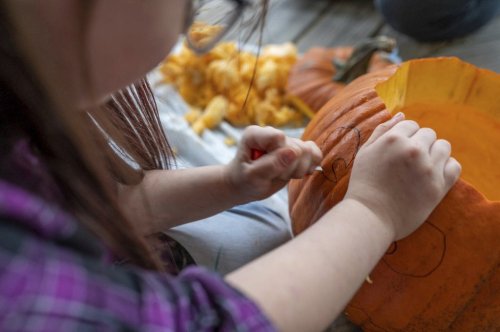
If you’re carving a jack-o’-lantern, don’t throw away the skin or innards — every part is edible.
After carving, you can cube the excess flesh — the thick part between the outer skin and the inner pulp that holds the seeds — for soups and stews, says Carleigh Bodrug, a chef known for cooking with common food scraps. You can also puree it and add a tablespoon to your dog’s dinner for extra nutrients. And pumpkin chunks can be frozen for future use.
“The seeds are a nutritional gold mine,” Bodrug said. They’re packed with protein, magnesium, zinc and healthy fats, according to a 2022 study in the journal Plants.
One of Bodrug’s recipes involves removing the seeds, rinsing and roasting them with cinnamon for a crunchy snack or salad topper. Then you can use the stringy guts to make a pumpkin puree for muffins. This version differs from canned purees in grocery stores — which typically use a different type of pumpkin or squash — because carving pumpkins have stringier innards and a milder flavor. A carving pumpkin’s guts can still be used for baking — you’ll just have to amp up the seasoning to boost the flavor.
If you don’t want to eat your pumpkins, you can donate them to a local farm, which might use them to feed pigs, chickens and other animals.
Edible parts should be collected while you’re carving and before it’s painted, decorated or left on your porch for weeks. Paint and wax aren’t food-safe, and bacteria and mold can grow on the skin in outdoor climates.
Once you’ve cooked what you can and donated what’s safe to feed, composting the rest is the easiest way to keep it out of the landfill.
“That way, even though they’re not safe to eat, they can still give back to the earth,” Bodrug said.
Composting at home or donating to a farm
Composting pumpkins keeps them out of methane-emitting landfills and turns them into nutrient-rich soil instead. You can do this at home or drop them off at a local farm, compost collection bin or drop-off site.
“A large percentage of what ends up going to the landfill is stuff that could have been composted,” said Dante Sclafani, compost coordinator at Queens County Farm in New York. “So even just cutting down something like pumpkins could really help curb how many garbage bags you’re putting out every week.”
Before composting, remove any candles, plastic, glitter, or other decorations — they can contaminate the compost. A little glitter or paint won’t ruin the pile, but it’s best to get it as clean as possible before tossing it in. Then, chop up the pumpkin in 1-inch (2.5-centimeter) pieces so it can break down easier.
“Pumpkins are full of water, so it’s important to maintain a good balance of dried leaves, wood chips, sawdust, shredded newspaper, cardboard, straw — anything that’s a dry organic material — in your compost bin,” Sclafani said. If you don’t maintain this balance, your compost might start to stink.
According to the Environmental Protection Agency, a healthy compost pile should include a mix of “greens” — like pumpkin scraps and food waste — and “browns” like dry leaves, straw or cardboard, in roughly a three-to-one ratio. That balance helps the pile break down faster and prevents odors.
And if your pumpkin’s been sitting on the porch all month? That’s actually ideal. “It’s never too far gone for compost,” Sclafani said. “Even if it’s mushy or moldy, that actually helps, because the fungus speeds up decomposition.”

“Composting anything organic is better than throwing it out because you’re not creating more refuse in landfills, you’re not creating methane gas,” said Laura Graney, the farm’s education director.
Graney said autumn on the farm is the perfect opportunity to teach kids about composting since it gives them a sense of power in the face of big environmental challenges.
“Even though they’re little, composting helps them feel like they can make a difference,” Graney said. “They take that message home to their families, and that’s how we spread the word.”
___
The Associated Press’ climate and environmental coverage receives financial support from multiple private foundations. AP is solely responsible for all content. Find AP’s standards for working with philanthropies, a list of supporters and funded coverage areas at AP.org.