Artificial art a threat to human creativity

Advertisement
Read this article for free:
or
Already have an account? Log in here »
To continue reading, please subscribe:

Digital Subscription
One year of digital access for only $205*
- Enjoy unlimited reading on winnipegfreepress.com
- Read the E-Edition, our digital replica newspaper
- Access News Break, our award-winning app
- Play interactive puzzles
*First annual payment billed as $205.00 + GST for one year. This annual subscription will automatically renew at $233.00 + GST every 52 weeks (10% off the regular annual price of $259.35). Offer available to new and qualified returning subscribers only. Cancel any time.
To continue reading, please subscribe:
Add Free Press access to your Brandon Sun subscription for only an additional
$1 for the first 4 weeks*
- Enjoy unlimited reading on winnipegfreepress.com
- Read the E-Edition, our digital replica newspaper
- Access News Break, our award-winning app
- Play interactive puzzles
*Your next Brandon Sun subscription payment will increase by $1.00 and you will be charged $17.95 plus GST for four weeks. After four weeks, your payment will increase to $24.95 plus GST every four weeks.
Read unlimited articles for free today:
or
Already have an account? Log in here »
Hey there, time traveller!
This article was published 08/11/2025 (334 days ago), so information in it may no longer be current.
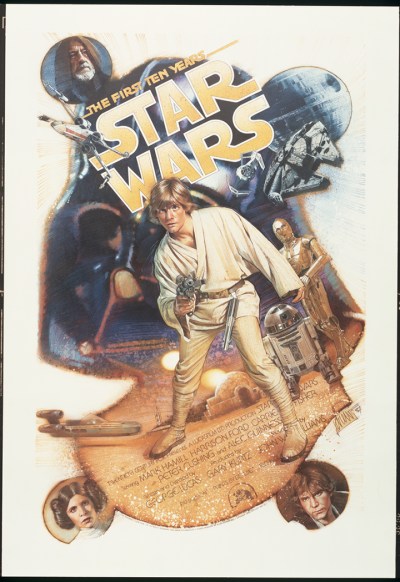
Even if you don’t know the name Drew Struzan, you’ve definitely seen his work. It’s been shown in the odd art gallery, but you’ve likely encountered it in popcorn-scented movie theatres, or, even more likely, on your friends’ bedroom walls, that first site of personal art curation.
The American artist and illustrator created more than 150 movie posters. He was the brain behind the enduring images we have in our minds of Star Wars, E.T., The Shawshank Redemption, Bladerunner, Back to the Future and Indiana Jones.
Struzan died in October at the age of 78. Earlier this year, his wife disclosed that he had Alzheimer’s and was no longer drawing.
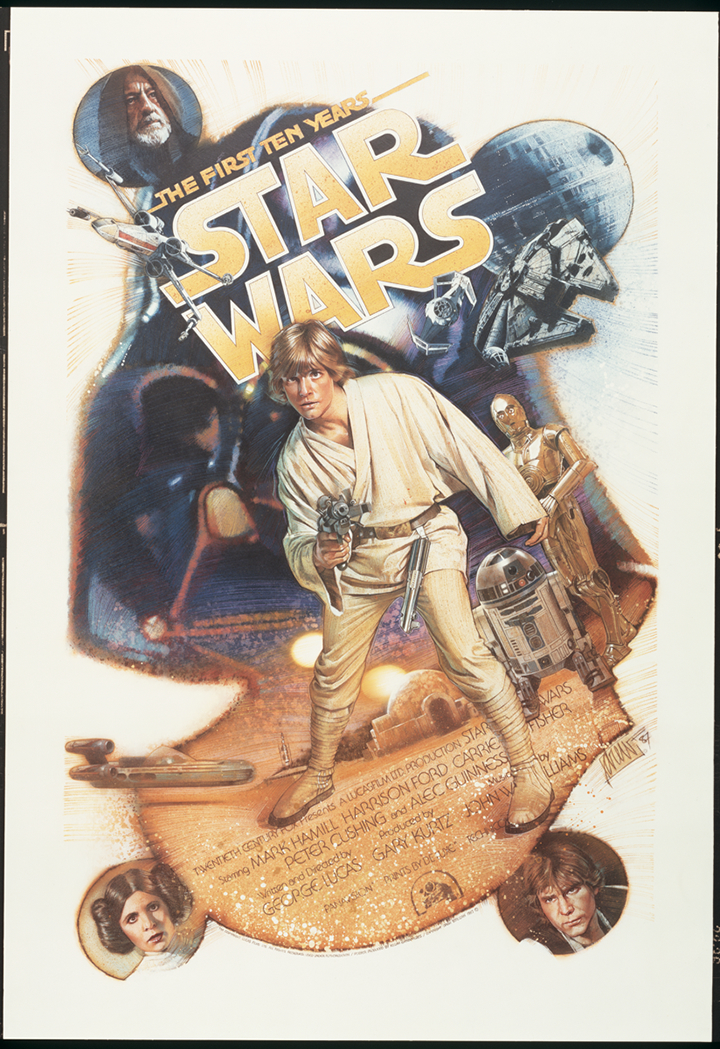
“Iconic” is an overused adjective, often breathlessly used in the place of “popular” or “very famous.”
But what Struzan created was, indeed, iconography. When you hear the titles of some of these films, it’s very possible you think of Struzan’s soft-glow imagery before you even think of a specific scene.
He was famous for both his airbrush technique as well as his unparalleled ability to capture actors’ likenesses. “Wait, these are all paintings?!?!” read a post on Instagram after he died. “I thought these were edited layers of actual photos with digital effects added in,” followed by head-exploding emojis.
Struzan wouldn’t have had access to digital effects. He would have had to work by hand.
Thinking of Struzan’s legacy of art — of magic, really — it’s hard not to think that this particular form will be another casualty of artificial intelligence, another art form reduced to cheap slop.
You could argue the art of the movie poster was already dying, long before AI was sitting on its chest. Many movies don’t get theatrical releases anymore; people don’t buy them in physical-media forms. Struzan himself already had to pivot as early as the ’90s when demand for hand-drawn film posters was already starting to decline.
Movie posters, album covers and book jackets are art about art, but they are works of art unto themselves.
One thing I don’t see much in the discourse about our increasing reliance on readily available AI tools is the inevitable pipeline problem we’re going to have when it comes to creating artists.
I read a piece on New York Magazine’s site The Cut about people outsourcing their hobbies to ChatGPT or using it to cheat at things, such as tricky escape rooms, coming up with trivia night questions or participating in their book clubs for which they haven’t read the book.
The world of crochet patterns, apparently, is overrun with AI slop.
What this says to me is that some people want the satisfaction of having done without doing. They want the satisfaction of having created without actually creating.
Trust me, I get it. The process of creating can be frustrating and hard and uncomfortable. It’s what I call the messy middle, when you’re in the weeds and you wish the idea you were once so enthusiastic about never entered your brain and you hate everything you’re doing. That’s creating.
You can’t skip over that part. That part is key. The messy middle is where mastery lives.
I often deeply relate to a quote ascribed to the late, great Dorothy Parker: “I hate writing, but I love having written.” But I love having written the same way I love having exercised: it’s hard while you’re doing it, and that’s why you get so much out of doing it at all and why it feels so good when it’s done.
You can’t hack, cheat or outsource that.

I wonder if this over-reliance on ChatGPT for things that are ostensibly about leisure or joy is a byproduct of people being more afraid of failing, or getting it “wrong,” or making things that aren’t Pinterest perfect and ready to be monetized.
Struzan was a professional. His art wasn’t a hobby. He chose illustration over fine art at the outset of his career because of financial stability (!), an idea that seems absolutely improbable now.
But it probably started out that way. He was probably a kid who liked to doodle in the margins of his notebooks during class. He was probably a guy who liked movies and then worked hard on mastering his own craft to become part of them.
If everyone skips over the middle and cuts right to the result, truly nothing will be iconic anymore. And there will certainly be no more Drew Struzans.
jen.zoratti@freepress.mb.ca
Jen Zoratti is a columnist and feature writer working in the Arts & Life department, as well as the author of the weekly newsletter NEXT. A National Newspaper Award finalist for arts and entertainment writing, Jen is a graduate of the Creative Communications program at RRC Polytech and was a music writer before joining the Free Press in 2013. Read more about Jen.
Every piece of reporting Jen produces is reviewed by an editing team before it is posted online or published in print – part of the Free Press‘s tradition, since 1872, of producing reliable independent journalism. Read more about Free Press’s history and mandate, and learn how our newsroom operates.
Our newsroom depends on a growing audience of readers to power our journalism. If you are not a paid reader, please consider becoming a subscriber.
Our newsroom depends on its audience of readers to power our journalism. Thank you for your support.
Jen Zoratti is a columnist and feature writer working in the Arts & Life department, as well as the author of the weekly newsletter NEXT. A National Newspaper Award finalist for arts and entertainment writing, Jen is a graduate of the Creative Communications program at RRC Polytech and was a music writer before joining the Free Press in 2013. Read more about Jen.
Every piece of reporting Jen produces is reviewed by an editing team before it is posted online or published in print – part of the Free Press‘s tradition, since 1872, of producing reliable independent journalism. Read more about Free Press’s history and mandate, and learn how our newsroom operates.
Our newsroom depends on a growing audience of readers to power our journalism. If you are not a paid reader, please consider becoming a subscriber.
Our newsroom depends on its audience of readers to power our journalism. Thank you for your support.
Advertisement Advertise With Us
Advertisement Advertise With Us
History
Updated on Sunday, November 9, 2025 12:46 PM CST: Replaces illustration