

Full blackout hits the Dominican Republic as crews scramble to restore power
Advertisement
Read this article for free:
or
Already have an account? Log in here »
To continue reading, please subscribe:

Digital Subscription
One year of digital access for only $205*
- Enjoy unlimited reading on winnipegfreepress.com
- Read the E-Edition, our digital replica newspaper
- Access News Break, our award-winning app
- Play interactive puzzles
*First annual payment billed as $205.00 + GST for one year. This annual subscription will automatically renew at $233.00 + GST every 52 weeks (10% off the regular annual price of $259.35). Offer available to new and qualified returning subscribers only. Cancel any time.
To continue reading, please subscribe:
Add Free Press access to your Brandon Sun subscription for only an additional
$1 for the first 4 weeks*
- Enjoy unlimited reading on winnipegfreepress.com
- Read the E-Edition, our digital replica newspaper
- Access News Break, our award-winning app
- Play interactive puzzles
*Your next Brandon Sun subscription payment will increase by $1.00 and you will be charged $17.95 plus GST for four weeks. After four weeks, your payment will increase to $24.95 plus GST every four weeks.
Read unlimited articles for free today:
or
Already have an account? Log in here »
Hey there, time traveller!
This article was published 11/11/2025 (297 days ago), so information in it may no longer be current.
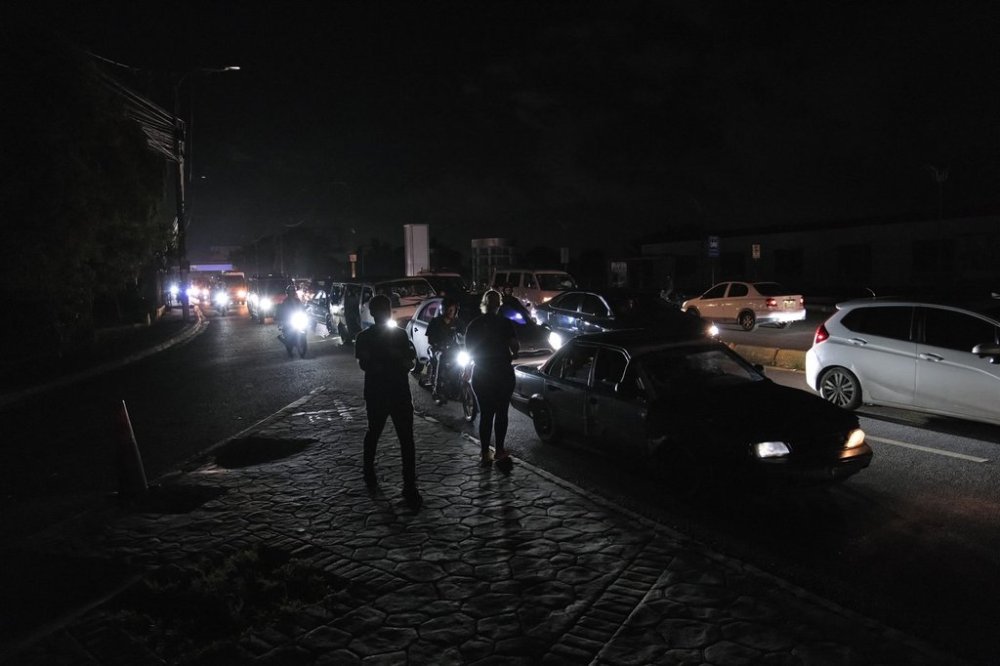
SANTO DOMINGO, Dominican Republic (AP) — A rare blackout hit the entire Dominican Republic on Tuesday, snarling traffic and paralyzing businesses in the country of nearly 11 million people.
Officials blamed a failure in the grid’s transmission system, although it wasn’t immediately clear what caused it.
Generation units in San Pedro de Macorís and the Quisqueya Power Plant shut down, triggering a cascade of failures at other transmission and generation plants, according to the Dominican Electricity Transmission Company, a decentralized state agency.
It wasn’t immediately clear how quickly power would be restored, but as of Tuesday night, some 15% of the system was back online, according to Energy Minister Joel Santos.
“We’ll restore power little by little,” he said, adding that transportation and health were among the sectors with priority.
Santos said authorities are investigating what caused the outage, noting that “the electrical system is complex and requires in-depth analysis before a final report can be issued.”
The blackout disrupted mass transit systems including aerial cable cars and the metro in the capital, Santo Domingo, where some people disembarked from the train and began walking through tunnels alongside the railway. Hospitals, banks and other large institutions were relying on generators, but many homes and small businesses were without power.
“Traffic is already chaos in eastern Santo Domingo,” said Tomás Ozuna, 37, as he headed to his night shift as an IT worker. “I don’t know how we’ll work.”
Meanwhile, Lissa Fernández, 26, said there was a generator at the bank where she works, but she wasn’t sure how she would get home. “The metro isn’t running. I have to figure out how to get there,” she said.
Leonel Encarnación, who owns a barbershop in Santo Domingo, said his business was full when the blackout hit.
“Ever since the air conditioning shut down, the clients left,” he lamented.
Most of the Dominican Republic’s energy supply is fueled by oil and its products, followed by coal, natural gas, and to a lesser extent, solar, wind and hydroelectric power, according to the International Energy Agency.
____
Follow AP’s coverage of Latin America and the Caribbean at https://apnews.com/hub/latin-america