How chummy is too chummy? Epstein emails shine light on relationships between journalists, sources
Advertisement
Read this article for free:
or
Already have an account? Log in here »
To continue reading, please subscribe:

Digital Subscription
One year of digital access for only $205*
- Enjoy unlimited reading on winnipegfreepress.com
- Read the E-Edition, our digital replica newspaper
- Access News Break, our award-winning app
- Play interactive puzzles
*First annual payment billed as $205.00 + GST for one year. This annual subscription will automatically renew at $233.00 + GST every 52 weeks (10% off the regular annual price of $259.35). Offer available to new and qualified returning subscribers only. Cancel any time.
To continue reading, please subscribe:
Add Free Press access to your Brandon Sun subscription for only an additional
$1 for the first 4 weeks*
- Enjoy unlimited reading on winnipegfreepress.com
- Read the E-Edition, our digital replica newspaper
- Access News Break, our award-winning app
- Play interactive puzzles
*Your next Brandon Sun subscription payment will increase by $1.00 and you will be charged $17.95 plus GST for four weeks. After four weeks, your payment will increase to $24.95 plus GST every four weeks.
Read unlimited articles for free today:
or
Already have an account? Log in here »
Hey there, time traveller!
This article was published 14/11/2025 (308 days ago), so information in it may no longer be current.
The emails to and from Jeffrey Epstein released this week shine a light on the delicate relationship between reporters and their sources. And, as can be the case, bright light isn’t always flattering.
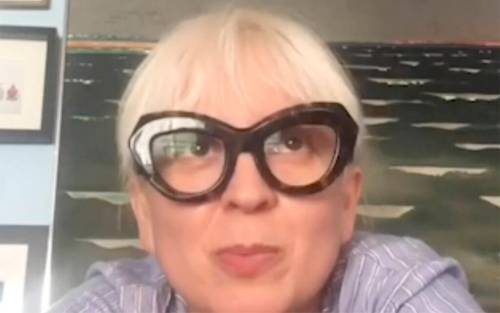
Messages between Epstein, the convicted sex offender who died by suicide in 2019, and journalists Michael Wolff and Landon Thomas Jr. are frequently chummy and, in one case, show Wolff giving Epstein advice on how to deal with the media —- a line journalists are taught not to cross. Wolff specializes in the “you are there” inside accounts that are possible with intensive reporting, though some of his work has been questioned.
People frequently see journalists in public settings, conducting an interview or asking questions at a news conference. Private phone calls, texts or messages — where reporters try to ingratiate themselves with sources who may not otherwise be inclined to give information — are inherently different. But ethical rules remain and are followed by most in American journalism.
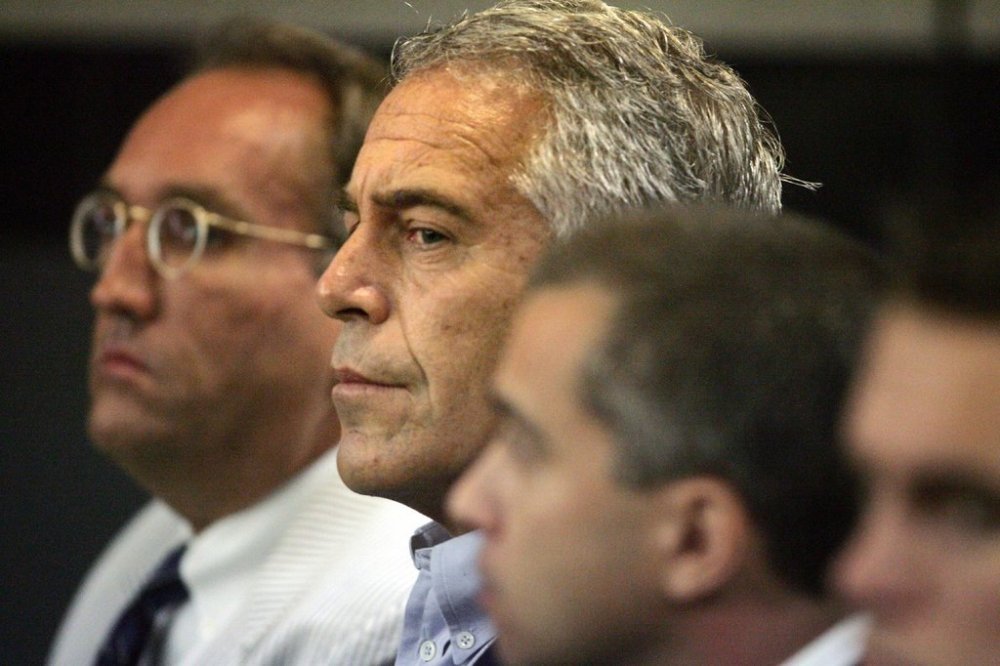
Wolff’s advice came in a December 2015 exchange, where the writer said he heard CNN was going to ask then-presidential candidate Donald Trump about his relationship with Epstein. If we could craft an answer for him, Epstein wondered, what would it be?
“I think you should let him hang himself,” Wolff replied. “If he says he hasn’t been on the plane or to the house, then that gives you a valuable PR and political currency. You can hang him in a way that potentially generates a positive benefit for you, or, if it really looks like he could win, you could save him, generating a debt.”
Advice on media relations for convicted sex offender
The exchange left some experts aghast.
Independence is vital for a journalist, and Wolff compromised it, said Dan Kennedy, a media writer and professor at Northeastern University.
Kathleen Bartzen Culver’s voice rises in anger just contemplating the example. Culver, director of the Center for Journalism Ethics at the University of Wisconsin, said there are plenty of ethical issues to maneuver every day, like whether a reporter should give $20 after interviewing a poor person who lost benefits during the government shutdown.
“Giving PR advice to a convicted sex offender isn’t one of them,” she said.
Wolff, a two-time National Magazine Award winner, wrote books like “Fire and Fury,” about the opening days of the first Trump administration, and “The Man Who Owns the News,” a biography of Rupert Murdoch. “Historically, one of the problems with Wolff’s omniscience is that while he may know all, he gets some of it wrong,” the late David Carr of The New York Times wrote in a review of the Murdoch book.
Wolff, who did not immediately return a message from The Associated Press, admitted on the “Inside Trump’s Head” podcast that some of the email messages were embarrassing. But he said his knowledge of the media offers “the kind of cachet that gives me a place at the table, which has gotten me the Epstein story, if anybody wanted to pay attention.”
At one point in 2016, Wolff turns the table, seeking counsel from Epstein on what he should ask during an upcoming interview with Trump. That’s a legitimate journalistic exercise, part of the reporting that goes into preparing for an interview.
A 2016 exchange with Epstein mixed a plea for an interview with some advice: “There’s an opportunity to come forward this week and talk about Trump in such a way that could garner you great sympathy and help finish him off. Interested?”
Wolff said on the podcast that part of his role is “play-acting” to get sources to reveal things they would not tell other people. And he took on his critics.
“These are not people that have written the kind of books that I have written,” he said, “and I often make the distinction between journalists who do what they do — daily reporters working for organizations, working within a very prescribed set of rules — and what I do. I’m a writer who manages to make relationships that let me tell a story in the ways that The New York Times or other very reputable journalistic organizations are unable to tell.”
A distinction that not every reader makes
Not everyone sees the difference when considering works of nonfiction. Culver cited journalism that took courage and skill to report and said, “I find it heartbreaking when that kind of work is sullied by this kind of garbage.”
Should a journalist act differently in public or private? They’re not supposed to. That explains why Connie Chung had a hard time living down her 1995 exchange with then-House Speaker Newt Gingrich’s mother. Gingrich initially ducked when Chung asked how her son felt about Hillary Clinton until Chung asked — on camera — “why don’t you just whisper it to me — just between you and me.”
Many of the exchanges between Epstein and the journalists are chatty, gossipy — seemingly harmless, yet not the sort of things one would like to see published years later. Northeastern’s Kennedy read some of the emails between Wolff and Epstein and said “it just seemed like kibbitzing with a child molester for no apparent purpose.”
In one email conversation, the former New York Times reporter Thomas mentions that he’s been getting calls from another journalist who is writing a book on Epstein. “He seems very interested in your relationship with the news media,” Thomas wrote. “I told him you were a hell of a guy :).”
Thomas also didn’t hide his feelings about Trump in one conversation — a personal opinion that most reporters learn to keep to themselves. “I am getting worried,” Thomas wrote in July 2016. “Is he ever going to implode?”
Relations between journalist and source: Step carefully
Journalists should take care to maintain boundaries, especially when dealing with people who are inexperienced with the media. There’s admittedly a fine line: A reporter needs a source’s trust, but it’s a form of deception if a source begins to think of the journalist as a friend who would never betray them.
People most commonly think of politics when considering bias in journalism. More frequently, bias shows up in relationships, whether a reporter likes or dislikes someone they are dealing with, Culver said.
“I advise my students to be human with their sources,” she said. “Not to be friendly or sweet, but to come at it with respect and understanding.”

Thomas stopped working at The Times in 2019 after editors discovered a violation of its ethical standards. National Public Radio reported that Thomas had solicited a $30,000 contribution from Epstein for a charity the journalist supported.
In one exchange that was widely noticed online, Epstein asked Thomas in 2015 if he would like photos of Trump and girls in bikinis taken in his kitchen. “Yes!!!” the reporter replied.
But The Times said no such photos were forthcoming.
___
David Bauder writes about the intersection of media and entertainment for the AP. Follow him at http://x.com/dbauder and https://bsky.app/profile/dbauder.bsky.socia l