Ottawa is ‘rebooting’ its relationship with the tech industry, advocates say
Advertisement
Read this article for free:
or
Already have an account? Log in here »
To continue reading, please subscribe:

Digital Subscription
One year of digital access for only $205*
- Enjoy unlimited reading on winnipegfreepress.com
- Read the E-Edition, our digital replica newspaper
- Access News Break, our award-winning app
- Play interactive puzzles
*First annual payment billed as $205.00 + GST for one year. This annual subscription will automatically renew at $233.00 + GST every 52 weeks (10% off the regular annual price of $259.35). Offer available to new and qualified returning subscribers only. Cancel any time.
To continue reading, please subscribe:
Add Free Press access to your Brandon Sun subscription for only an additional
$1 for the first 4 weeks*
- Enjoy unlimited reading on winnipegfreepress.com
- Read the E-Edition, our digital replica newspaper
- Access News Break, our award-winning app
- Play interactive puzzles
*Your next Brandon Sun subscription payment will increase by $1.00 and you will be charged $17.95 plus GST for four weeks. After four weeks, your payment will increase to $24.95 plus GST every four weeks.
Read unlimited articles for free today:
or
Already have an account? Log in here »
Hey there, time traveller!
This article was published 22/11/2025 (298 days ago), so information in it may no longer be current.
OTTAWA – Prime Minister Mark Carney told a business crowd in Montreal recently that the federal government got a bit of outside help on a major piece of innovation policy in the recently passed federal budget.
“We went to Shopify and said, ‘Can you help us redesign this process?’ Somewhat embarrassingly, they came back in 48 hours and said, ‘Do this.’ We looked at it for three months and then we did what they said,” he said to laughter in the room.
Carney was speaking to Chamber of Commerce of Metropolitan Montreal on Nov. 14 about the government’s scientific research and experimental development tax credit — shortened to SR&ED and pronounced a bit like “shred” in the tech community.

The prime minister bemoaned how inefficient and burdensome the process had become for the mostly small- and medium-sized businesses who lean on SR&ED to fund research and development to help bring new, innovative products to market.
But it was Shopify — the Ottawa-born e-commerce giant which serves small businesses but hasn’t been one itself for well over a decade — that offered the government a path forward as it seeks to tackle long-standing productivity issues among Canadian firms.
Tech sector players say the Carney Liberals have been receptive to the industry’s concerns since the spring election.
The SR&ED tax credit — which offers burgeoning tech firms both a significant source of funding and a notoriously cumbersome process — has emerged as a case study for that revitalized relationship.
Federal government records show the last fiscal year, the SR&ED program doled out roughly $4.5 billion in response to more than 22,000 applications from Canadian firms. The government does not publish a list of individual SR&ED recipients, but Budget 2025 noted 64 per cent of applicants are small- or medium-sized businesses.
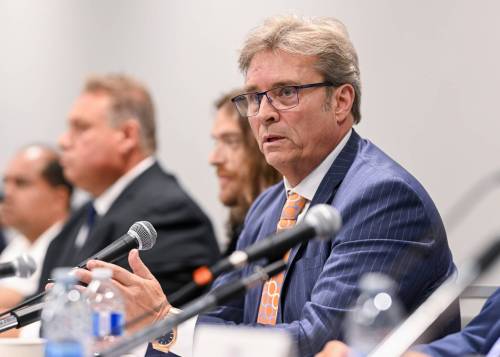
“SR&ED really is kind of the crown jewel in the government’s innovation programming,” said Ben Bergen, president of the Council of Canadian Innovators, a group that lobbies on behalf of Canada’s tech industry.
Shopify president Harley Finkelstein went on a rant at the Elevate tech conference in Toronto last month over how complicated it is to apply to SR&ED, and how that has given rise to a cottage industry of consultants helping businesses get their applications across the finish line.
The Council of Canadian Innovators says the result is that anywhere between a quarter to a third of every SR&ED dollar ends up going to consultants, or to cover financing costs to get advances on funding — and not to the companies themselves.
In early September, Finkelstein posted a memo about his SR&ED complaints to the website of Build Canada, a group with connections to former and current Shopify execs that encourages open debate on Canadian tech policy.
He told the Elevate crowd that he hand-delivered the memo to Finance Minister François-Philippe Champagne a few days earlier. He praised Champagne, calling him an “incredible minister” who “really does listen.”
Shopify did not respond to requests for comment for this story.
There’s plenty of overlap between the SR&ED proposals in the federal budget and Finkelstein’s Build Canada memo — including a pitch to offer SR&ED funding approval upfront, rather than as a rebate after a project has already gone forward.
Bergen said that small change could have a major effect on the kinds of projects firms are willing to take on, because it would assure them that they’re pre-approved for funding.
“Firms are now going to be taking potentially bigger bets in applying for that money if they know that they’re getting it up front rather than at the end,” he said. “It will actually spur different types of SR&ED claims that potentially are more dynamic and innovative.”
The budget says Ottawa is also doubling the annual limit for SR&ED expenditures to $6 million and plans to use AI to cut down on the administrative burden from Canada Revenue Agency audits of the program.
Modernizing SR&ED — a program that Bergen said hasn’t changed in roughly three decades — has been a focus of the Council of Canadian Innovators’ advocacy for years. Many of the program changes included in the budget were first proposed in the federal government’s 2024 fall economic statement, Bergen noted.
But after years to attempting to move the needle on SR&ED and other major innovation policy planks, he said there’s been a “relationship rebooting” at the federal level under Carney and Champagne.
When Carney praised Shopify for the SR&ED overhaul in the budget, Bergen said he interpreted that as a signal of more direct engagement with the tech industry.
“The relationship has been very positive and it’s been really one where consulting with industry has been really collaborative,” he said.
John Fragos, Champagne’s press secretary, said in a media statement that Ottawa undertook “broad consultation” with the industry and innovation experts to help meet the needs of Canada’s tech companies.
“We engaged with Shopify as a major homegrown technology leader, drawing on their experience to assist budget proposals that would help scale R&D in Canada and leverage Canada’s tech advantage,” he said.
Matt Malone, assistant professor at the University of Ottawa’s faculty of law, said it makes a lot of sense to engage with tech leaders who have first-hand experience of chafing against red tape.
Finkelstein’s Build Canada memo is a positive example of an effort to foster public debate on legislation, he argued.
“That’s what we need. We need to have open conversations. But the moment you start to have conversations where you’re seeking influence or you’re exercising influence, where there is a lack of transparency, that’s where problems emerge,” Malone said.
He gave the example of Cohere, a Toronto-based artificial intelligence company that signed a memorandum of understanding with Ottawa earlier this year to work on AI applications within the public service.
But that agreement didn’t cite any specific descriptions of how the government and the tech startup will work together and did not have a dollar figure attached.
“This is not how you do things. We have no idea how they’re being deployed across the federal public service,” Malone said.
Ottawa also has fallen behind on its obligations under the Lobbying Act, which requires a review every five years but hasn’t been touched since 2012, Malone pointed out.
Gaps remain in the legislation, he said, citing the fact that the Lobbying Act does not require executives who lobby government officials to register if it’s not part of their full-time duties.

“You want to be able to see what’s happening because otherwise we quickly turn into influences happening in corridors of power where you don’t know what’s going on, and that’s a concern,” Malone said.
Bergen said there’s more work to be done on tech policy within the government, particularly on sovereignty and ensuring that federal funding is helping truly domestic firms grow and thrive in a period of economic disruption.
He said the Council of Canadian Innovators will be working to build consensus across the tech industry so groups like his can offer the government a clear direction on policies beyond SR&ED.
“That’s really what’s required to not only build wealth and prosperity, but also what’s required to build sovereign capabilities,” he said.
This report by The Canadian Press was first published Nov. 22, 2025.