

MPs call on feds to bring back bill criminalizing coercive behaviour in relationships
Advertisement
Read this article for free:
or
Already have an account? Log in here »
To continue reading, please subscribe:
Digital Subscription
One year of digital access for only $1.44 a week*
- Enjoy unlimited reading on winnipegfreepress.com
- Read the E-Edition, our digital replica newspaper
- Access News Break, our award-winning app
- Play interactive puzzles
*Billed as $5.77 plus GST every four weeks. After 52 weeks, price increases to the regular rate of $19.95 plus GST every four weeks. Offer available to new and qualified returning subscribers only. Cancel any time.
To continue reading, please subscribe:
Add Free Press access to your Brandon Sun subscription for only an additional
$1 for the first 4 weeks*
- Enjoy unlimited reading on winnipegfreepress.com
- Read the E-Edition, our digital replica newspaper
- Access News Break, our award-winning app
- Play interactive puzzles
*Your next Brandon Sun subscription payment will increase by $1.00 and you will be charged $17.95 plus GST for four weeks. After four weeks, your payment will increase to $24.95 plus GST every four weeks.
Read unlimited articles for free today:
or
Already have an account? Log in here »
Hey there, time traveller!
This article was published 25/11/2025 (186 days ago), so information in it may no longer be current.
OTTAWA – MPs on the House of Commons status of women committee called on the federal government Tuesday to criminalize coercive behaviour in intimate relationships.
The committee members, representing multiple parties, issued a report following a committee study on the issue of coercive control.
“We know that coercive control is often part of intimate partner violence, and not always well-recognized by the public, the police and the courts,” said Conservative MP Marilyn Gladu.
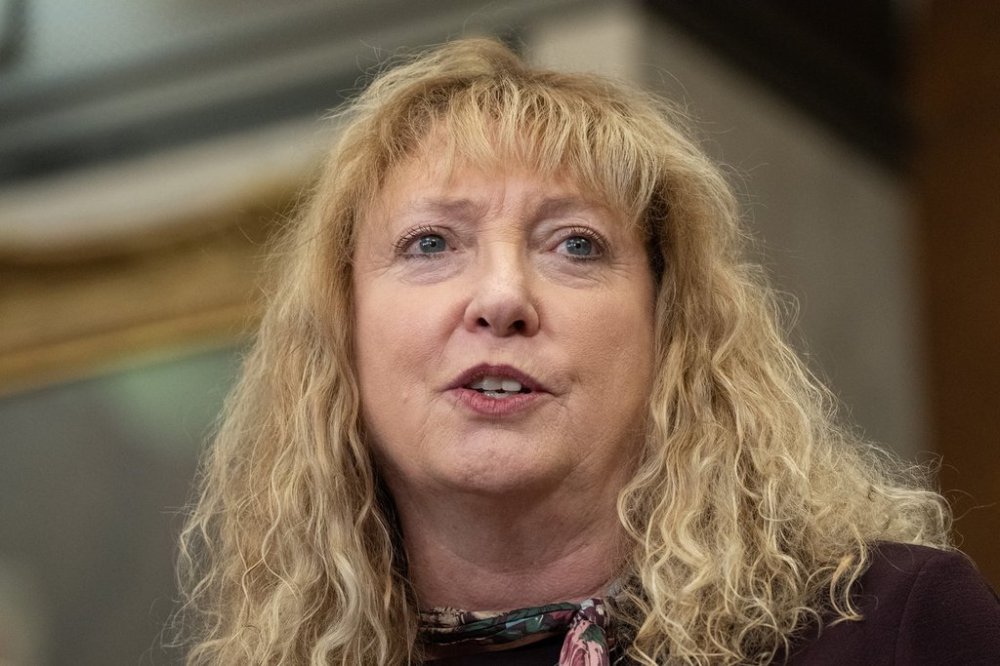
Coercive behaviour in relationships can include things like financial control, punishing pets, or isolating individuals, Gladu said. She called it “a key start to the escalation of violence against women.”
England, Scotland, Wales, Ireland and Australia have adopted legislation criminalizing coercive behaviour in recent years, the report says. It notes that while the Divorce Act refers to coercive control as a form of family violence, it doesn’t include a definition.
A private member’s bill from former NDP MP Laurel Collins to amend the Criminal Code to create a specific offence of coercive control passed the House of Commons before the last election but never made it through the Senate. MPs on the committee want that bill brought back.
The report released Tuesday also calls for training for people who interact with victims, such as police and justice system officials.
Gladu said criminalization and training go hand in hand “because we can’t have a law that the police and the judiciary don’t know how to implement.”
The report also calls for public education and awareness campaigns, and for the government to “recognize animal mistreatment as a form of coercive behaviour and train justice personnel as well as law enforcement to assess this during intimate partner violence investigations.”
Among other recommendations, it calls on the federal government to provide funding for victim supports.
“Addressing coercive control in Canada will not be accomplished through a single solution,” the report concludes.
“However, lessons learned from other jurisdictions and witness testimony indicate that legislative efforts towards criminalizing this behaviour, in combination with training and education opportunities targeted to different groups, as well as services provided to victims and survivors, would be positive steps towards supporting victims and survivors and addressing and preventing this behaviour in Canada.”
This report by The Canadian Press was first published Nov. 25, 2025.