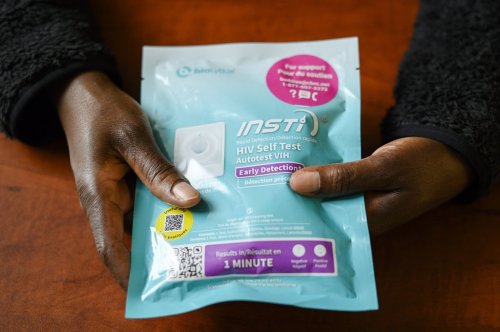
New HIV prevention guidelines say doctors should not be ‘gatekeeping’ PrEP
Advertisement
Read this article for free:
or
Already have an account? Log in here »
To continue reading, please subscribe:
Digital Subscription
One year of digital access for only $1.44 a week*
- Enjoy unlimited reading on winnipegfreepress.com
- Read the E-Edition, our digital replica newspaper
- Access News Break, our award-winning app
- Play interactive puzzles
*Billed as $5.77 plus GST every four weeks. After 52 weeks, price increases to the regular rate of $19.95 plus GST every four weeks. Offer available to new and qualified returning subscribers only. Cancel any time.
To continue reading, please subscribe:
Add Free Press access to your Brandon Sun subscription for only an additional
$1 for the first 4 weeks*
- Enjoy unlimited reading on winnipegfreepress.com
- Read the E-Edition, our digital replica newspaper
- Access News Break, our award-winning app
- Play interactive puzzles
*Your next Brandon Sun subscription payment will increase by $1.00 and you will be charged $17.95 plus GST for four weeks. After four weeks, your payment will increase to $24.95 plus GST every four weeks.
Read unlimited articles for free today:
or
Already have an account? Log in here »
Hey there, time traveller!
This article was published 30/11/2025 (328 days ago), so information in it may no longer be current.
A coalition of doctors across Canada is releasing a new guideline for prescribing medications that can prevent HIV infection, with a strong focus on increasing the promotion and awareness of the expanding class of drugs.
The clinical guideline published Monday in the Canadian Medical Association Journal provides 31 recommendations and 10 good practices for prescribing antiretroviral medication before and after a potential HIV exposure to prevent infection.
Lead author Dr. Darrell Tan said 19 health-care providers volunteered their time over the last three years to review the latest research and write the new guidelines, as the range of available pre-exposure prophylaxis (PrEP) and postexposure prophylaxis (PEP) options has expanded since the last guidance was released in 2017.
The recommendations are aimed at reducing the rise of HIV infections in Canada over the last several years, in pursuit of the country’s goal to eliminate the sexually transmitted infection as a public health threat by 2030.
“We’re not at all on track to reach that ambitious target,” said Tan, a physician-scientist at St. Michael’s Hospital.
New data released by the Public Health Agency of Canada on Monday said there were 1,826 new HIV diagnoses in 2024.
The federal health minister called this a “small decline” after several years of increases in Canada.
“But we know HIV remains a concern in Canada – with disproportionate impacts felt among populations experiencing health and social inequities,” Marjorie Michel said in a statement with the minister of Indigenous services Monday.
The new numbers did not include data from Quebec because it was not provided by the province, which had 476 new cases in 2023.
The 2024 data breaks from the steady increase seen in new cases since 2021, when there were more than 1,450 people newly diagnosed. In 2022 there were 1,800 first-time diagnoses and in 2023 there were 2,434.
Dr. Sean Rourke, a scientist with the MAP Centre for Urban Health Solutions at St. Michael’s Hospital, said the 2024 decrease is not significant and the numbers in Manitoba and Saskatchewan are still three or four times the national rate.
“I think PrEP has an incredible potential, but we’re not seeing the benefits of that yet.”
WHO IS IMPACTED?
Tan said “deep historical and structural inequities” have positioned specific populations at a disadvantage when it comes to accessing PrEP and PEP.
The clinical guideline said more than one-third of new infections are in women, 38 per cent are in gay, bisexual, and other men having sex with men, and 25 per cent are in people who inject drugs.
Infections have heavily affected some Indigenous communities, particularly in the Prairies.
Tan said it’s “disappointing” that national, provincial, regional and territorial authorities have not promoted more public health messaging on PrEP and PEP to counteract the stigma that can surround these medications.
“Almost everyone in Canada knows unequivocally that public health authorities think that influenza vaccination is something that they would support,” Tan said.
“It’s a failure of public health and authorities to push the message out in a positive way.”
The Public Health Agency of Canada says it provides national leadership for the prevention and control of sexually transmitted and blood-borne infections through its guide on the subject for health professionals.
In it, the federal agency has referred to HIV PrEP guidelines developed by the Canadian Institutes of Health Research’s Canadian HIV Trials Network.
THE GUIDELINE
The new guideline states that a health provider should prescribe PrEP to someone who is seeking it, even if they don’t disclose their HIV risk factors, rather than doctors “gatekeeping” access.
“There are many reasons people may not disclose HIV risk behaviours to health care providers, including shame, medical mistrust, and structural barriers linked to homophobia, transphobia, racism, colonial practices, HIV stigma, and other forms of discrimination,” the guideline states.
Dr. Ameeta Singh, a member of the guideline committee, said this is aimed at lowering the barrier to accessing PrEP.
Doctors across specialties, such as primary care and reproductive health, should also actively offer the medication if they identify risk, such as condomless sex, previous bacterial sexually transmitted infection, a higher number of partners and injection drug-use.
The expanding range of available PrEP choices is also addressed, and the guideline outlines appropriate scenarios in which they should be offered. In addition to daily and “on demand” pills, Health Canada approved a long-acting injectable medication in 2024.
This long-acting option is taken every two months, which Singh said is a particularly beneficial option for people who inject drugs and have unstable housing, as it would be challenging to take a daily pill.
“This is where injectable agents have huge potential,” said Singh, a clinical professor in the division of infectious diseases at the University of Alberta.
She said the next step is for policy makers to make implementing this guidance a priority.
ACTION
Rourke said he would have liked the guideline to more heavily address how to reach communities with the highest HIV rates — particularly Indigenous people in the Prairies.
Indigenous Peoples represented 19.6 per cent of new HIV diagnoses in 2023 (where race/ethnicity was reported), and only five per cent of the population, according to Communities, Alliances and Networks, which addresses HIV issues within an Indigenous context.
“There’s nothing in the paper about how you reach these people,” he said.
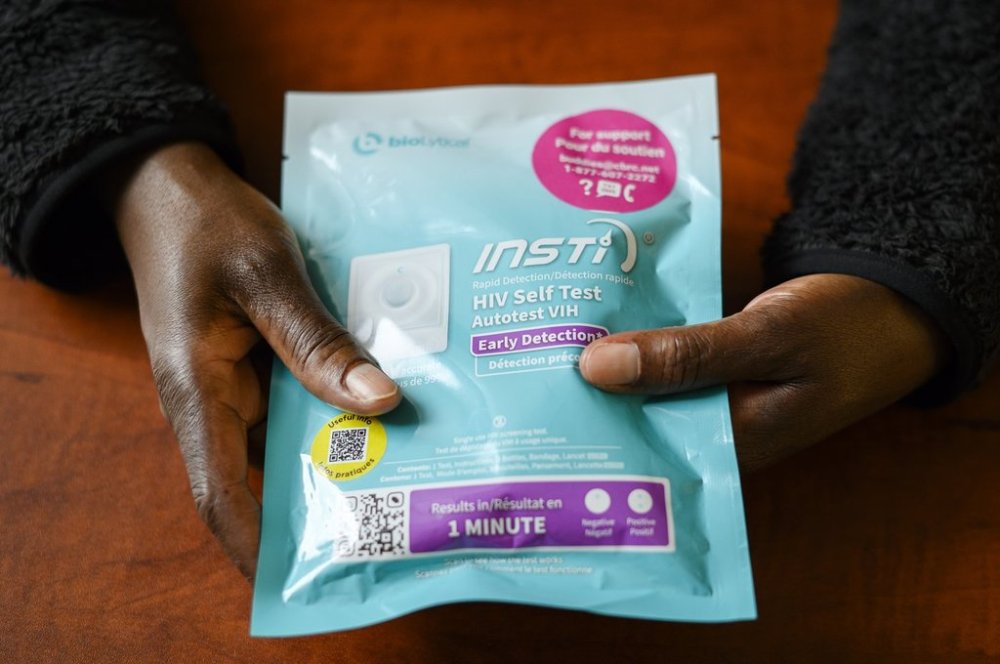
Rourke and a team of HIV advocates have been partnering with Indigenous leaders to reach people in Canada’s hardest hit communities. An HIV testing program they launched in March for underserved and remote communities in the Prairies has tested more than 1,500 people.
“Those that are the most vulnerable. It’s impacting them, three or four times more than it would have otherwise because other things have happened and the safety net is not there,” he said.

Rourke said solutions like this testing program already exist to address well-established health inequities.
However, he said, “It doesn’t happen on its own. And that’s the problem.”
This report by The Canadian Press was first published Dec. 1, 2025.
Canadian Press health coverage receives support through a partnership with the Canadian Medical Association. CP is solely responsible for this content.
Note to readers:This is a corrected story. A previous version misstated that 19 physicians were involved in writing the guidelines, when in fact it was 19 health-care providers.
Related Articles
Manitoba declares public health emergency over HIV rising rates
Advertisement Advertise With Us
Advertisement Advertise With Us