

Manitoba declares public health emergency over HIV rising rates
Cases more than three times higher than rest of Canada

Advertisement
Read this article for free:
or
Already have an account? Log in here »
To continue reading, please subscribe:

Digital Subscription
One year of digital access for only $205*
- Enjoy unlimited reading on winnipegfreepress.com
- Read the E-Edition, our digital replica newspaper
- Access News Break, our award-winning app
- Play interactive puzzles
*First annual payment billed as $205.00 + GST for one year. This annual subscription will automatically renew at $233.00 + GST every 52 weeks (10% off the regular annual price of $259.35). Offer available to new and qualified returning subscribers only. Cancel any time.
To continue reading, please subscribe:
Add Free Press access to your Brandon Sun subscription for only an additional
$1 for the first 4 weeks*
- Enjoy unlimited reading on winnipegfreepress.com
- Read the E-Edition, our digital replica newspaper
- Access News Break, our award-winning app
- Play interactive puzzles
*Your next Brandon Sun subscription payment will increase by $1.00 and you will be charged $17.95 plus GST for four weeks. After four weeks, your payment will increase to $24.95 plus GST every four weeks.
Read unlimited articles for free today:
or
Already have an account? Log in here »
The Manitoba government declared HIV spread a public health emergency Thursday as case counts continue to escalate.
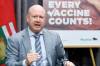
Dr. Brent Roussin, chief provincial public health officer, made the declaration at a news conference, noting cases have steadily increased over the past six years.
“In 2024, we reported a rate of 19.5 cases per 100,000 (people), which is roughly 3½ times that of Canada’s rate of 5.5,” Roussin said.
Manitoba had 328 new cases of human immunodeficiency virus in 2025, a sharp increase from the 90 tracked in 2019.
Dr. Brent Roussin, Manitoba’s chief public health officer (Ruth Bonneville / Free Press files)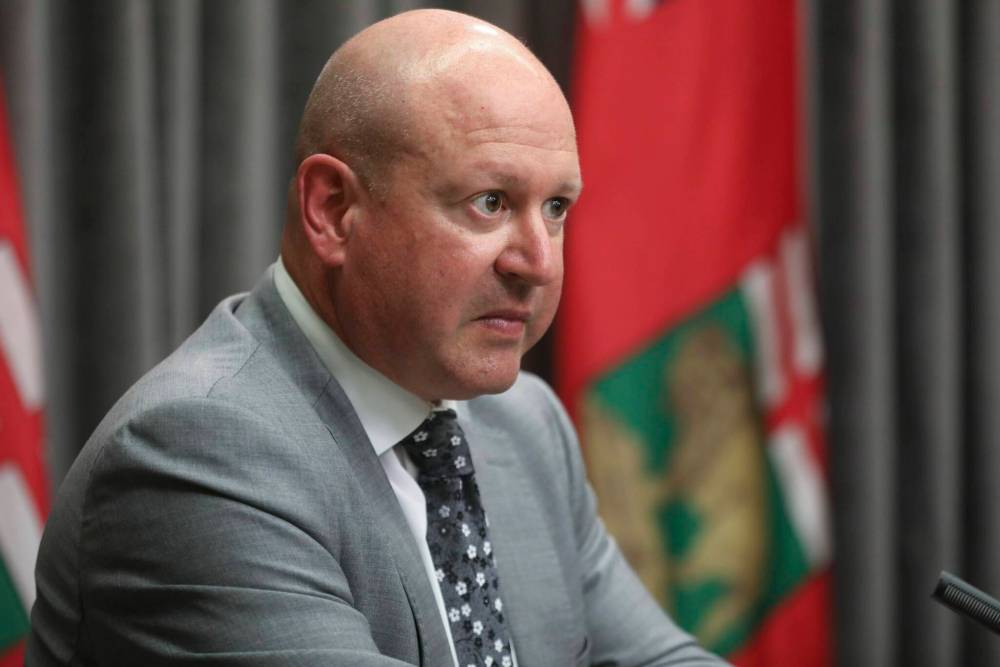
This year, the province appears to be following 2025’s trajectory despite efforts to reduce the number of infections, Roussin said.
Describing the situation as an emergency will “raise that level of urgency (and) raise our co-ordination,” he said, adding it will lead to greater public awareness, options for increased testing and more collaboration with organizations.
The announcement stemmed from a December meeting of government representatives, Indigenous leaders, community groups and health-care organizations. A steering committee, led by Manitoba Health, has been formed to focus on HIV prevention and supports for communities with higher rates of the virus.
Roussin said Indigenous groups are disproportionately affected.
“We want to support messaging at the community level,” Roussin said. “We need culturally appropriate, culturally safe messaging that will be developed by the communities.”
“We want to support messaging at the community level.”
The Prairie Mountain and Northern regional health authorities have the most cases per capita. (Prairie Mountain had 90 new cases in 2025; the Northern region had 17.) Winnipeg has the most overall cases.
Health professionals will increase HIV testing, including through blood tests and non-traditional formats such as self-tests, Roussin said, adding he expects there will be broader access to pre-exposure prophylaxis, a medication used to prevent the virus in high-risk individuals.
The medication is free through the Manitoba HIV medications program. Part of the work is ensuring people are aware of this, Roussin said.
“We find that in Manitoba, it’s underutilized, and it’s underutilized in some of the most high-risk groups,” he said.
Women, who account for more than half of new cases, access “very little” of the prevention medications, Roussin said.

Most newly diagnosed women are between the ages of 20 and 40, increasing the risk of babies being born with HIV. Manitoba counted two perinatal cases in 2024 and 2025.
HIV transmission in the province is linked to injection drug use, homelessness, mental-health issues and a rise in other sexually transmitted and blood-borne infections, Roussin said. Wraparound supports are needed for people who have the virus, he said.
The province’s planned supervised consumption site will connect people needing HIV medication to health-care providers, Housing, Addictions and Homelessness Minister Bernadette Smith told reporters.
But doctors — and HIV treatment — are hard to access in rural and northern communities, an executive with a northern wellness organization said.
“I really do believe that the HIV outbreak is worse than we know,” said Michelle Monkman, interim chief executive of Keewatinohk Inniniw Minoayawin. “It’s just a lack of access to testing that’s really happening.”
“I really do believe that the HIV outbreak is worse than we know.”
The organization said in a statement that care has been hampered by the provincial and federal governments, who have placed health-care responsibilities on each other.
Health Minister Uzoma Asagwara disputed that, saying Ottawa has been “very responsive,” and the two levels of government regularly communicate about HIV.
“What we’re saying now with this declaration is that we need more support,” Asagwara said. “We need a greater partnership here.”
The government has asked for more support for additional community testing, Asagwara said.
Canada will likely be part of the steering committee, the minister added. Details on steering committee membership weren’t available Thursday.
Dr. Laurie Ireland, the Manitoba HIV program’s primary care lead, expects to help a committee build tools for health-care providers.
“Everyone should have an HIV test regularly,” Ireland said. “Anyone who has sex is potentially at risk.”

Unprotected sex and sharing drugs can transmit HIV, the virus that leads to AIDS. It’s not curable, but when treated it can become undetectable on tests and won’t spread through sex.
Tory health critic Kathleen Cook said she’ll keep an eye on whether the emergency status will lead to more people accessing supports.
“Maybe (that involves) filing some freedom of information requests to see how many more Manitobans access testing services,” Cook said. “That would be one of the measurable outcomes, I think, that we could hope to see.”
Manitoba has funnelled an extra $8 million annually into HIV prevention and care since 2023.
No new money has been committed, Roussin said Thursday, adding the province will be “working with and bringing our federal partners into this.”
Ottawa is funding seven projects through an HIV and hepatitis C fund from 2022 through 2027. The nearly $8 million is part of the Public Health Agency of Canada’s role in working “closely” with Manitoba on HIV spread, spokesperson Karine LeBlanc wrote in a statement.
gabrielle.piche@winnipegfreepress.com
Gabrielle Piché reports on business for the Free Press. She interned at the Free Press and worked for its sister outlet, Canstar Community News, before entering the business beat in 2021. Read more about Gabrielle.
Every piece of reporting Gabrielle produces is reviewed by an editing team before it is posted online or published in print — part of the Free Press‘s tradition, since 1872, of producing reliable independent journalism. Read more about Free Press’s history and mandate, and learn how our newsroom operates.
Our newsroom depends on a growing audience of readers to power our journalism. If you are not a paid reader, please consider becoming a subscriber.
Our newsroom depends on its audience of readers to power our journalism. Thank you for your support.
Gabrielle Piché reports on business for the Free Press. She interned at the Free Press and worked for its sister outlet, Canstar Community News, before entering the business beat in 2021. Read more about Gabrielle.
Every piece of reporting Gabrielle produces is reviewed by an editing team before it is posted online or published in print — part of the Free Press‘s tradition, since 1872, of producing reliable independent journalism. Read more about Free Press’s history and mandate, and learn how our newsroom operates.
Our newsroom depends on a growing audience of readers to power our journalism. If you are not a paid reader, please consider becoming a subscriber.
Our newsroom depends on its audience of readers to power our journalism. Thank you for your support.
Related Articles
Combination of social, health problems in province blamed for increase in number of HIV cases Oral HIV self-test approved for sale, advocates say it's key to elimination



Advertisement Advertise With Us
Advertisement Advertise With Us
History
Updated on Thursday, May 7, 2026 12:51 PM CDT: Photo changed.
Updated on Thursday, May 7, 2026 2:20 PM CDT: Adds details, comments from Marion Willis
Updated on Thursday, May 7, 2026 6:20 PM CDT: Adds quotes, details. Updates graphic.