

Protecting nature, culture and Churchill’s tourism economy
Advertisement
Read this article for free:
or
Already have an account? Log in here »
To continue reading, please subscribe:
Monthly Digital Subscription
$0 for the first 4 weeks*
- Enjoy unlimited reading on winnipegfreepress.com
- Read the E-Edition, our digital replica newspaper
- Access News Break, our award-winning app
- Play interactive puzzles
*No charge for 4 weeks then price increases to the regular rate of $19.00 plus GST every four weeks. Offer available to new and qualified returning subscribers only. Cancel any time.
Monthly Digital Subscription
$4.75/week*
- Enjoy unlimited reading on winnipegfreepress.com
- Read the E-Edition, our digital replica newspaper
- Access News Break, our award-winning app
- Play interactive puzzles
*Billed as $19 plus GST every four weeks. Cancel any time.
To continue reading, please subscribe:
Add Free Press access to your Brandon Sun subscription for only an additional
$1 for the first 4 weeks*
*Your next subscription payment will increase by $1.00 and you will be charged $16.99 plus GST for four weeks. After four weeks, your payment will increase to $23.99 plus GST every four weeks.
Read unlimited articles for free today:
or
Already have an account? Log in here »
Churchill’s marine environment stands on the edge of profound change. Government investment is accelerating to transform the Port of Churchill into a year-round shipping hub. Without careful planning, the very wildlife that makes this region globally renowned could be irreparably harmed.
Western Hudson Bay is one of Canada’s most ecologically important — and vulnerable — marine regions. These waters host tens of thousands of beluga whales each summer, are home to the world’s most famous polar bear population and provide a critical stopover for migratory birds linking ecosystems across continents. The region’s wildlife is integral to Indigenous cultures and forms the backbone of Churchill’s world-class tourism economy.
In 2018, Parks Canada proposed establishing a National Marine Conservation Area in Western Hudson Bay. Since then, 12,000 Canadians and the Town of Churchill have sent written correspondences to the federal government urging it to launch the long-overdue feasibility study for the conservation area.
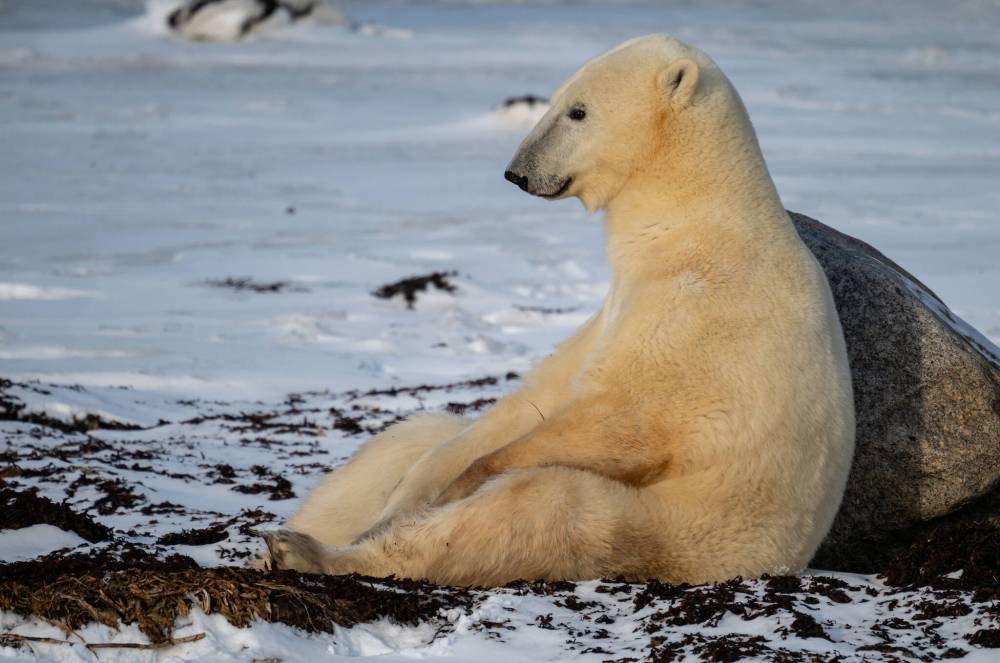
Clive Jackson/File
A polar bear near Churchill. Polar bears can’t speak for themselves, but Canadians can advocate for a conservation area on their behalf.
Manitoba is now stepping up. The province has committed to partnering with Ottawa on the study and, in the throne speech, allocated funds to support the work. This should be the signal the federal government needs to finally proceed — because with major port upgrades and expanded shipping on the horizon, delay is no longer an option.
Manitoba has pledged tens of millions of dollars to upgrade the Hudson Bay Railway, modernize port equipment and conduct ice-breaking studies to support year-round operations. The federal government has already contributed $175 million to position the port as a strategic trade corridor for critical minerals, agricultural products and potentially liquefied natural gas — a proposal generating intense debate due to environmental risks.
Experiences from across the Arctic and subarctic show what rising marine traffic means for fragile ecosystems. More ships create more underwater noise, masking the calls of belugas that depend on sound to navigate, communicate and protect their young. Increased traffic raises the risk of vessel strikes and hazardous cargo spills. More industrial activity adds stress to a marine environment already strained by rapid climate warming and sea-ice loss.
The question is no longer whether development will occur, it already is. The question is whether development will be guided by conservation from the start, or whether attempts at protections will be made after much has been lost.
A national marine conservation area is essential to getting this right.
Such a conservation area is not a no-go zone. It is a collaborative model built with local regional communities and stakeholders. These areas allow for multiple uses, including shipping, research, tourism and fishing, while ensuring the most sensitive habitats receive the strongest safeguards. Zones can limit vessel speeds, apply noise-reduction measures and protect migration routes based on ongoing monitoring. In western Hudson Bay, a conservation area would provide what this moment demands: responsible planning that puts conservation at the heart of decision-making.
Examples across Canada show that marine protection strengthens, rather than restricts, economic opportunity. In British Columbia, the Gwaii Haanas conservation area supports world-class tourism while safeguarding whales and dolphins. In Quebec, the Saguenay–St. Lawrence Marine Park creates local jobs in research and stewardship while protecting one of Canada’s most sensitive marine corridors.
Churchill and regional communities deserve the same success.
The long-awaited feasibility assessment for a western Hudson Bay conservation area would be a constructive, community-driven process exploring key questions: How do we balance diverse interests? Which areas are most important to protect? What governance structures are needed? What economic opportunities could emerge from a protected area?
Work completed by Mushkegowuk Council in James Bay shows how transformative such a process can be. Their feasibility assessment involved elders, land users and local leaders in mapping cultural ties, wildlife habitat and development pathways. A similar approach in western Hudson Bay would ensure the resulting plan reflects those with the deepest ties to the region — Indigenous Peoples, Churchill residents and local commercial stakeholders.
The federal government needs only to say “go.” Otherwise, we will continue to watch studies for more ice-breaking and more shipping, while the proposal to protect the very waters those ships traverse remains stalled.
That is backwards.

Belugas cannot speak in cabinet meetings. Polar bears do not write letters. Migratory birds cannot ask for quieter, cleaner shorelines. But Canadians can.
Churchill’s future can include sustainable trade, strong local economies and year-round global connections. But it must also include thriving whales, resilient bears, healthy bird populations and the cultures and livelihoods that depend on them.
The federal government must immediately begin the feasibility assessment for a western Hudson Bay national marine conservation area, before further investment locks in development without conservation in the blueprint.
The clock on western Hudson Bay is already ticking. The time to act is now.
Ron Thiessen is executive director of the Manitoba chapter of the Canadian Parks and Wilderness Society (CPAWS).