

What to know about Somalia as Trump wants Somalis in the US to leave
Advertisement
Read this article for free:
or
Already have an account? Log in here »
To continue reading, please subscribe:

Digital Subscription
One year of digital access for only $205*
- Enjoy unlimited reading on winnipegfreepress.com
- Read the E-Edition, our digital replica newspaper
- Access News Break, our award-winning app
- Play interactive puzzles
*First annual payment billed as $205.00 + GST for one year. This annual subscription will automatically renew at $233.00 + GST every 52 weeks (10% off the regular annual price of $259.35). Offer available to new and qualified returning subscribers only. Cancel any time.
To continue reading, please subscribe:
Add Free Press access to your Brandon Sun subscription for only an additional
$1 for the first 4 weeks*
- Enjoy unlimited reading on winnipegfreepress.com
- Read the E-Edition, our digital replica newspaper
- Access News Break, our award-winning app
- Play interactive puzzles
*Your next Brandon Sun subscription payment will increase by $1.00 and you will be charged $17.95 plus GST for four weeks. After four weeks, your payment will increase to $24.95 plus GST every four weeks.
Read unlimited articles for free today:
or
Already have an account? Log in here »
Hey there, time traveller!
This article was published 03/12/2025 (278 days ago), so information in it may no longer be current.
U.S. President Donald Trump has called Somali immigrants living in the United States “garbage” and wants them to leave, claiming without evidence that “they contribute nothing.”
The crude language came Tuesday after a person familiar with the planning said federal authorities were preparing an immigration enforcement operation in Minnesota primarily focusing on Somali immigrants living unlawfully in the United States. Almost 58% of the Somalis in Minnesota were born in the U.S. And of the foreign-born Somalis there, 87% are naturalized U.S. citizens.
Here’s a look at Somalia, which is also one of the countries where the Trump administration this week paused all immigration applications. The country’s prime minister, asked at a public event Wednesday about Trump’s statements, did not comment.
Over three decades of war
Somalis have been fleeing the Horn of Africa nation for decades, ever since the fall of dictator Siad Barre led to clashes between warlords, wider civil war and the rise of the al-Qaida-linked al-Shabab extremist group.
The widespread insecurity has sent millions of Somalis fleeing within the country or into neighboring ones. Many waited for years in remote refugee camps in places like Kenya before a chance to immigrate to the U.S. or elsewhere. Many others remain in those camps.
Inside Somalia, the current threat remains primarily from al-Shabab, which holds some rural areas and periodically targets the capital, Mogadishu, with devastating attacks. A truck bombing in the heart of Mogadishu in 2017 killed well over 100 people. Another in 2019 killed dozens more. Targets have also included the presidential palace and hotels.
For decades, there was no U.S. Embassy in Somalia because of the insecurity. The embassy returned in 2019, locating itself in a highly fortified seaside compound around the Mogadishu airport where other diplomatic or humanitarian offices are found.
Somalia’s fragile federal government in recent years has been involved in what its president has called “total war” against al-Shabab. But the extremist group remains resilient amid the country’s complex clan dynamics, with some arms coming in from the Middle East via the Gulf of Aden.
The overall instability in Somalia helped to create the phenomenon of Somali pirates, who earlier this month hijacked a commercial vessel on the Indian Ocean for the first time in a year and a half, raising fears about a resurgence.
For many, a struggle to survive
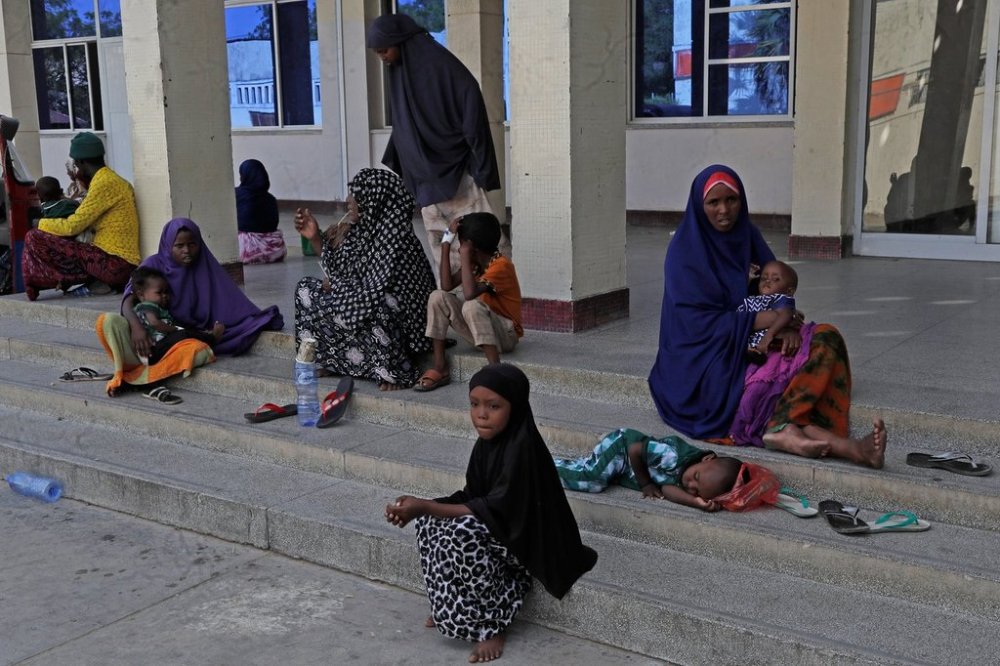
While Mogadishu has shown some signs of a revival, often driven by Somali returnees bringing investment and ideas, much of the country’s population of about 19 million faces grim circumstances. The widespread insecurity has long limited rebuilding and investment.
Somalia continues to have one of the world’s weakest health care systems, according to the World Health Organization and other partners. And now longtime donors like the United States and Britain have been pulling back, especially with the Trump administration’s dismantling of the U.S. Agency for International Development this year.
The Associated Press recently visited rare public hospitals remaining in Mogadishu that some Somalis must trek for days to reach for care. Many rural areas have little assistance. The ones under the control of al-Shabab may have none.
A harsh and changing climate
As Africa stands to suffer the most from climate change, Somalia is one of the most visible examples.
Droughts periodically kill thousands of people along with the camels and other livestock that help keep communities and economies alive. Floods rip through river valleys. Indian Ocean cyclones roar onto the coastline, the longest in Africa. From time to time, locusts devour landscapes’ vegetation.
“In Somalia, climate change and conflict are increasingly intertwined,” the International Crisis Group has noted, pointing out that al-Shabab’s fighters use access to water as another means to “tax” residents in vulnerable communities. In some cases during the most recent yearslong drought, al-Shabab destroyed water infrastructure, infuriating communities.