Fact File: ‘Fake snow’ that doesn’t melt when burned has scientific explanation

Advertisement

Advertise with us

Several videos posted online last week showed people burning snow with a lighter and questioning why the snow turned black and didn't seem to melt. Some social media users claimed the snow was fake and "geo-engineered." 

Read this article for free:


or

Already have an account? Log in here »

To continue reading, please subscribe:

Subscribe and receive a limited-edition Free Press branded hat or tote.

Digital Subscription

One year of digital access for only $205*

  • Enjoy unlimited reading on winnipegfreepress.com
  • Read the E-Edition, our digital replica newspaper
  • Access News Break, our award-winning app
  • Play interactive puzzles

*First annual payment billed as $205.00 + GST for one year. This annual subscription will automatically renew at $233.00 + GST every 52 weeks (10% off the regular annual price of $259.35). Offer available to new and qualified returning subscribers only. Cancel any time.

To continue reading, please subscribe:

Add Free Press access to your Brandon Sun subscription for only an additional

$1 for the first 4 weeks*

  • Enjoy unlimited reading on winnipegfreepress.com
  • Read the E-Edition, our digital replica newspaper
  • Access News Break, our award-winning app
  • Play interactive puzzles
Start now

*Your next Brandon Sun subscription payment will increase by $1.00 and you will be charged $17.95 plus GST for four weeks. After four weeks, your payment will increase to $24.95 plus GST every four weeks.

Hey there, time traveller!
This article was published 09/12/2025 (285 days ago), so information in it may no longer be current.

Several videos posted online last week showed people burning snow with a lighter and questioning why the snow turned black and didn’t seem to melt. Some social media users claimed the snow was fake and “geo-engineered.” 

A chemistry professor who researches ice and snow says the snow is real. The black marks are from the lighter’s soot, and the snow doesn’t look like it’s melting because it’s turning from a solid to a gas without a liquid stage in between, a process called sublimation. 

THE CLAIM

Snow is blown into a hill at the Angrignon snow deposit site in Montreal on Friday, Feb. 21, 2025. Responding to viral social media posts, a Canadian researcher says there's a scientific explanation behind snow that doesn't appear to melt when put to a flame. THE CANADIAN PRESS/Christinne Muschi

As snowy weather descends on the East Coast and other parts of North America, social media users are taking to various platforms to describe what they view as a strange phenomenon affecting their snow. 

In the videos, people take fallen snow from outside, form a snowball, and take a lighter to the snow. They observe that the snow appears to take on black “burn” marks but doesn’t seem to be melting.

“FYI — Snow should melt & it certainly shouldn’t turn black,” one poster wrote on the X platform, formerly Twitter, whose accompanying video of a woman burning a snowball earned around 1.8 million views. 

Others who tried similar experiments posted their results to Facebook and TikTok and made similar remarks about the “burnt” snow and its seeming resistance to melting.

“It’s disappearing but there’s no water going anywhere. Where’s the water?” a woman asks as she holds her snowball to the flame. 

The X users and several commenters made comments about “geo-engineered snow,” suggesting the flame-resistant snow was unnatural or man-made. 

THE FACTS

There are a few reasons the snowballs in the video might appear to be resistant to melting under the lighter’s flame, said Tara Kahan, a professor in the department of chemistry at the University of Saskatchewan who researches pollutants in ice and snow. 

One is snow metamorphism, where as temperature increases, the air in the space between snow crystals gets replaced by melted water, so it doesn’t look as if the snow is melting even though it is. 

Another is sublimation, which is when a substance goes straight from a solid to a gas state without a liquid state in between. 

“So instead of melting first and then evaporating, it just essentially disappears. So you don’t see the water. If the snow isn’t as tightly packed, what you would see is it would look like the snowball was shrinking,” Kahan said. 

Kahan said she and her research team tried the snow experiment outside with two different lighters and packed it tightly. 

“We didn’t see what looked like a lot of melting. But if you look carefully, or if you had a bit that was sort of sticking out a little bit, so it wasn’t quite as packed as the rest — that part would immediately sort of shrink,” she said. 

So why did the snowballs in the videos appear to “burn” and turn black?

That’s because the soot from the butane used in many lighters is transferring onto the snowballs, Kahan said. 

“It’s actually the soot in the flame that’s getting really hot and then emitting light. If you didn’t have soot you wouldn’t see the flame. When you hold a lighter to anything, whether it’s snow or glass or something else, you will see it turn black because you’re depositing soot on it,” she said.

Claims about the melt-resistant or scorched snow aren’t new. They usually crop up on social media in the winter as people come across the supposed phenomenon and test it out themselves. 

Science communicators from Neil Degrasse Tyson to Hank Green have debunked the myth in the past. 

Kahan said she understands if people feel concerned about their snow being contaminated.

“Snow can be polluted, just like water can be polluted,” she said. 

But she emphasized that what people are seeing is natural snow, and there is a scientific explanation behind the way it acts and reacts. 

This report by The Canadian Press was first published Dec. 9, 2025.

Report Error Submit a Tip

More Stories

Desperate Poilievre wants Canadians to believe the sky is falling when it’s just cloudy outside

Tom Brodbeck 5 minute read Preview

Desperate Poilievre wants Canadians to believe the sky is falling when it’s just cloudy outside

Tom Brodbeck 5 minute read Friday, Sep. 18, 2026

Pierre Poilievre has a problem.

Canadians just don’t seem to be paying much attention to him anymore.

So, naturally, the Conservative Opposition leader has decided to turn up the volume.

At a recent party caucus retreat in Penticton, B.C., Poilievre delivered the familiar message: Canada is in trouble, Canadians are hurting and the Liberal government is making everything worse.

Read
Friday, Sep. 18, 2026

A life’s story: activist, educator, organizer knew the true meaning of community

Janine LeGal 7 minute read Preview

A life’s story: activist, educator, organizer knew the true meaning of community

Janine LeGal 7 minute read Yesterday at 3:00 AM CDT

Somewhere between a love for sharing stories and a love of community connections, Michael (Mike) Maunder lived his life. Giving voice to people and neighbourhoods was a passion for the natural-born community organizer.

An author, teacher and principal, Maunder lived in a one-bedroom apartment in West Broadway and devoted himself to community development, education and neighbourhood renewal.

He maintained a connection with Augustine United Church, whose commitment to social justice he appreciated, volunteered at the Sandy-Saulteaux Spiritual Centre, and found comfort in a Buddhist prayer community.

Maunder died on July 15 at the age of 80.

Read
Yesterday at 3:00 AM CDT

Not falling back means time loop remains unclosed

Jen Zoratti 4 minute read Yesterday at 2:01 AM CDT

I demand restitution. Where’s my hour?

In the traditional fall-back, spring-forward time change set up — you know, ol’ trusty that’s been effect for lo these 63 years — we lost an hour in the spring that we got back in the fall.

That was the social contract: you commit to feeling like you’re on cold medication for a week in March because you know a glorious extra hour of sleep will be returned to you in November. (Unless, of course, you have little kids, but look: we all make our choices.)

Well, that transaction, flawed as it was, isn’t happening this year. That hour you sacrificed to the sun gods in the spring? Gone. Not coming back. We’ve sprung forward and we shan’t be falling back — not in November, and (possibly) not ever. The scale shall remain unbalanced and the loop shall remain unclosed as Manitoba has adopted permanent daylight time.

National Black Canadians Summit celebrates culture, combats racism

Gabrielle Piché 4 minute read Preview

National Black Canadians Summit celebrates culture, combats racism

Gabrielle Piché 4 minute read Yesterday at 6:06 PM CDT

Despite the event’s name — the National Black Canadians Summit — Bruce Miller felt he should attend.

He booked a ticket. And so, this weekend, the Indigenous Manitoban joined roughly 1,500 people flocking to the RBC Convention Centre.

It’s a full schedule — addresses from a former Canadian governor general, sessions on Black mental health and anti-Black racism.

The annual event draws politicians, artists and other professionals from across the country.

Read
Yesterday at 6:06 PM CDT

AC/DC fans power up with pre-show pop-up

By Sheldon Birnie 3 minute read Preview

AC/DC fans power up with pre-show pop-up

By Sheldon Birnie 3 minute read Friday, Sep. 18, 2026

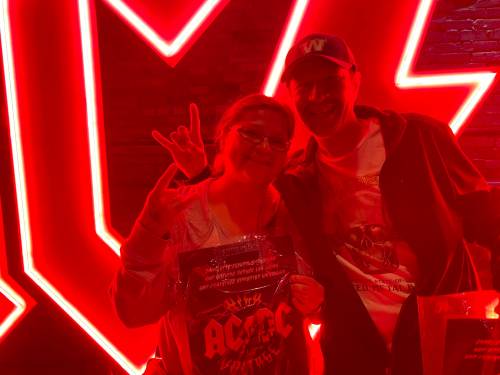
Those getting ready to rock on Sunday night at Princess Auto Stadium, can prime their engines at AC/DC’s PWR/UP Pop-Up this weekend.

Fans lined up all the way down Fort Street south of the Pyramid Cabaret for a special preview event on Friday night.

“We’re so excited,” said Marcella Ceron shortly after getting into the Pyramid. Ceron and her husband were hoping to win tickets to Sunday’s concert, one of a number of promotions running throughout the pop-up’s tenure at the downtown bar. “We were in line since 5 o’clock.”

According to organizers, the venues across Canada have been handpicked – including the Commodore Ballroom in Vancouver and Foufounes Électriques in Montreal, among others — owing to their reputations as “places where fans already gather and music culture lives.”

Read
Friday, Sep. 18, 2026

Family account spiced with magic realism, geopolitical intrigue and a ghost story

Reviewed by Zilla Jones 4 minute read Preview

Family account spiced with magic realism, geopolitical intrigue and a ghost story

Reviewed by Zilla Jones 4 minute read Yesterday at 2:01 AM CDT

Tom Lin’s second novel Babylon, South Dakota moves beyond a historical account of an immigrant family’s struggle, delightfully blending and bending genres.

Lin is a Chinese-born novelist whose family emigrated to the U.S. when he was four years old. His debut novel, The Thousand Crimes of Ming Tsu, won the 2022 Andrew Carnegie Medal for Excellence in Fiction, making him the youngest ever recipient of that award. He earned a PhD in English from the University of California Davis and is currently an assistant professor of English and creative writing at the University of Iowa.

Babylon, South Dakota takes place in an unspecified time period that can be understood to be during the Mao era — likely the 1950s or ’60s. A young Chinese couple, the Hsuis, immigrate to the rural community that gives the book its title. They take the names Saul and Mei and settle on a 160-acre homestead left to them by a distant relative.

Saul’s dream is to breed and sell chrysanthemums from seeds he brought from China, while Mei wants to raise livestock. They speak no English, know nothing of life in the United States, are unprepared for the harshness of winter and the isolation of the farm and bring nothing with them except some gold, which Mei hides around the house for emergencies. Their only link to the outside world is a discarded and marginally functioning TV set, which Saul rescues and rigs up.

Read
Yesterday at 2:01 AM CDT