A force of nature
Activist, educator, organizer knew the true meaning of community
Advertisement
Read this article for free:
or
Already have an account? Log in here »
To continue reading, please subscribe:

Digital Subscription
One year of digital access for only $205*
- Enjoy unlimited reading on winnipegfreepress.com
- Read the E-Edition, our digital replica newspaper
- Access News Break, our award-winning app
- Play interactive puzzles
*First annual payment billed as $205.00 + GST for one year. This annual subscription will automatically renew at $233.00 + GST every 52 weeks (10% off the regular annual price of $259.35). Offer available to new and qualified returning subscribers only. Cancel any time.
To continue reading, please subscribe:
Add Free Press access to your Brandon Sun subscription for only an additional
$1 for the first 4 weeks*
- Enjoy unlimited reading on winnipegfreepress.com
- Read the E-Edition, our digital replica newspaper
- Access News Break, our award-winning app
- Play interactive puzzles
*Your next Brandon Sun subscription payment will increase by $1.00 and you will be charged $17.95 plus GST for four weeks. After four weeks, your payment will increase to $24.95 plus GST every four weeks.
Read unlimited articles for free today:
or
Already have an account? Log in here »
Somewhere between a love for sharing stories and a love of community connections, Michael (Mike) Maunder lived his life. Giving voice to people and neighbourhoods was a passion for the natural-born community organizer.
An author, teacher and principal, Maunder lived in a one-bedroom apartment in West Broadway and devoted himself to community development, education and neighbourhood renewal.
He maintained a connection with Augustine United Church, whose commitment to social justice he appreciated, volunteered at the Sandy-Saulteaux Spiritual Centre, and found comfort in a Buddhist prayer community.
SUPPLIED
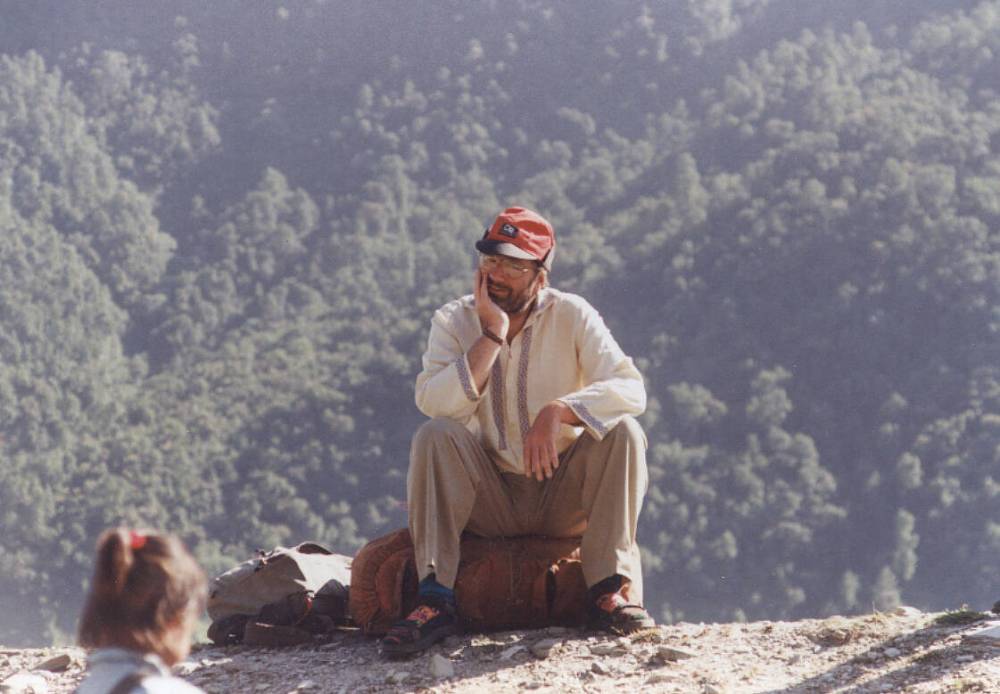
Mike Maunder in Tibet — his niece recalls him as an adventurer, a traveller.
Maunder died on July 15 at the age of 80.
He grew up in Norwood with his parents and two brothers. When he was 12, his father died suddenly, a loss that had a profound impact.
As a young man, Maunder attended St. John’s Cathedral Boys’ School in Selkirk. The school provided mentorship and opportunities for outdoor adventures. Maunder would go on to spend 15 years working with St. John’s Schools in Manitoba and Ontario.
While in Grade 11, he landed his first job at the Free Press as a copy boy, rushing wire-service photographs through the newsroom.
For a while he worked in Fort William, Ont., before returning to Winnipeg in 1970 to join the Winnipeg Tribune as a reporter.
Maunder contributed to the Free Press and, more recently, The Wolseley Leaf, where he wrote on community life.
After completing a master’s-level program in adult education in the early 1990s, and travelling to India to teach, he returned to Winnipeg to be closer to his mother, Mabel, and his brother Cliff, who lives with an intellectual disability.
In the late 1990s, Maunder collaborated with Indigenous Canadian literary professional Virginia Maracle to publish Inner City Voices, a newspaper focusing on the contributions of community organizations and the lives of low-income families in Winnipeg’s inner city.
Maunder wrote, co-wrote and researched numerous books and publications exploring community issues.
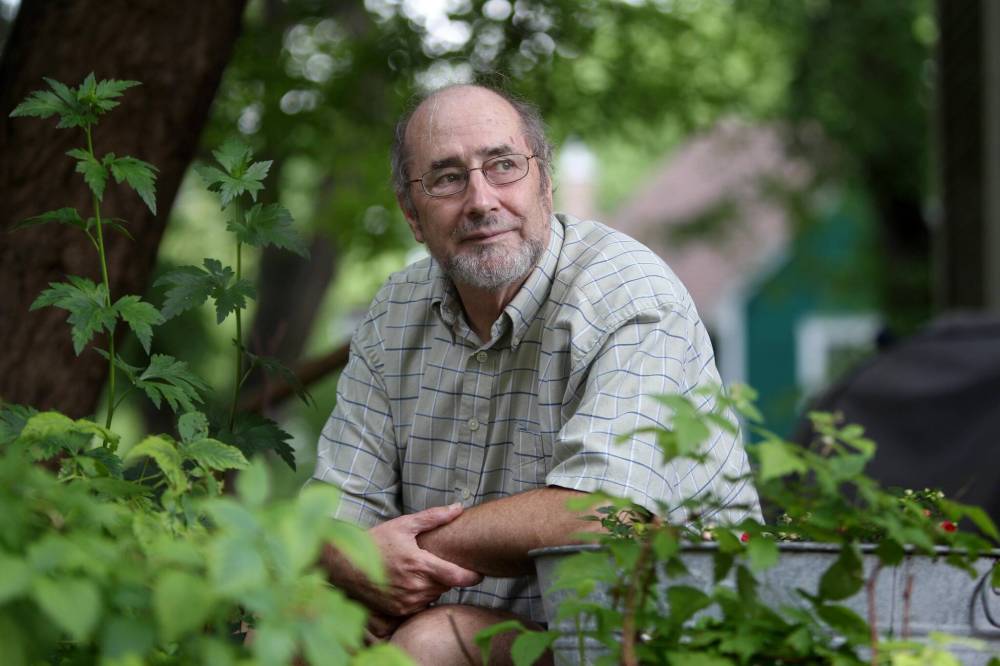
RUTH BONNEVILLE / FREE PRESS FILES
Mike Maunder on the deck at his Spence Street home.
As the active head of the West Broadway Community Organization at the time, Greg McPherson first met Maunder in 2008.
“He had published a book about West Broadway’s rooming houses, and my own work intersected with his,” said McPherson. “We were both interested in community mobilization, and Mike taught me a great deal about empowering people, listening carefully and respecting their agency.”
Instrumental in launching West Broadway’s Good Food Club — a community-based program which helps residents access fresh food that now has several thousand members — Maunder was also the catalyst for other initiatives.
“He helped to start — and was a longtime editor and contributor to — the Broadcaster community newspaper,” said McPherson. “His research and approach to rooming houses helped change the narrative around this often misunderstood yet essential form of housing. His tireless effort as a tenant advocate directly improved people’s quality of life and he was a founding member of the West Broadway Tenants Committee.”
Devoting many years to the Westminster Housing Society, one of Winnipeg’s affordable housing organizations, Maunder championed tenant participation.
“He was an exceptional teacher and storyteller, with profound respect for the complexity of human experience,” McPherson said. “The people Mike wrote about in his books were never archetypes or two-dimensional; they were real people with flaws, barriers, gifts and personalities. He showed me that ‘target populations’ only exist in abstraction, and that social and economic impacts are only possible when you get to know people and they get to know you.”
McPherson knew Maunder to lead by example.
“Mike practiced the things he preached, working tirelessly as a volunteer, spending years researching and writing about complex local issues and stories, and opening his home to people of many backgrounds. There was always a cold drink, a table full of snacks, new people to meet and big conversations to be had at Mike’s place. I stopped by often over the past 18 years and it’s hard to think that he’s no longer there on Spence Street, or down at WanaBees Diner, listening close or celebrating some piece of human magic that he invariably recognized before any of us did.”
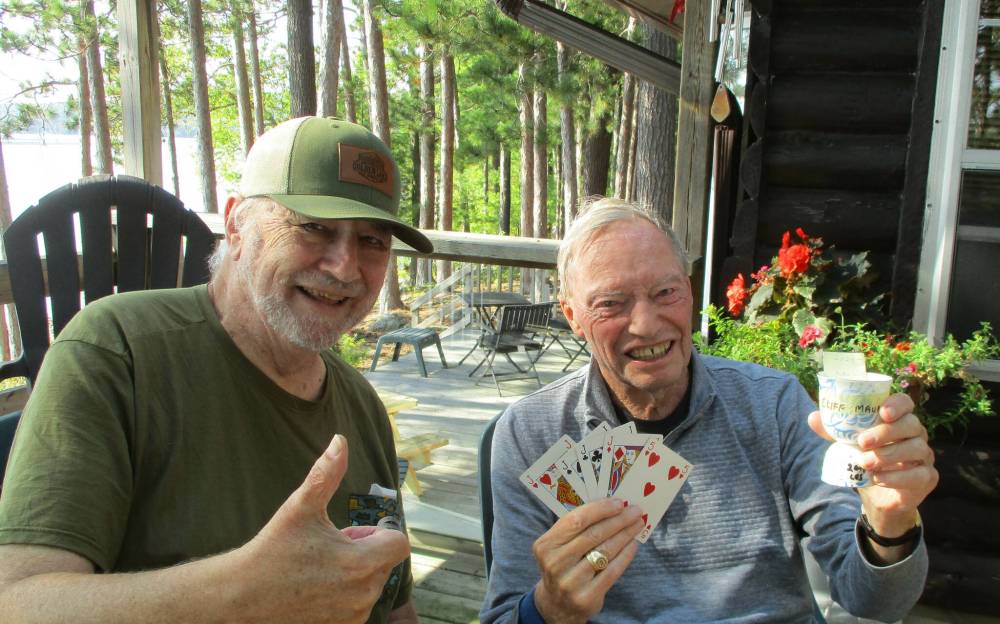
SUPPLIED
Mike Maunder (left) and his brother Les Maunder in 2024.
Maunder’s niece, Rosanna, recalls opening presents from under the tree one Christmas morning.
“My dad passes out a package that is wrapped with scuffed brown paper, tied with a string and covered with worldly stamps. This package has come from a traveller, an adventurer, someone who uses the words ‘going on a pilgrimage’ rather than ‘going on a holiday.’ It is special, not for what might be inside but because the gift has arrived from our Uncle Mike.”
She remembers Mike as a kind, caring, educated and smart man, who helped build community — a man who built relationships and maintained them.
“He checked in with those he cared for, made visits happen, called to see how you were doing and helped others. His family was important to him.
“Mike often visited our family cottage in Golden Lake, Ontario. He enjoyed early morning swims, watching the sunsets from the deck, singing songs around the campfire and playing in the summer cribbage tournament. He loved the tall red pines.”
That affinity for nature resulted in enduring connections.
Shaun Loney met Maunder 20 years ago while volunteering at the Sandy-Saulteaux Spiritual Centre in Beausejour. Both were there at seasonal ceremonies.
“We connected on a few things over the years,” Loney said of his longtime friend. “He helped me write a book, Manidoo Ziibi, the story of Rainy River and the local chief of the Ojibway nation,” he added, referring to a collection of stories and a travel guide to the area.
“We travelled to Indigenous historical sites — last year to Minnesota — canoeing and camping over the years. He and I travelled a bit to get pictures of trees in our region. Stories emerged.”
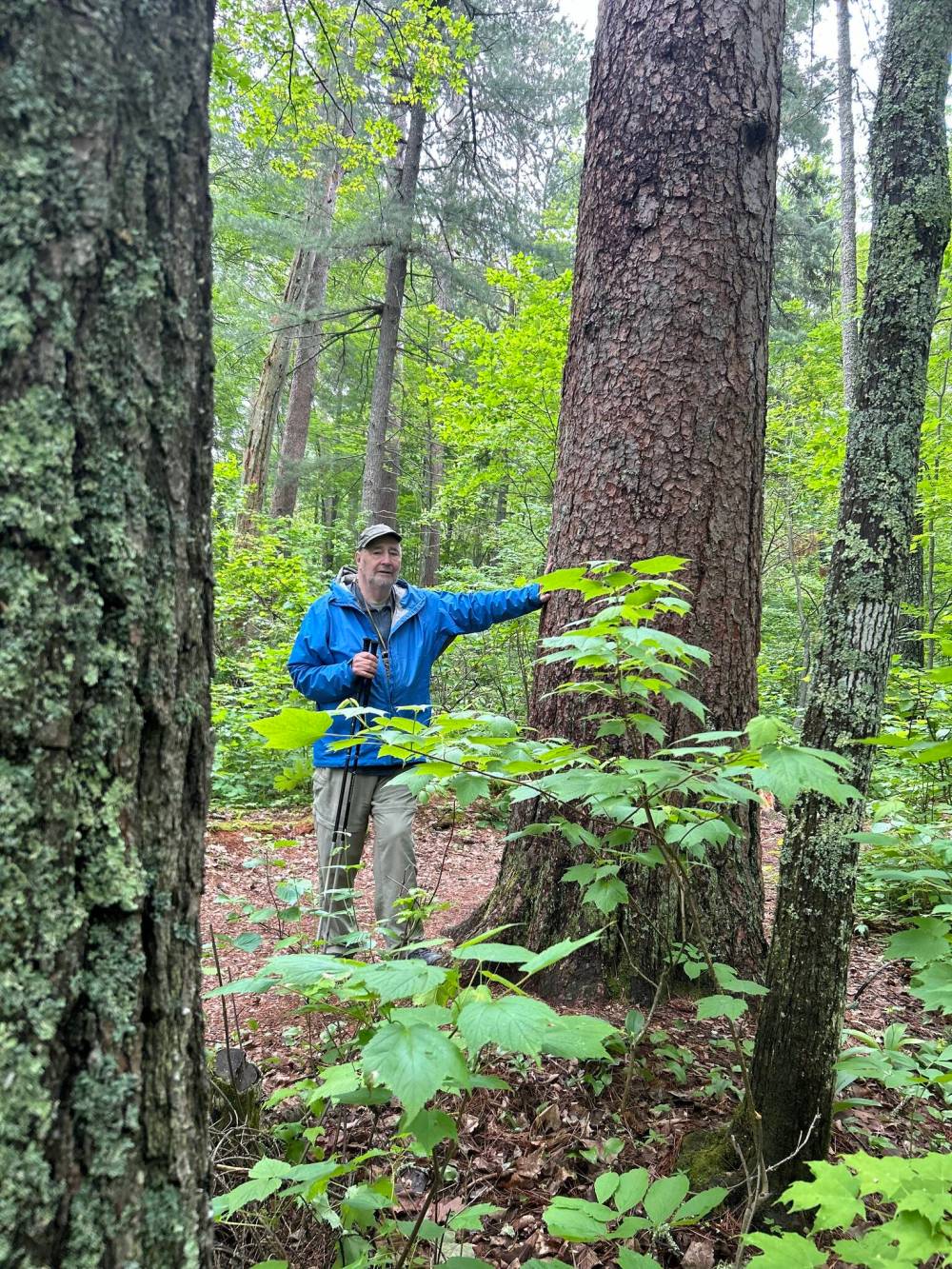
SUPPLIED
Mike Maunder loved trees and visited Minnesota’s The Lost 40 tree preserve in June 2025.
21 Trees and Me, a personal reflection on nature, spirituality, healing and belonging, was Maunder’s final writing project, and the book will be launched in October.
“It’s a remarkable perspective on his life and our lives told through trees,” said Loney, “trees that have spoken to him through his life. The trees of Norwood and in his yard on Spence Street.”
Loney said days before his death, Maunder reflected about their meaning in his lifetime.
“Trees saved me,” Maunder said. “They give me such a spiritual connection.”
“Mike was present, thoughtful and interested in people,” said Loney. “People would wander into his little unit on Spence Street. He had close relationships. He had a lot of friends.”
Maunder started the Baby Boomer Café, a community social program where people gathered monthly.
“They’d bring their families — it was an opportunity for people to socialize,” Loney said of the project that was especially important to Maunder, “a welcoming community for older adults needing extra assistance — there, people found friendship, conversation, music, learning and mutual support. The labour of love deepened Maunder’s connection to his brother, Cliff.
“I think Mike lived a life of integrity. He wasn’t making decisions to build his bank account. His ledger was all about how he contributed to his community and to his friends. He had some friends in very high places that were very wealthy. He had friends who were having trouble paying their rent. He treated everyone with respect.”
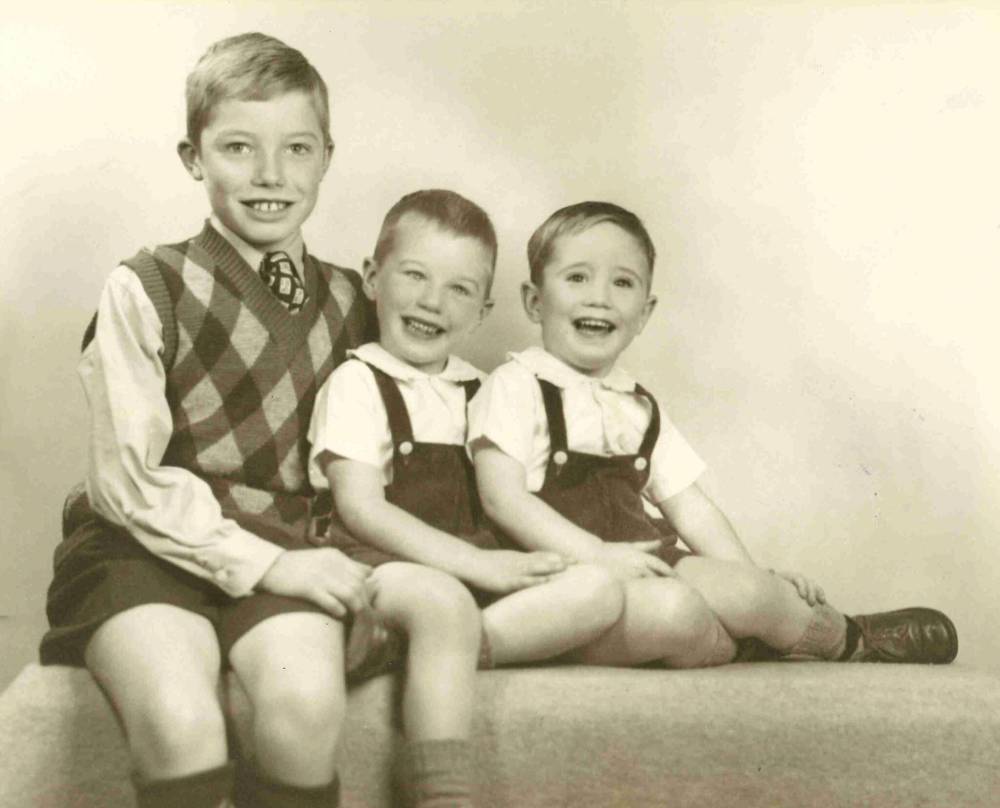
SUPPLIED
From left: Les, Cliff and Mike, the Maunder brothers, circa 1949.
At age 71, Maunder did a solo hike of the legendary gold rush Chilkoot Trail from Skagway, Alaska to Bennett Lake, B.C., to celebrate Canada’s 150th year, and created a journal from the trip.
His niece Rosanna cherishes what he shared with her about what he learned over the 53 kilometres of the Chilkoot.
“Plans change. You walk by putting one foot in front of the other. Walking is the end in itself: nature, beauty, health — being fully alive each moment. The destination is secondary. The most important is the gift of the people you meet along the way.”
fpcity@freepress.mb.ca