Why your holiday gift returns might go to a landfill and what you can do about it
Advertisement
Read this article for free:
or
Already have an account? Log in here »
To continue reading, please subscribe:
Digital Subscription
One year of digital access for only $1.44 a week*
- Enjoy unlimited reading on winnipegfreepress.com
- Read the E-Edition, our digital replica newspaper
- Access News Break, our award-winning app
- Play interactive puzzles
*Billed as $5.77 plus GST every four weeks. After 52 weeks, price increases to the regular rate of $19.95 plus GST every four weeks. Offer available to new and qualified returning subscribers only. Cancel any time.
To continue reading, please subscribe:
Add Free Press access to your Brandon Sun subscription for only an additional
$1 for the first 4 weeks*
- Enjoy unlimited reading on winnipegfreepress.com
- Read the E-Edition, our digital replica newspaper
- Access News Break, our award-winning app
- Play interactive puzzles
*Your next Brandon Sun subscription payment will increase by $1.00 and you will be charged $17.95 plus GST for four weeks. After four weeks, your payment will increase to $24.95 plus GST every four weeks.
Read unlimited articles for free today:
or
Already have an account? Log in here »
Hey there, time traveller!
This article was published 26/12/2025 (300 days ago), so information in it may no longer be current.
The holiday season will soon come to a close, but the busiest time of the year for product returns is just beginning.
The National Retail Federation estimates 17% of holiday purchases will be sent back this year. More retailers are reporting extended return windows and increased holiday staff to handle the rush this year.
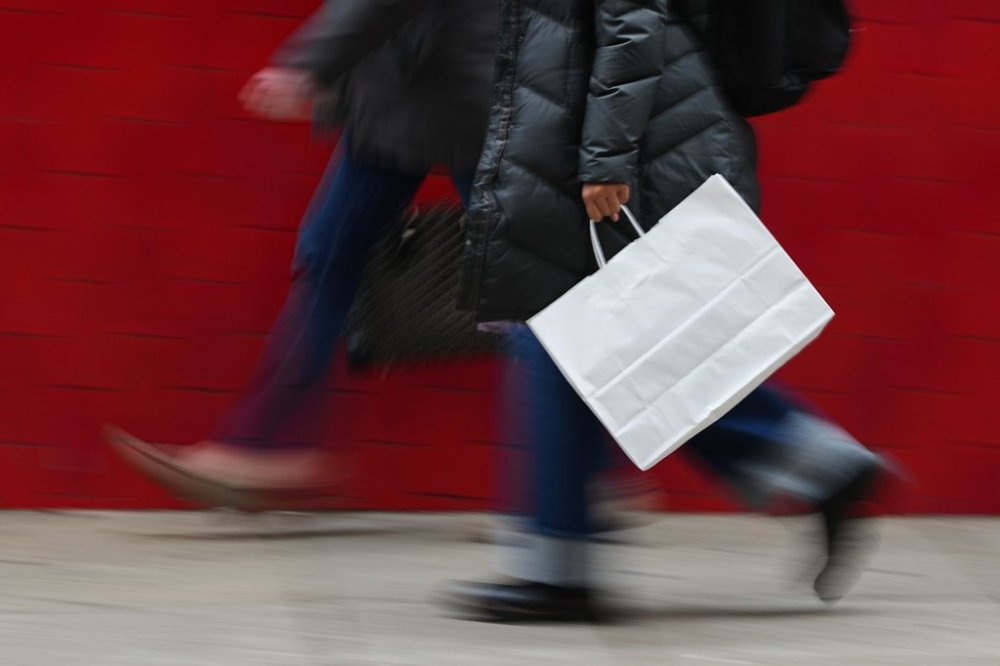
A major driver for returns is uncertainty. When we buy for other people, finding what they want is a bit of a guessing game. Online purchases have higher return rates because finding the right size and color is tough when you’re just staring at images on screens.
“Clothing and footwear, as you can imagine, because fit is such an important criteria, they have higher rates of returns,” said Saskia van Gendt, chief sustainability officer at Blue Yonder, which sells software designed to improve companies’ supply chain management.
Returns come with an environmental cost, but there’s a lot consumers and companies are doing to minimize it.
The impact of returns
If a company sells a thing, it’s probably packaged in plastic. Plastic is made from oil, and oil production releases emissions that warm the planet. If that thing is bought online, it’s put on a plane or a train or a truck that usually uses oil-based fuel.
If you buy a thing and return it, it goes through most or all of that all over again.
And once those products are back with the retailer, they may be sent along to a refurbisher, liquidator, recycler or landfill. All these steps require more travel, packaging and energy, ultimately translating to more emissions. Joseph Sarkis, who teaches supply chain management at Worcester Polytechnic Institute, estimates that returning an item increases its impact on the planet by 25% to 30%.
Roughly a third of the time, those returns don’t make their way to another consumer. Because frequently, it’s not worth reselling.
If, for example, you get a phone, but you send it back because you don’t like the color, the seller has to pay for the fuel and equipment to get the phone back, and then has to pay for the labor to assess whether it has been damaged since leaving the facility.
“It can be quite expensive,” said Sarkis. “And if you send it out to a new customer and the phone is bad, imagine the reputational hit you’ll get. You’ll get another return and you’ll lose a customer who’s unhappy with the product or material. So the companies are hesitant to take that chance.”
Something as expensive as a phone might get sold to a secondary or refurbishment market. But that $6 silicone spatula you got off Amazon? Probably not worth it. Plus, some stuff — think a bathing suit or a bra — is less attractive to customers if there’s a chance it’s been resold. The companies know that.
And that’s where the costs of returns are more than just environmental — and consumers wind up paying. Even free returns aren’t really free.
“Refurbishment, inspection, repackaging, all of these things get factored into the retail price,” said Christopher Faires, assistant professor of logistics and supply chain management at Georgia Southern University.
What consumers can do about it
If you want to reduce the impact of your returns, the first move is to increase their chances of resale. Be careful not to damage it, and reuse the packaging to send it back, said Cardiff University logistics and operations management lecturer Danni Zhang.
If you have to return something, do it quickly. That ugly Christmas sweater you got at the white elephant office party has a much better chance of selling on Dec. 20 than it does on Jan. 5. Zhang said it’s not worth the cost to the company to store that sweater once it’s gone out of season.
Another tip: in-person shopping is better than online because purchases get returned less often, and in-person returns are better, too — because those items get resold more often. Zhang said it reduces landfill waste. Sarkis said it reduces emissions because companies with brick-and-mortar locations spread out across the country and closer to consumers thus move restocked goods shorter distances.
“If I can return in-store, then I definitely will,” Zhang said. “The managers can put that stuff back to the market as soon as possible.”
Obviously the best thing consumers can do is minimize returns. Many shoppers engage in “bracketing behavior,” or buying multiple sizes of the same item, keeping what fits, and returning the rest.
“This behavior of bringing the dressing room to our homes is not sustainable,” said Faires.
If you’re buying for someone else, you can also consider taking the guesswork out of the equation and going for a gift card.
“I know we do really want to pick up something really nice to express our love for our friends or our family. But if we are more sustainable, probably the gift card will be much better than just purchasing the product,” Zhang said.
What businesses can do about it
Sarkis wants to see companies provide more information in product descriptions about the environmental impact of returning an item, or how much of the purchase price factors in return costs.
“But I don’t know if they want to send a negative message,” he said. “If you’re telling someone to stop something because of negative results, that’s not going to sell.”
Sarkis and Zhang both say charging for returns would help. Already Amazon is requiring customers pay in certain situations.
On the tech side, Blue Yonder’s recent acquisition of Optoro, a company that provides a return management system for retailers and brands, uses a software to quickly assess the condition of returned products and route them to stores that are most likely to resell them.
“Having that process be more digitized, you can quickly assess the condition and put it back into inventory,” said van Gendt. “So that’s a big way to just avoid landfill and also all of the carbon emissions that are associated with that.”
Clothing is returned most often. Many sizes do not reflect specific measurements, like women’s dresses, so they vary a lot between brands. Zhang said better sizing could help reduce the need for returns. On top of that, Sarkis said more 3D imaging and virtual reality programs could help customers be more accurate with their purchases, saving some returns.
___
The Associated Press’ climate and environmental coverage receives financial support from multiple private foundations. AP is solely responsible for all content. Find AP’s standards for working with philanthropies, a list of supporters and funded coverage areas at AP.org.