Foods with healthy-sounding buzzwords could be hiding added sugar in plain sight

Advertisement

Advertise with us

Many consumers feel pride in avoiding the glazed pastries in the supermarket and instead opting for “all natural” granola that comes packed with extra protein. Same goes for low-fat yogurts “made with real fruit,” organic plant-based milks and bottled “superfood” smoothies.

Read this article for free:


or

Already have an account? Log in here »

To continue reading, please subscribe:

Subscribe and receive a limited-edition Free Press branded hat or tote.

Digital Subscription

One year of digital access for only $205*

  • Enjoy unlimited reading on winnipegfreepress.com
  • Read the E-Edition, our digital replica newspaper
  • Access News Break, our award-winning app
  • Play interactive puzzles

*First annual payment billed as $205.00 + GST for one year. This annual subscription will automatically renew at $233.00 + GST every 52 weeks (10% off the regular annual price of $259.35). Offer available to new and qualified returning subscribers only. Cancel any time.

To continue reading, please subscribe:

Add Free Press access to your Brandon Sun subscription for only an additional

$1 for the first 4 weeks*

  • Enjoy unlimited reading on winnipegfreepress.com
  • Read the E-Edition, our digital replica newspaper
  • Access News Break, our award-winning app
  • Play interactive puzzles
Start now

*Your next Brandon Sun subscription payment will increase by $1.00 and you will be charged $17.95 plus GST for four weeks. After four weeks, your payment will increase to $24.95 plus GST every four weeks.

Hey there, time traveller!
This article was published 27/12/2025 (258 days ago), so information in it may no longer be current.

Many consumers feel pride in avoiding the glazed pastries in the supermarket and instead opting for “all natural” granola that comes packed with extra protein. Same goes for low-fat yogurts “made with real fruit,” organic plant-based milks and bottled “superfood” smoothies.

Buyer beware: Healthy grocery buzzwords like those often cover up an unhealthy amount of sugar.

Added sugars are difficult to quickly spot because many companies use clever marketing to distract consumers, said Nicole Avena, a professor of neuroscience and psychiatry at Mount Sinai Medical School and Princeton University who has studied added sugars.
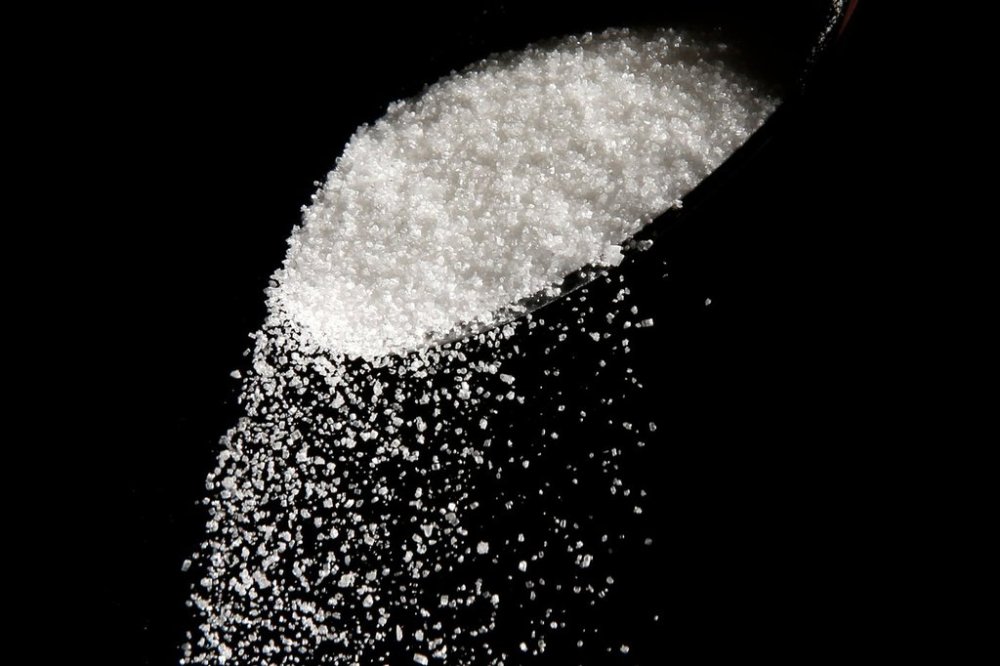
FILE - This photo illustration shows granulated sugar falling from a spoon, in Philadelphia, on Sept. 12, 2016. (AP Photo/Matt Rourke, File)

Avena said while some health-forward brands know people are starting to become aware of the hazards of added sugars, “a lot of the bigger brands don’t worry so much about people’s health.”

Here’s how to spot hidden sugars and what to do about it.

What to look for

Along with saturated fat and salt, eating excess sugar is linked to heart disease, obesity, diabetes and other health risks.

The average American consumes 17 teaspoons of added sugar a day, which adds up to 57 pounds (26 kilograms) per year, according to the American Heart Association. About half of that comes from beverages, but much of the rest is sneaked into cereal, salsa, prepared sandwiches, dairy products, bottled sauces and baked goods, including many brands of whole-grain bread.

To help control sugar intake, start by checking the nutrition label. Since 2021, food companies have been required to list the quantity of added sugars separately from total sugar content. But the plan backfired, Avena said.

Companies reduced common sweeteners like refined beet sugar and high-fructose corn syrup but added alternatives, such as monk fruit and the sugar alcohol erythritol, which aren’t considered “added sugars” under FDA regulations.

“Now our foods are even more sweet than they were back in 2020,” Avena said.

What should you do?

Collin Popp, a dietitian and professor at NYU Langone Health, said the current FDA recommendation allows for some flexibility. People should get no more than 10% of their calories from added sugar, which amounts to about 50 grams per day if eating 2,000 calories, or a bit more than what’s in a typical can of soda.

But that might be too flexible, Popp said.

“I would actually like to see that be less than 5%, and closer to zero for some, if they have diabetes or prediabetes,” he said.

The key is to be mindful of what you’re eating, even if the product seems healthy or if the package is labeled organic, Popp said. Roasted nuts, plant-based milks and wasabi peas, for example, can include a surprising amount of added sugars. So can English muffins and Greek yogurt.

One Chobani black cherry yogurt, for example, has zero grams of fat but 9 grams of added sugar, or more than 2 teaspoons. Silk brand almond milk has 7 grams per cup.

Popp recommends taking control of how much sugar goes into your food. That could mean buying plain yogurt and adding honey or berries, or asking the barista if you can put your own oat milk into your coffee.

Taking from one column to add to another

Although they lower the calorie content of foods, artificial sweeteners like stevia and sugar alcohols may not be better because they can encourage people to overeat, Avena said. She said research shows that sweet flavors are what activate the reward center of the brain, not the sugar itself.

That’s not to write off sugar alternatives, including allulose for people with Type 1 diabetes since it doesn’t affect blood sugar.

But for the general public, minimizing dependence on the overall sweetness of food is key to improving health, she said.

“Don’t let the food companies decide how much sugar you’re eating,” Avena said.

___

This story has been updated to correct the amount of added sugar that the average American consumes daily, according to the American Heart Association. It is 17 teaspoons a day, not 17 grams a day.

___

Albert Stumm writes about food, travel and wellness. Find his work at www.albertstumm.com.
Report Error Submit a Tip

More Stories

Manitoba gains doctors for third straight year, but loses at pandemic-level rate: report

Scott Billeck 5 minute read Preview

Manitoba gains doctors for third straight year, but loses at pandemic-level rate: report

Scott Billeck 5 minute read Wednesday, Sep. 9, 2026

Manitoba is adding doctors at a record clip — but it’s also losing them at a rate not seen since the depths of the COVID-19 pandemic, a physicians advocacy organization cautioned Wednesday.

Read
Wednesday, Sep. 9, 2026

Mining, mineral exploration projects ramp up, First Nations training lags

Gabrielle Piché 3 minute read Preview

Mining, mineral exploration projects ramp up, First Nations training lags

Gabrielle Piché 3 minute read Yesterday at 8:19 PM CDT

Mark Fedikow hunts for gold. Skilled labour can become a secondary search.

“You can find lots of folks on the reserves that are willing to work and learn, no question about it,” Fedikow, president of Mount Morgan Resources Ltd., said Thursday in Winnipeg.

“They need to get some training, they need to get some education in exploration.”

Fedikow and his team have been surveying roughly 7,400 acres in the Snow Lake area in northern Manitoba. They’re in “early days” of gold exploration. Results over the past two years of work have been promising, Fedikow said.

Read
Yesterday at 8:19 PM CDT

South Winnipeg neighbourhood will be first to go geothermal

Chris Kitching 4 minute read Preview

South Winnipeg neighbourhood will be first to go geothermal

Chris Kitching 4 minute read Wednesday, Sep. 9, 2026

A new neighbourhood in south Winnipeg will be Manitoba’s first to use a shared, large-scale geothermal system to heat and cool hundreds of homes over coming decades.

The province is giving up to $4 million to the developers of Southwood Circle, just north of the University of Manitoba’s Fort Garry campus, for a district geothermal system as part of the NDP’s goal to reach net-zero greenhouse gas emissions by 2050.

“It means a whole neighbourhood can tap into geothermal, which means low-carbon heating and cooling for at least 1,000 homes,” Premier Wab Kinew said at a news conference Wednesday.

Geothermal systems, equipped with pumps and pipes, use underground temperatures to heat and cool one or more buildings. Proponents point to long-term energy and cost savings compared with conventional heating and cooling systems.

Read
Wednesday, Sep. 9, 2026

‘Huge resource gaps’: judge shortage leads to circuit court cuts

Dean Pritchard 4 minute read Preview

‘Huge resource gaps’: judge shortage leads to circuit court cuts

Dean Pritchard 4 minute read Wednesday, Sep. 9, 2026

A shortage of judges is forcing Manitoba’s provincial court to slash sittings across the province.

The court announced in a notice to the profession Wednesday that it will be reducing the number of annual court sittings at nine rural circuit locations and St. Boniface provincial court in Winnipeg by 68 sittings, effective April 1, 2027.

The reductions are necessary to balance “access to justice needs with the complement of judicial resources currently insufficient to maintain the current court schedule,” said the notice, signed by provincial court Chief Judge Ryan Rolston.

Affected circuit courts include Altona, Arborg, Beausejour, Easterville, Cranberry Portage, Lundar, Grand Rapids, Moose Lake, and Pine Falls.

Read
Wednesday, Sep. 9, 2026

U of M students call for ban on far-right group

Maggie Macintosh 4 minute read Preview

U of M students call for ban on far-right group

Maggie Macintosh 4 minute read Yesterday at 6:00 AM CDT

Some University of Manitoba students are calling on their school to ban a far-right group from campus after posters promoting mass deportations were found during the summer break.

More than 50 people rallied on Wednesday, the first day of classes, to make known their concerns about a group called the Dominion Society of Canada.

The protest was organized after a supporter of the self-described nationalist group posted a video over the Labour Day weekend that shows him putting up flyers in Fort Garry.

“Canada is a really beautiful country and I have been welcomed here by a lot of beautiful people and it’s been amazing, but when I see harmful rhetoric online and now, on campus, it gives me a lot of anxiety,” said Ela Ancheta, an arts major at U of M.

Read
Yesterday at 6:00 AM CDT

Letters, Sept. 11

7 minute read 2:01 AM CDT

25 years of remembering

There are days and events in one’s life that simply cannot be erased, nor should they. Such was that day, 25 years ago on Sept. 11, 2001.

The world remembered in silence at 9:46 AM (CST) in homage to the victims of that tragic event. Sadly many thousands would lose their lives in the wars that followed as a result of 9/11, including no less than 165 Canadians in Afghanistan. We shall remember them.

Following that solemn silence, attention in Canada and the United States will be drawn to Gander, Newfoundland and Labrador, and understandably so.