Wartime rescue mission movingly recalled

Advertisement

Advertise with us

In the midst of the Second World War, the British army and the Jewish leadership in Palestine forged a tenuous partnership based on a shared need to infiltrate Nazi-occupied Europe.

Read this article for free:


or

Already have an account? Log in here »

To continue reading, please subscribe:

Subscribe and receive a limited-edition Free Press branded hat or tote.

Digital Subscription

One year of digital access for only $205*

  • Enjoy unlimited reading on winnipegfreepress.com
  • Read the E-Edition, our digital replica newspaper
  • Access News Break, our award-winning app
  • Play interactive puzzles

*First annual payment billed as $205.00 + GST for one year. This annual subscription will automatically renew at $233.00 + GST every 52 weeks (10% off the regular annual price of $259.35). Offer available to new and qualified returning subscribers only. Cancel any time.

To continue reading, please subscribe:

Add Free Press access to your Brandon Sun subscription for only an additional

$1 for the first 4 weeks*

  • Enjoy unlimited reading on winnipegfreepress.com
  • Read the E-Edition, our digital replica newspaper
  • Access News Break, our award-winning app
  • Play interactive puzzles
Start now

*Your next Brandon Sun subscription payment will increase by $1.00 and you will be charged $17.95 plus GST for four weeks. After four weeks, your payment will increase to $24.95 plus GST every four weeks.

Hey there, time traveller!
This article was published 17/01/2026 (240 days ago), so information in it may no longer be current.

In the midst of the Second World War, the British army and the Jewish leadership in Palestine forged a tenuous partnership based on a shared need to infiltrate Nazi-occupied Europe.

Each party had different strategic motives, and these differences would be a source of tension. But each party needed the other to realize its objectives.

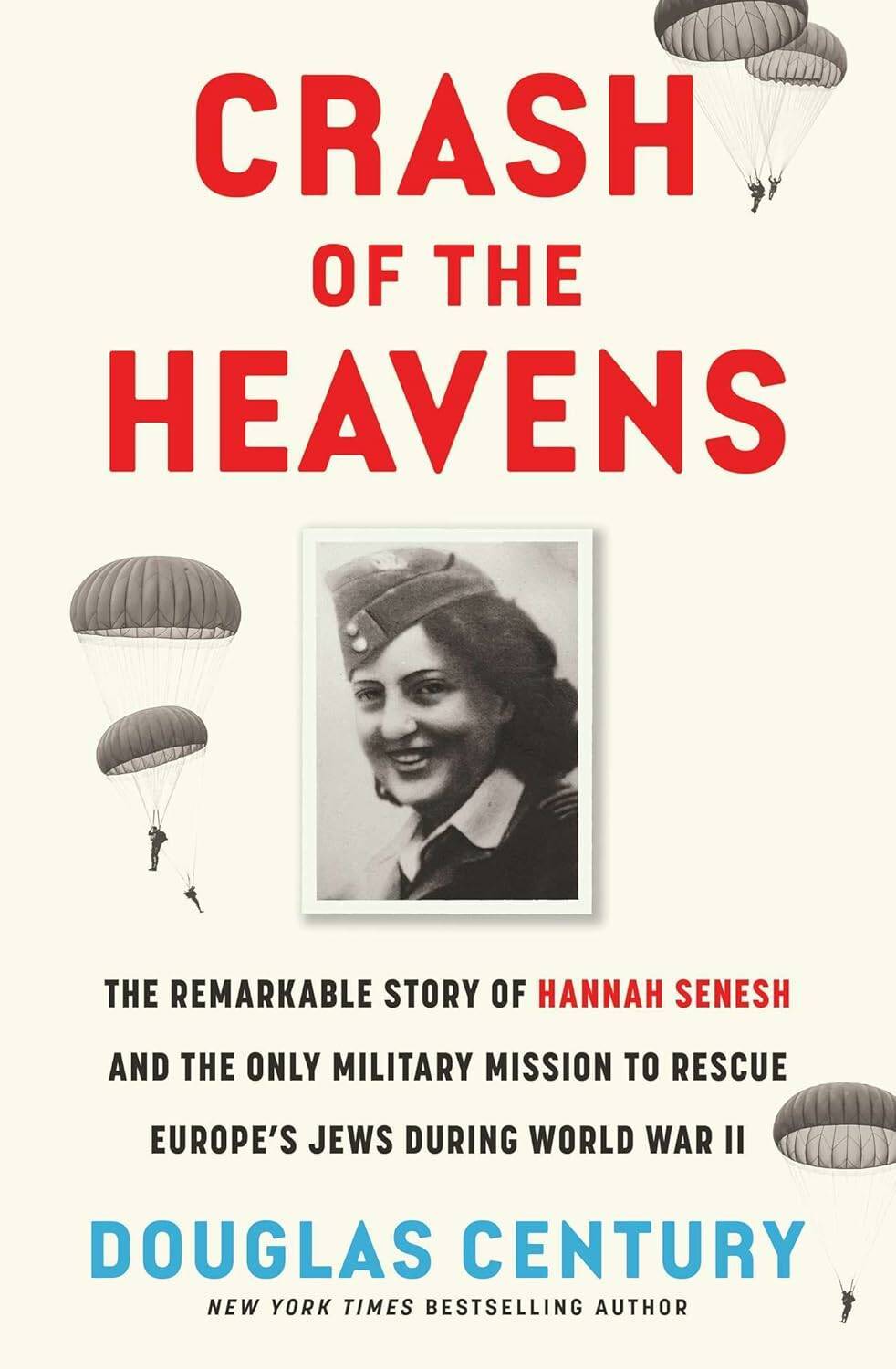
In Crash of the Heavens, Douglas Century, a veteran investigative journalist who grew up in Canada, elaborates the politics of this uneasy alliance in an admirable, substantive account.
Crash of the Heavens

Crash of the Heavens

By 1943, Britain faced a shortage of pilots. Thousands of Allied airmen had been forced to bail out over Romania, Hungary, Yugoslavia and Bulgaria, where they tried to evade capture but could not speak the local language.

Britain had tried to send British-born agents to extricate the pilots, but these efforts were unsuccessful. As Lieutenant Colonel Anthony Simonds, the officer in charge of recovering downed Allied airmen in central Europe and the Balkans, observed, “it is hard to find an Englishman who can successfully pose as a Bulgarian, Greek, Romanian, or Hungarian.”

Simonds had the inspired idea that Jews in the British mandate of Palestine would make ideal agents for covert missions in search of British pilots behind enemy lines.

He explained his rationale: “There’s practically not a country in the world that does not have a Jewish minority familiar with the local way of life and language.”

And Palestinian Jews were eager to work with the British, provided the mission could be expanded to include succoring Jewish refugees from Nazi Germany, where Jews were being persecuted and systematically murdered.

But neither Simonds nor the Jewish leadership in Palestine were able to persuade the British brass of the merits of this plan. For various reasons, British officials in the Middle East and at the Foreign Office in London were indifferent or hostile to Simonds’s proposal.

But Simonds did find an influential supporter: Colonel Dudley Clarke, a friend of British prime minister Winston Churchill.

Clarke recognized the value of young, motivated, multilingual Jews for dangerous covert tasks in Europe. He cabled Churchill, and Simonds’s mission was promptly approved.

One of the Palestinian Jews who volunteered for the mission was Hannah Senesh, a brilliant young woman, a gifted poet and intellectual, originally from Hungary.

Century focuses on her experiences — her recruitment, training and eventual deployment by parachute to the Balkans.

Tragically, she was taken prisoner in Hungary, tortured by the Gestapo and ultimately executed. She came to be seen as a Jewish Joan of Arc.

With its emphasis on the doomed Hannah, the story Century tells is necessarily sad.

But his account of the politics of the mission shows how the British and the Jews in Palestine could co-operate to realize their respective aims.

Graeme Voyer is a Winnipeg writer.

Report Error Submit a Tip

More Stories

Groups call for end to tariffs on sports gear, warn of economic impacts

Catherine Morrison, The Canadian Press 4 minute read Preview

Groups call for end to tariffs on sports gear, warn of economic impacts

Catherine Morrison, The Canadian Press 4 minute read Updated: Yesterday at 9:52 AM CDT

OTTAWA - Some sports organizations and companies are urging governments on both sides of the border to suspend sports-related tariffs, warning of heightened economic challenges and waning participation in healthy activities.

The trade war between Canada and the United States has been escalating for weeks after talks on a trade deal collapsed in mid-August.

The next day, U.S. President Donald Trump imposed 50 per cent duties on $28 billion in Canadian goods, including hockey equipment, golf and gym equipment and fishing rods and parts.

Canada, in turn, implemented retaliatory tariffs on Sept. 8. They also target several categories of sporting goods, including track suits, ski suits and swimwear, golf equipment and fishing rods.

Read
Updated: Yesterday at 9:52 AM CDT

Winnipeg venues saying no to AI-made advertisements

Sheldon Birnie 8 minute read Preview

Winnipeg venues saying no to AI-made advertisements

Sheldon Birnie 8 minute read 6:00 AM CDT

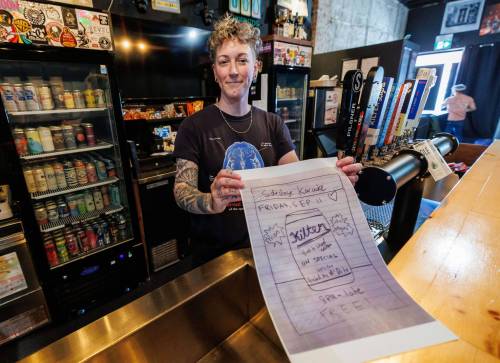
Although the days when telephone poles and notice boards across the city were thick with gig posters, either slopped up with wheat paste or wrapped tight with packing tape, are behind us, the art of making an appealing visual ad for live music events is still a vital part of the local creative scene.

However, a widespread backlash against a new kind of slop — the use of generative AI images — has been building, especially among creatives when it comes to promoting live music.

“Live music is and always has been a DIY type of scene, especially locally,” says Evan Simpson, who has been working as a graphic designer for nearly a decade.

“For years people have been making their own flyers, or if they have the budget, hiring a designer or artist to come up with some artwork for their flyers. It’s a whole ecosystem, a scene supporting itself. If you take away the visual side of it, the spark, individuality and uniqueness of each gig poster is lost. What a sad world it would be if all art were made by AI.”

Read
6:00 AM CDT

Fathers united by loss share warning about dangers of fentanyl

Marsha McLeod 6 minute read Preview

Fathers united by loss share warning about dangers of fentanyl

Marsha McLeod 6 minute read Yesterday at 7:30 PM CDT

Harlan James Edward Fourre would have turned 35 on Sunday.

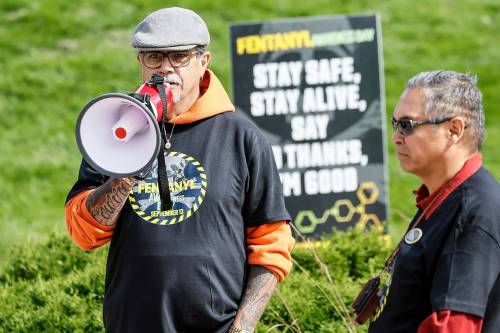
But instead of celebrating his birthday, Fourre’s father organized a sombre walk through downtown Winnipeg to commemorate his son and the many others who have died of fentanyl poisoning.

Three and a half years ago, Harlan Fourre took a recreational drug he believed was ecstasy but turned out to contain fentanyl, which killed him, said his father Joseph Fourre, a Red River Métis citizen, actor and filmmaker.

Fourre said his son was a master roofer, working on a job in The Pas around the time of his death. He wasn’t known to use drugs — in fact, his boss relayed that if someone pulled out an illicit substance at the end of a job, Harlan’s response would be: “no thanks, I’m good.”

Read
Yesterday at 7:30 PM CDT

The port of Churchill — but done right

Editorial 4 minute read Preview

The port of Churchill — but done right

Editorial 4 minute read Saturday, Sep. 12, 2026

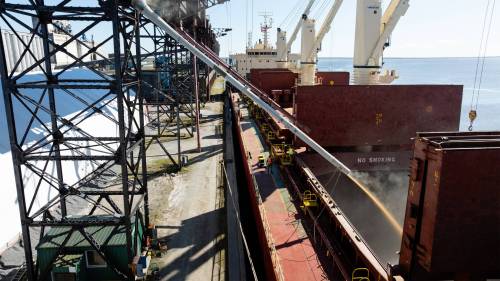
The seagoing grain carrier wasn’t christened with a champagne bottle. There was no confetti or streamers. Nevertheless, the Aug. 31 event marking the first shipment of grain to be loaded at the Port of Churchill since 2020 was celebrated like the launch of a brand new vessel.

The presence of the federal minister of northern and arctic affairs, provincial cabinet ministers and leaders and elders from several northern First Nations signalled that the fast-tracked process of refurbishing and buffing up Manitoba’s deep-water seaport gem is gaining momentum.

For OneNorth, the partnership of 29 First Nations and 12 northern communities which owns the Port of Churchill and the Hudson Bay Railway (both operated by the Arctic Gateway Group) the event heralded a new beginning. It’s been eight years since OneNorth purchased the port and railroad, and six years since grain was moved by rail through Manitoba and then by ship to European markets. Two more grain shipments, plus shipments of potash and critical minerals, will continue through the fall.

When Prime Minister Mark Carney solicited the premiers to suggest “nation-building” projects following his election in 2025, Premier Wab Kinew pitched a Manitoba trade corridor that would move wheat, critical minerals, potash and energy (oil or liquid natural gas) through the Port of Churchill.

Read
Saturday, Sep. 12, 2026

Long-running creative endeavour

Aaron Epp 6 minute read Preview

Long-running creative endeavour

Aaron Epp 6 minute read 6:00 AM CDT

Brazen browsers are always welcome at the Paper Gallery.

“A lot of people just love to come and look,” says Julie Pedersen Ross, who owns the Winnipeg gift shop. “They always tell us, ‘Oh, I have an hour — I’m so excited to be here and just look around.’”

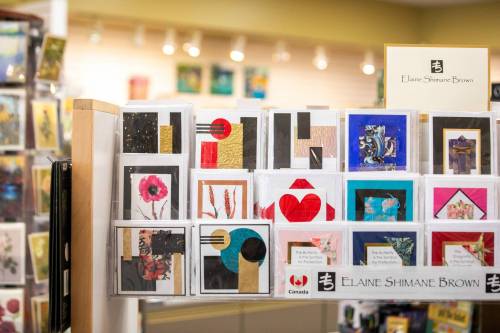
Situated in River Heights at 1437 Corydon Ave., the Paper Gallery features more than 2,000 different greeting cards that staff have hand-selected. There’s also stationery and a range of gifts.

Whether you’re looking for candles, picture frames, children’s books and toys, kitchenware, party supplies, bath products, journals, reading glasses or novelty gifts, it’s likely the Paper Gallery has a fun, functional item to suit your needs.

Read
6:00 AM CDT

Downtown no place to be after dark, huge majority of Winnipeggers say in survey

Joyanne Pursaga 8 minute read Preview

Downtown no place to be after dark, huge majority of Winnipeggers say in survey

Joyanne Pursaga 8 minute read Friday, Sep. 11, 2026

Most Winnipeggers are afraid to walk alone downtown and believe the city needs more police officers, a new survey finds.

Winnipeg Police Service released its 2026 citizen survey Friday.

Downtown safety appears to remain a major concern, with just 44 per cent saying they feel very or reasonably safe walking alone in the area during the day. The number plummets to eight per cent overall at night, down from nine per cent in 2024, the last time the survey was conducted.

This year, 14 per cent of men felt very or reasonably safe walking alone downtown at night, compared to just three per cent of women.

Read
Friday, Sep. 11, 2026