West Coast tightwad thriftily thrives

Advertisement

Advertise with us

Steve Burgess, originally from Brandon, is a Vancouver-based freelance writer who’s resided in a comfy apartment near Stanley Park for over three decades.

Read this article for free:


or

Already have an account? Log in here »

To continue reading, please subscribe:

Subscribe and receive a limited-edition Free Press branded hat or tote.

Digital Subscription

One year of digital access for only $205*

  • Enjoy unlimited reading on winnipegfreepress.com
  • Read the E-Edition, our digital replica newspaper
  • Access News Break, our award-winning app
  • Play interactive puzzles

*First annual payment billed as $205.00 + GST for one year. This annual subscription will automatically renew at $233.00 + GST every 52 weeks (10% off the regular annual price of $259.35). Offer available to new and qualified returning subscribers only. Cancel any time.

To continue reading, please subscribe:

Add Free Press access to your Brandon Sun subscription for only an additional

$1 for the first 4 weeks*

  • Enjoy unlimited reading on winnipegfreepress.com
  • Read the E-Edition, our digital replica newspaper
  • Access News Break, our award-winning app
  • Play interactive puzzles
Start now

*Your next Brandon Sun subscription payment will increase by $1.00 and you will be charged $17.95 plus GST for four weeks. After four weeks, your payment will increase to $24.95 plus GST every four weeks.

Hey there, time traveller!
This article was published 31/01/2026 (228 days ago), so information in it may no longer be current.

Steve Burgess, originally from Brandon, is a Vancouver-based freelance writer who’s resided in a comfy apartment near Stanley Park for over three decades.

He owns no real estate and has no car. His income is modest and variable — and not variable in a positive way. He repeatedly underlines that over the years his rent has more than tripled while his income has flatlined.

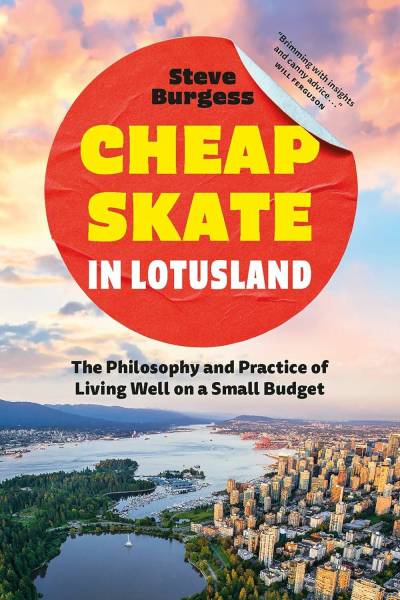
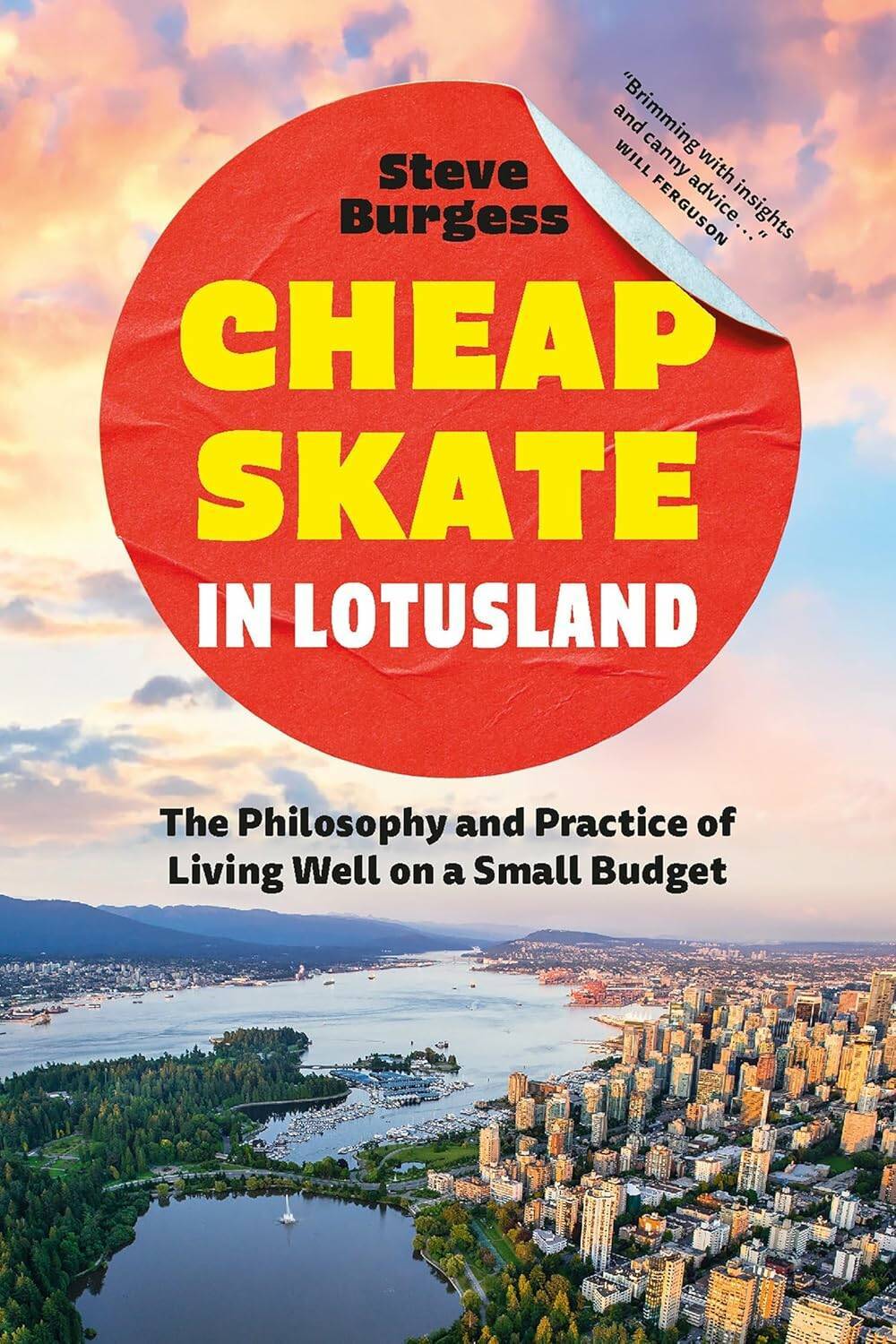
Cheapskate in Lotusland is part memoir, part marketplace primer and a lot of acute reflection on everything from food waste, rampant consumerism and the importance of buying local to the Trumpian bully our southern neighbour has become.
Cheapskate in Lotusland

Cheapskate in Lotusland

It’s also informed, opinionated and funny — sometimes snarkily funny.

Despite its title, it’s not a how-to guide to living on the cheap, though there are elements of that here. Nor is it didactic, in the sense of offering a preachy transformative program to achieve off-the-grid frugality.

Rather, it’s an elastic take on its title’s and subtitle’s ostensible subject matter. Burgess’s research and ruminations aren’t confined to economics — personal, micro or macro — though money is always there in the background.

Early on, he admits his lifestyle choice is born of necessity.

“It has been my own feeling that thrift, far from signalling greed, is the required virtue of those who do not spend their lives chasing money,” Burgess writes. “Frugality is a defining trait of the artistic and creative, because when you follow your passions rather than profit, economy becomes a necessity.”

His express and implicit message: You can spend less and enjoy life more.

Burgess has an omnivorous intellect. He canvasses disparate ideas, everything from the cost of coffins and pet care to Beatles’ song lyrics and George Orwell’s seminal account of the life of European working poor in the 1930s, Down and Out in Paris and London. Yet he has a knack for nicely congregating them under broader themes of money and lack of same.

He challenges conventional Western consumer habits and is an ardent advocate of repairing and repurposing items, cooking at home, forgoing restaurant dining and reducing waste and spoilage. Yet for all that, Burgess comes across not as hectoring or lecturing, but as a warmhearted guide to living on less.

While he’s an affable narrator, there’s sometimes a tincture of sadness in his personal disclosures.

He lives alone — no wife, no girlfriend, no kids. He allows as to how he’s happy in his life’s lot, but elegiac moments sometimes quietly surface.

In Canadian circles, Vancouver has long worn the titular nickname Lotusland, with its connotations of West Coast indolence and self-indulgence. It’s a lift from Homer’s Odyssey, in which Odysseus and his crew discover a magical land of happily narcotized lotus-eaters. Some of his sailors eat the delicious lotus, abandon their duties and plead to stay forever in “Lotusland.”

The dreamy unreality of a Lotusland is a nice place to visit, but you wouldn’t want to live there. Ditto re: Burgess’s rich yet greatly constrained existence.

Still, his analysis is singular, and often entertaining. This is a tough-to-pigeonhole, bright, insightful and irreverent book about money — and, even more so, its absence.

Douglas J. Johnston is a Winnipeg lawyer and writer.
Report Error Submit a Tip

More Stories

Federal Court awards OCN $27M, 62 years after construction of hydro dam

Nicole Buffie 5 minute read Preview

Federal Court awards OCN $27M, 62 years after construction of hydro dam

Nicole Buffie 5 minute read Yesterday at 6:34 PM CDT

The Federal Court has ordered Ottawa pay Opaskwayak Cree Nation $27 million over damages suffered due to the construction of the Grand Rapids hydro dam in the 1960s.

In a decision dated Sept. 3, Federal Court Justice Sébastien Grammond says the federal government had a fiduciary duty to protect the community from the impacts of the dam.

“When the Crown exercises a discretionary power over an Indigenous interest, it has a fiduciary duty and it must exercise the discretion in the best interests of the Indigenous group,” the ruling said. “Canada breached its fiduciary duty to OCN because it approved the (project) without ensuring that the impacts of the Grand Rapids dam on OCN’s traditional way of life were mitigated or compensated.”

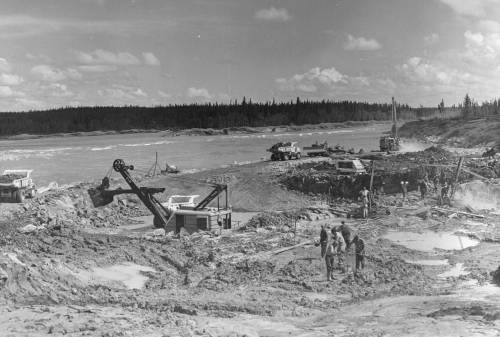
The First Nation took the federal government to court in February over impacts on the community after the dam, located about 145 kilometres southeast of Opaskwayak Cree Nation, was installed on the Saskatchewan River in 1964. The case was heard over 14 days in a judge-alone trial in Winnipeg.

Read
Yesterday at 6:34 PM CDT

Winnipeg, economic diversity and risks from AI

Al Vigier 5 minute read 2:00 AM CDT

I run a company that builds software to read documents and fill out forms. When I look at Winnipeg, I see a lot of potential customers. I also think the city should be asking some fairly uncomfortable questions about what companies like mine are selling.

Winnipeg has spent decades building an economy that does not depend on any one industry. Insurance, agriculture, transportation, aerospace, manufacturing, government, health care. That mix has served it well. A bad year for one employer does not necessarily become a bad year for the whole city.

But there is another way to look at that economy: what people actually do when they arrive at work.

Great-West Lifeco, Wawanesa, IGM Financial and Manitoba Public Insurance are all headquartered in Winnipeg. There are provincial departments, Shared Health and businesses handling the freight moving through CentrePort. Their purposes are different. A surprising amount of their paperwork follows the same routine.

Putting together annual fashion show takes many hard-working hands

AV Kitching 8 minute read Preview

Putting together annual fashion show takes many hard-working hands

AV Kitching 8 minute read 2:00 AM CDT

A frenzy of activity is taking place behind the closed doors of WAG-Qaumajuq on Monday. It’s the day before Crafted on the Catwalk, the gallery’s annual fashion and design show, and the clock is ticking.

There’s less than 30 hours before the big event and it’s all hands on deck.

A steady stream of people walk in and out of the Memorial Boulevard entrance towards the main hall, which glows in soft hues as technicians test out lighting equipment.

The ground floor is teeming with people lugging chairs and pushing trolleys. A stream of white material unravelling from its roll prompts a shouted “OK to step on this?” and receives an equally loud ‘No!” in reply, voices raised above the metallic buzz of a drill as staff from a local production company put together seats.

Read
2:00 AM CDT

You can’t hold a government accountable for what it won’t let you see.

BRANDON — The Manitoba government is seeking to build a soybean crushing plant and is looking for investment to make it happen.

The proposed facility is one of several projects the NDP government pitched at the international investment summit in Toronto this week.

“We’re in a new world of opportunities that I think provinces or the country of Canada needs to apprehend,” Manitoba Agriculture Minister Ron Kostyshyn said Monday.

The MLA for Dauphin said soybeans were a “very popular discussion” during recent trade missions in certain parts of Asia.

West Coast tightwad thriftily thrives

Reviewed by Douglas J. Johnston 3 minute read Preview

West Coast tightwad thriftily thrives

Reviewed by Douglas J. Johnston 3 minute read Saturday, Jan. 31, 2026

Steve Burgess, originally from Brandon, is a Vancouver-based freelance writer who’s resided in a comfy apartment near Stanley Park for over three decades.

He owns no real estate and has no car. His income is modest and variable — and not variable in a positive way. He repeatedly underlines that over the years his rent has more than tripled while his income has flatlined.

Cheapskate in Lotusland is part memoir, part marketplace primer and a lot of acute reflection on everything from food waste, rampant consumerism and the importance of buying local to the Trumpian bully our southern neighbour has become.

It’s also informed, opinionated and funny — sometimes snarkily funny.

Read
Saturday, Jan. 31, 2026