Doctors share the best ways to get the most from a bidet
Advertisement
Read this article for free:
or
Already have an account? Log in here »
To continue reading, please subscribe:

Digital Subscription
One year of digital access for only $205*
- Enjoy unlimited reading on winnipegfreepress.com
- Read the E-Edition, our digital replica newspaper
- Access News Break, our award-winning app
- Play interactive puzzles
*First annual payment billed as $205.00 + GST for one year. This annual subscription will automatically renew at $233.00 + GST every 52 weeks (10% off the regular annual price of $259.35). Offer available to new and qualified returning subscribers only. Cancel any time.
To continue reading, please subscribe:
Add Free Press access to your Brandon Sun subscription for only an additional
$1 for the first 4 weeks*
- Enjoy unlimited reading on winnipegfreepress.com
- Read the E-Edition, our digital replica newspaper
- Access News Break, our award-winning app
- Play interactive puzzles
*Your next Brandon Sun subscription payment will increase by $1.00 and you will be charged $17.95 plus GST for four weeks. After four weeks, your payment will increase to $24.95 plus GST every four weeks.
Read unlimited articles for free today:
or
Already have an account? Log in here »
Hey there, time traveller!
This article was published 01/02/2026 (237 days ago), so information in it may no longer be current.
NEW YORK (AP) — Once considered an oddity in American homes, bidets are becoming increasingly common as more people seek a hygienic and sustainable alternative to toilet paper or a hand managing certain physical conditions.
Toilet paper shortages during the COVID-19 pandemic helped demystify the devices for U.S. consumers, although Italy, Japan and some other countries where bidets are standard bathroom features also saw runs on TP. Environmental awareness, less expensive bidet options and the development of smart toilets that perform multiple functions have given further momentum to the idea of rinsing instead of wiping.
Bidets even earned a moment in the national spotlight last month when Zohran Mamdani, New York City’s new mayor, said he hoped to have them installed in the bathrooms of Gracie Mansion, the 18th century Manhattan home that serves as the official residence of the city’s chief executive.
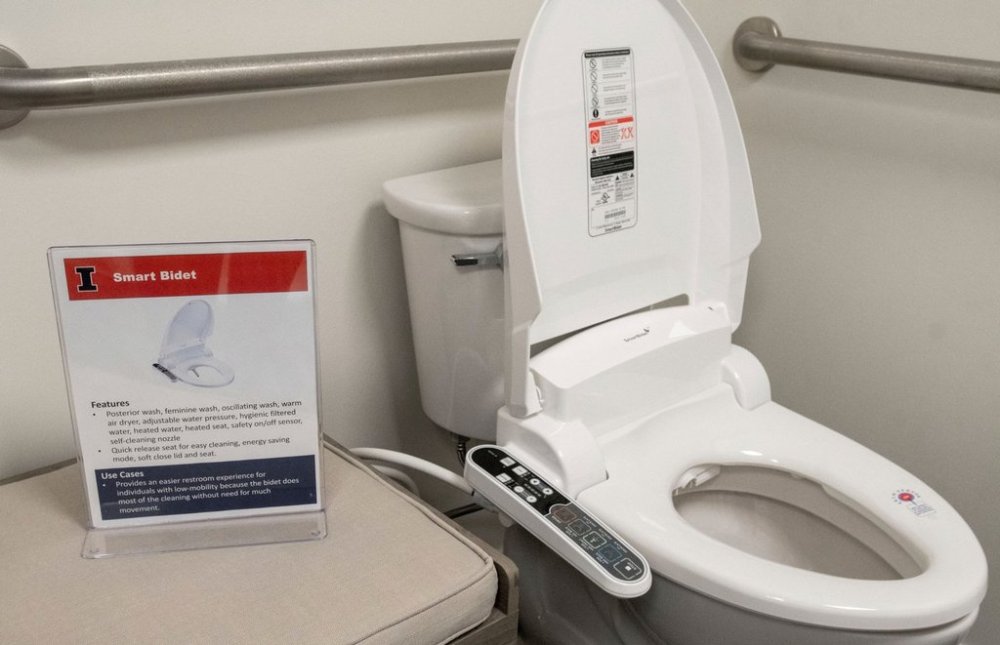
Medical professionals sometimes recommend bidets for patients with hemorrhoids, in recovery from surgery, or who have limited mobility due to age or disabilities. But experts say bidets are not best for everyone and need to be used properly to prevent other problems.
Here are some of the ins and outs to consider.
Bidets for every budget
Bidets use a jet of water to clean the genitals and anal area after someone goes to the bathroom. They originally existed mainly as standalone fixtures separate from toilets.
These days, the options include toilet seat attachments and hand-held versions that resemble detachable shower heads. Many of the latest “smart” toilets come with integrated bidets and feature heated seats, adjustable water pressure and air dryers.
On YouTube and other social media platforms, there are videos demonstrations of how to make a portable bidet with a plastic soda bottle.
Proper bidet etiquette
Bidet converts tend to rave about how much cleaner the appliances leave them feeling. Since all toileting activity involves delicate body parts and bacteria, experts stress that correct bidet use is required to make the activity as sanitary as possible.
When using standalone bidets and ones installed on toilets, it’s best, especially for women, to turn on the faucet while facing the controls so the washing is done from front to back, according to Dr. David Rivadeneira, a colorectal surgeon with the Huntington Hospital in Huntington, New York.
That position prevents the transfer of bacteria from the anal area to the urethra, Rivadeneira said.
Most doctors recommend using warm water at low pressure for up to a few minutes, avoiding any extreme temperatures. You can also try a gentle soap if desired, but it’s usually not necessary for regular bidet users.
Rivadeneira cautions patients against trying to inject water into the anus since the devices are not meant for internal use.
“You’re not supposed to be substituting it for a colonic or an enema,” he said.
After washing, pat dry with toilet paper or a dedicated cotton towel to remove any remaining stool and to prevent yeast infections, experts say.
Bidets can be used every day but are most appropriate after a bowel movement. Overuse may cause skin irritation, according to medical experts.
Proper bidet maintenance also matters, said Dr. Neal H. Patel, a family physician with the Providence St. Joseph Hospital in Orange County, California. Make sure to wipe down the nozzle every week or two with disinfectant wipes to remove bacteria, he said.
Some benefits of bidets
Dr. Danielle Antosh, a urogynecologist in Houston, said some studies have showed that a bidet leaves less bacteria on a user’s hand compared to toilet paper, but the research remains too limited to know for sure.
However, doctors who are in favor of bidets think the devices are less harsh on sensitive skin than toilet paper.
“The texture of toilet paper can cause irritation and itching, while the gentle water stream of a bidet is less abrasive and healthier for the skin,” Dr. George Ellis, a urologist in Orlando, Florida, said.
Bidets therefore may benefit people with chronic diarrhea or other conditions that necessitate a lot of wiping, as well as those who are prone to urinary tract infections, medical experts said. They also may help relieve discomfort from hemorrhoids, fistulas and anal fissures, they said.
Three dermatologists from the University of Tennessee Health Science Center wrote in a 2023 editorial in the International Journal of Women’s Dermatology that their peers should be “aware of the commonality of bidet use outside of American culture” and comfortable recommending bidets because skin conditions such as eczema, psoriasis and contact dermatitis can occur in the perianal region.
They also argued that by helping people with physical limitations clean themselves independently after using the toilet, bidets can reduce the workload of caregivers, most of whom are women.
When to turn away from a bidet
Bidets are another example where it’s possible to get too much of a good thing. Some doctors in Japan have advised patients who reported rashes or difficulty controlling their bowels after frequent bottom cleansing to stop using bidets until the conditions cleared up.
Antosh recommends checking with a doctor before using a high-pressure bidet right after childbirth or if you have genital ulcers because powerful streams of water may be irritating.
Dr. Jenna Queller, a dermatologist and founder of Boca Raton, Florida-based DermWorks, said the same was true for people with genital eczema or psoriasis. She recommends moisturizing the areas after using a bidet to prevent irritation..
And while bidets may offer relief for an itchy bottom, always consult a doctor if there’s persistent bleeding from fissures or hemorrhoids because you could have a more serious condition, Rivadeneira advises.
The green factor
Bidets generally are recognized as a greener choice than toilet paper by most environmental groups and scientists. The non-profit Natural Resources Defense Council said in a recent report that the devices “significantly cut down on the use of toilet paper, helping to lessen the environmental impacts associated with tissue production.”
Gary Bull, a professor emeritus of forestry at the University of British Columbia told The Associated Press in a recent interview that while it makes sense and is agreed bidets are more sustainable, truly knowing the environmental impact of a product requires calculating all the carbon emitted and energy used in making the products and through the end of their life cycles.
Fancier bidets, for example, use electricity to heat the water and seat, he noted.
“I was working out in my own house last night putting in a Japanese bidet because I just came back from Japan, and I went, ‘OK, so this is good,’” Bull said. “But then if I look at that bidet, if I’m doing an honest assessment cradle to cradle, then I have to look at the water consumption, the energy consumption, a whole bunch of other things, to know whether or not that is a better choice for me as a consumer versus toilet tissue.”
Andrea Hicks, a professor of civil and environmental engineering at the University of Wisconsin, suggested thinking about how dry or wet a climate you live in before making a decision.
In a “water-stressed” state like Arizona, toilet paper may be the more sustainable choice, while a bidet might more sense in a place where water is abundant, Hicks said.
—-
AP Writer Isabella O’Malley in Philadelphia contributed to this report.
___
This story was first published on Feb. 1, 2026. It was updated on Feb. 2, 2026 to correct the first name of New York City’s new mayor to Zohran, not Zorhan.