

Trump administration cuts number of sites for testing the 2030 census, focusing on the South
Advertisement
Read this article for free:
or
Already have an account? Log in here »
To continue reading, please subscribe:
Monthly Digital Subscription
$1 per week for 24 weeks*
- Enjoy unlimited reading on winnipegfreepress.com
- Read the E-Edition, our digital replica newspaper
- Access News Break, our award-winning app
- Play interactive puzzles
*Billed as $4.00 plus GST every four weeks. After 24 weeks, price increases to the regular rate of $19.95 plus GST every four weeks. Offer available to new and qualified returning subscribers only. Cancel any time.
Monthly Digital Subscription
$4.99/week*
- Enjoy unlimited reading on winnipegfreepress.com
- Read the E-Edition, our digital replica newspaper
- Access News Break, our award-winning app
- Play interactive puzzles
*Billed as $19.95 plus GST every four weeks. Cancel any time.
To continue reading, please subscribe:
Add Free Press access to your Brandon Sun subscription for only an additional
$1 for the first 4 weeks*
*Your next subscription payment will increase by $1.00 and you will be charged $16.99 plus GST for four weeks. After four weeks, your payment will increase to $23.99 plus GST every four weeks.
Read unlimited articles for free today:
or
Already have an account? Log in here »
The Trump administration is eliminating four out of the six locations that had been slated for a practice test to try out new methods for the 2030 census, raising concerns that the U.S. Census Bureau might not learn enough about communities that have been traditionally difficult to count.
The test, which started Monday, will be conducted only in Huntsville, Alabama, and Spartanburg, South Carolina, according to a notice submitted by the Commerce Department that will be formally published on Tuesday. The Commerce Department oversees the Census Bureau.
Four other sites — Colorado Springs, Colorado, tribal lands in Arizona, western North Carolina and western Texas — originally were included when the Census Bureau announced the locations in 2024.
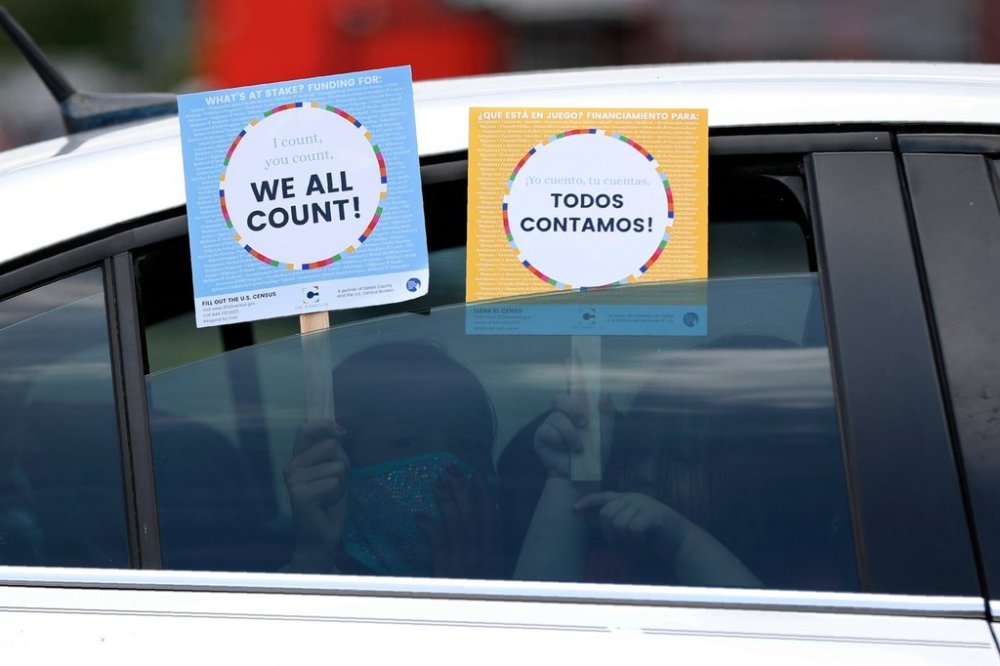
The bureau didn’t respond to an emailed inquiry on Monday about the reasons for the reduced number of sites. In a statement on its website, it said it “remains committed to conducting the most accurate count in history for the 2030 Census and looks forward to the continued partnership with local communities.”
Mark Mather, an associate vice president at the Population Reference Bureau, a nonpartisan research group, said limiting the test to just two metro areas in the South would be “a step backward.”
“The Census Bureau would be essentially flying blind into communities that need testing most — tribal lands, rural areas with limited connectivity and places with historically low response rates,” Mather said. “You can’t fix what you don’t test.”
Terri Ann Lowenthal, a former congressional staffer who consults on census issues, called the locale eliminations “an ominous sign for the 2030 Census.”
“The new plan for 2026 is unclear,” Lowenthal said.
The test is supposed to give the statistical agency the chance to learn how to better tally populations that were undercounted in the 2020 census and improve methods that will be used in 2030. It also allows it to test its messaging and its ability to process data as it’s being gathered.
Among the new methods being tested for 2030 is the use of U.S. Postal Service workers to conduct tasks previously done by census workers.
The original six test sites had been picked for a variety of reasons, including a desire to include rural areas where some residents don’t receive mail or have little or no internet service. Others, including tribal land, fast-growing locations with new construction, and dorms, care facilities and military barracks had been picked because their residents are traditionally hard to count.
Ahead of the last census in 2020, the only start-to-finish test of the head count was held in Providence, Rhode Island, in 2018. Plans for other tests were canceled because of a lack of funding from Congress.
The once-a-decade head count determines how many congressional seats and Electoral College votes each state gets. It also guides the distribution of $2.8 trillion in annual federal spending.
___
Follow Mike Schneider on the social platform Bluesky: @mikeysid.bsky.social.
___
Follow the AP’s coverage of the U.S. Census Bureau at https://apnews.com/hub/us-census-bureau.