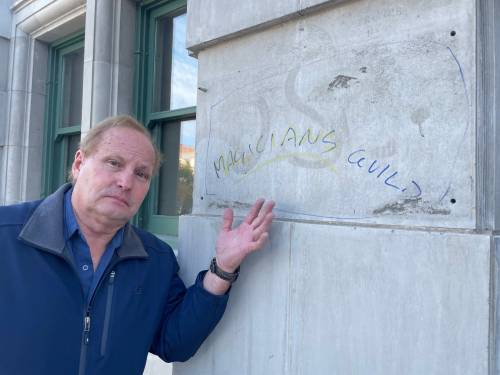
Investigations underway after patients die following multiple-hour ER waits at St. B Family of 68-year-old woman says their concerns were dismissed
Read this article for free:
or
Already have an account? Log in here »
To continue reading, please subscribe:

Digital Subscription
One year of digital access for only $205*
- Enjoy unlimited reading on winnipegfreepress.com
- Read the E-Edition, our digital replica newspaper
- Access News Break, our award-winning app
- Play interactive puzzles
*First annual payment billed as $205.00 + GST for one year. This annual subscription will automatically renew at $233.00 + GST every 52 weeks (10% off the regular annual price of $259.35). Offer available to new and qualified returning subscribers only. Cancel any time.
To continue reading, please subscribe:
Add Free Press access to your Brandon Sun subscription for only an additional
$1 for the first 4 weeks*
- Enjoy unlimited reading on winnipegfreepress.com
- Read the E-Edition, our digital replica newspaper
- Access News Break, our award-winning app
- Play interactive puzzles
*Your next Brandon Sun subscription payment will increase by $1.00 and you will be charged $17.95 plus GST for four weeks. After four weeks, your payment will increase to $24.95 plus GST every four weeks.
Read unlimited articles for free today:
or
Already have an account? Log in here »
Hey there, time traveller!
This article was published 02/02/2026 (253 days ago), so information in it may no longer be current.
Two families are seeking answers after their loved ones died following prolonged waits in the St. Boniface Hospital emergency room last month — cases that have sparked an internal hospital review and a provincial critical-incident investigation.
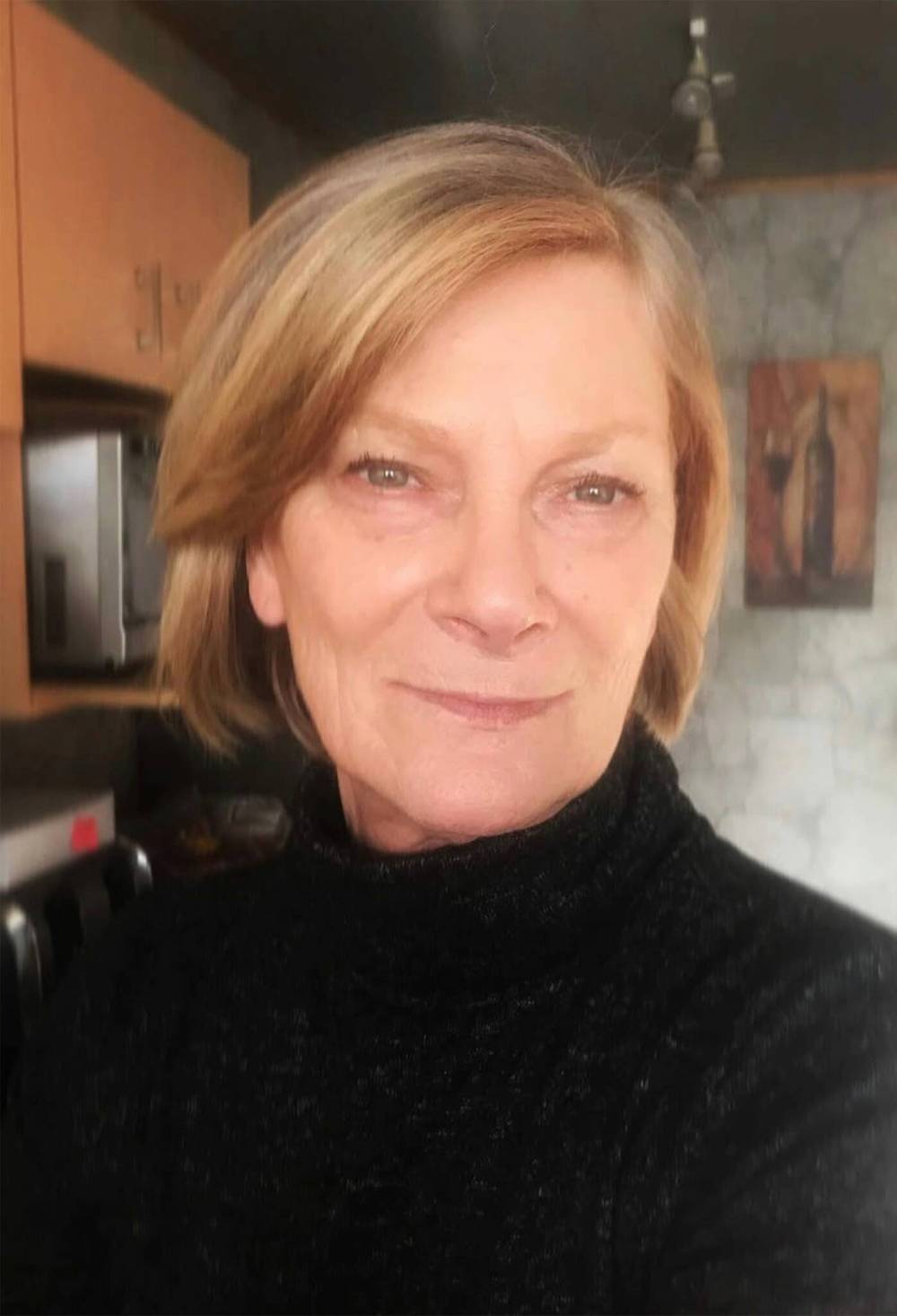
Judy Burns, 68, died on Jan. 21, three days after being admitted, after experiencing rectal bleeding. Her family says doctors repeatedly dismissed their concerns over many hours.
“We are seeking justice for our mom.”
SUPPLIED
Judy Burns, 68, died on Jan. 21, three days after being admitted to St. Boniface Hospital. Her family says doctors repeatedly dismissed their concerns.“Our family believes this case raises serious concerns about age-based dismissal, delayed intervention, and failures in emergency assessment that place other patients at risk,” Burns’ daughter Chelsea Mann told the Free Press Monday. “We are seeking justice for our mom, accountability and transparency from the hospital, mainly the ER department, and awareness, not only for the nurses and doctors but also to potential patients and families, so that no other families have to go through this.”
Burns was taken to hospital in the early morning hours of Jan. 18 after her daughter Samantha Burns found her delirious following a fall while trying to get out of bed.
Despite hypotension, an altered mental state and visible bleeding, the family said their mother’s condition was repeatedly attributed to dehydration.
Burns was later diagnosed with diverticulosis, and the family says they were told her symptoms were normal for “an elderly patient.”
The family pushed back, saying this was not normal for their mother, whom they described as cognitively intact and active.
Over many hours in the emergency room, they say her care was limited to repeated bloodwork, IV fluids and a CT scan. Doctors declined to perform an endoscopy, telling the family a follow-up colonoscopy would be sufficient.
“We were told further investigation would only happen if additional bleeding occurred,” said Mann.
Throughout the day, the family said multiple health-care providers continued to dismiss their mother’s symptoms. At one point, Burns was asked to sign a consent for a potential scope despite her impaired mental state and physical weakness.
At around 8 p.m., Burns’ condition deteriorated rapidly.
“Her body went into shock,” Samantha said. “It looked like she was having a stroke or a seizure.”
Samantha said she had to yell for another nurse to get help. Less than an hour later, Burns went into cardiac arrest. Hospital staff were able to stabilize her for emergency surgery, which revealed a small ulcer on her small intestine, which was fixed in a matter of minutes, the family said.
“She survived surgery, which was given a one per cent chance to survive, but was later diagnosed as being in a vegetative state,” Mann said.
The family took their mother off life support on Jan. 21.
An internal investigation is underway, according to the family.

SUPPLIED
Judy Burns, centre, with daughters Chelsea Mann, left, and Samantha Burns.“They said this shouldn’t have happened.”
Two nurses advised the family on how to submit a formal complaint, and even suggested taking the story to media.
“They said this shouldn’t have happened,” Mann said, wondering if there was more they could have done. “What if we pushed? What if? Even though we tried and we spoke up and everything.”
On Monday, the president of the Manitoba Nurses Union said those nurses were still advocating for their patient — even after her death.
“They were still advocating because we don’t want these things to happen,” Darlene Jackson said. “We want to see positive change in our health-care system.”
Unionized nurses at St. Boniface Hospital are set to vote on whether to grey-list the facility, citing growing safety concerns. St. Boniface would be the third health-care facility in the province (after Health Sciences Centre and Thompson General Hospital) to receive the designation, which signals a workplace is unsafe and advises nurses not to accept jobs or shifts there.
St. Boniface’s ER wait time was 10 hours on Monday afternoon.
Jackson said nurses, despite the ER’s $141-million upgrade and expansion, remain stretched and overworked.
Two days before Burns was admitted, 55-year-old Stacey Ross died after waiting 11 hours in St. Boniface Hospital’s emergency room — a case the province is now investigating as a critical incident.
Ross first went to the ER on Jan. 4 with chest pain and a persistent cough. After waiting 12 hours, she was sent home.
“They said she was fine,” her sister, Sheri Ross, said Monday.
Following her discharge, Ross made several visits to her doctor’s office. On the morning of Jan. 15, she experienced chest pain while at work and returned to the hospital, but was not admitted until 9:30 p.m.
Shortly afterward, her oxygen levels dropped sharply. A CT scan showed her lungs were full of fluid, and that it was likely pneumonia. The scan also revealed sepsis. Sheri was contacted and told to come to the hospital immediately.

“When I arrived, she was already on life support,” Sheri said. “It’s crazy, because I was just talking to her about an hour before. And (Stacey) had been talking to a friend about 30 minutes before she coded for the first time.”
Stacey coded two more times. She died in the early hours of Jan. 16.
The province said Monday it has launched a critical incident investigation into Ross’s death, something Sheri said she has only heard through media reports.
“No one has reached out to the family. We don’t know what’s happening,” she said. “It just doesn’t make any sense. And we just don’t want this to happen to anyone else.”
In a statement, Health Minister Uzoma Asagwara expressed condolences to the Burns family, adding the province is reviewing the death to determine if it meets the criteria for a critical incident.

“This is an incredibly difficult time, and my thoughts are with everyone affected,” Asagwara said. “That determination is made carefully, based on evidence and established patient safety criteria, and is led by clinical and patient safety experts.”
Data on critical incidents is reported on a lagged basis in three-month intervals, a spokesperson said.
The province did not say how many critical incidents were reported in the past several months.
“Our government believes that nothing matters more than making sure Manitobans are healthy and have the care they need when they need it,” Asagwara said. “We will keep doing the work, alongside front-line staff, to build a stronger, more responsive health-care system.”
scott.billeck@freepress.mb.ca

Scott Billeck is a general assignment reporter for the Free Press. A Creative Communications graduate from Red River College, Scott has more than a decade’s worth of experience covering hockey, football and global pandemics. He joined the Free Press in 2024. Read more about Scott.
Every piece of reporting Scott produces is reviewed by an editing team before it is posted online or published in print — part of the Free Press‘s tradition, since 1872, of producing reliable independent journalism. Read more about Free Press’s history and mandate, and learn how our newsroom operates.
Our newsroom depends on a growing audience of readers to power our journalism. If you are not a paid reader, please consider becoming a subscriber.
Our newsroom depends on its audience of readers to power our journalism. Thank you for your support.
Related Articles
Manitoba docs urged to speak out on preventable deaths











History
Updated on Monday, February 2, 2026 9:26 PM CST: Corrects typo