What to know about EPA decision to revoke a scientific finding that helped fight climate change

Advertisement

Advertise with us

The Environmental Protection Agency on Thursday revoked its own 2009 “endangerment finding,” a scientific conclusion that for 16 years has been the central basis for regulating planet-warming emissions from power plants, vehicles and other sources.

Read this article for free:


By clicking the button above, an account will be created and you will begin to receive some of our recommended newsletters. You may opt out of any newsletter by visiting your Email and Communication Preferences page or by clicking "unsubscribe" at the bottom of any email.

or

Already have an account? Log in here »

To continue reading, please subscribe:

Digital Subscription

One year of digital access for only $1.44 a week*

  • Enjoy unlimited reading on winnipegfreepress.com
  • Read the E-Edition, our digital replica newspaper
  • Access News Break, our award-winning app
  • Play interactive puzzles

*Billed as $5.77 plus GST every four weeks. After 52 weeks, price increases to the regular rate of $19.95 plus GST every four weeks. Offer available to new and qualified returning subscribers only. Cancel any time.

To continue reading, please subscribe:

Add Free Press access to your Brandon Sun subscription for only an additional

$1 for the first 4 weeks*

  • Enjoy unlimited reading on winnipegfreepress.com
  • Read the E-Edition, our digital replica newspaper
  • Access News Break, our award-winning app
  • Play interactive puzzles
Start now

*Your next Brandon Sun subscription payment will increase by $1.00 and you will be charged $17.95 plus GST for four weeks. After four weeks, your payment will increase to $24.95 plus GST every four weeks.

Hey there, time traveller!
This article was published 12/02/2026 (255 days ago), so information in it may no longer be current.

The Environmental Protection Agency on Thursday revoked its own 2009 “endangerment finding,” a scientific conclusion that for 16 years has been the central basis for regulating planet-warming emissions from power plants, vehicles and other sources.

The finding itself is straightforward: Carbon dioxide and other greenhouse gases — caused by burning fossil fuels such as coal, oil and gas — endanger public health and welfare.

It was adopted after the U.S. Supreme Court ruled in 2007 that greenhouse gases are air pollutants that can be regulated under the Clean Air Act.
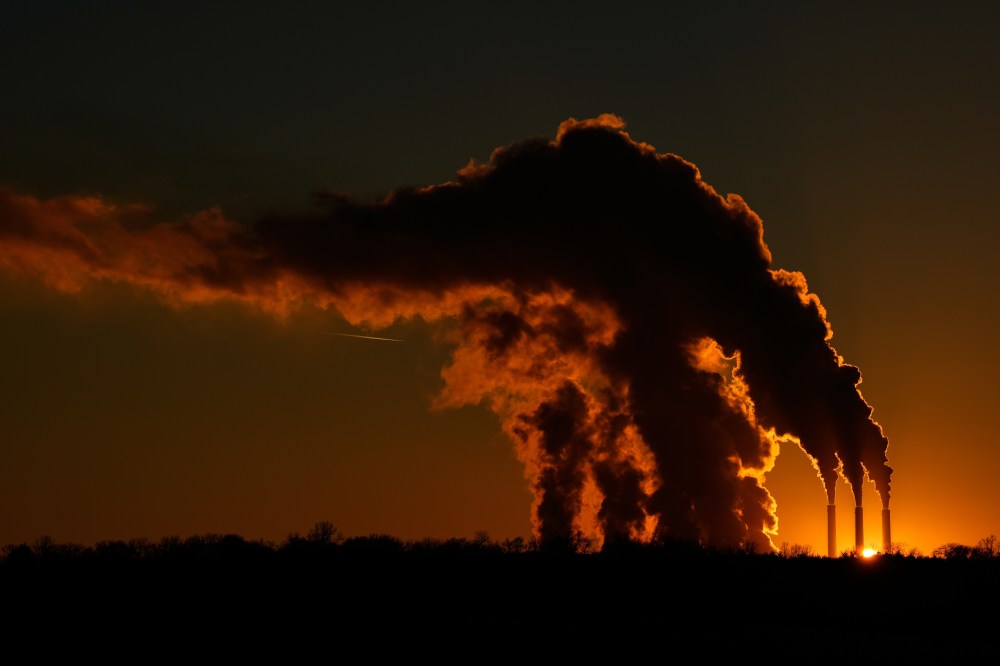
FILE - The Jeffrey Energy Center coal-fired power plant operates at sunset near Emmett, Kan., Jan. 3, 2026, in Topeka, Kan. (AP Photo/Charlie Riedel, File)

The Trump administration says the finding hurts industry and the economy and that the Obama and Biden administrations twisted science to determine that greenhouse gases are a public health risk.

Environmentalists say those gases are a clear threat because climate change worsens weather disasters such as floods, heat waves and drought.

Here’s what to know:

How has the endangerment finding been used?

Since taking effect in 2010, during President Barack Obama’s first term, the endangerment finding has been the legal underpinning for new regulations targeting emissions from vehicles, oil and gas facilities and large industries, including power plants.

The EPA also determined that greenhouse gas emissions from some aircraft endanger health and welfare, setting the stage for future regulations.

Under President Donald Trump, the Department of Energy has suggested that climate models used by scientists to predict warming have overreached, that long-term trends for disasters generally don’t show much change and that climate has little impact on the economy.

Why does it matter?

Climate scientists warn that overturning the endangerment finding undermines decades of scientific progress and damages the credibility of U.S. institutions tasked with protecting the environment.

More importantly, scientists say rising global temperatures — the hottest years on record have all occurred since 2009 — cause more extreme weather that endangers people and causes billions of dollars in damage from more frequent and severe heat waves, wildfires, droughts and catastrophic flooding from more-intense storms.
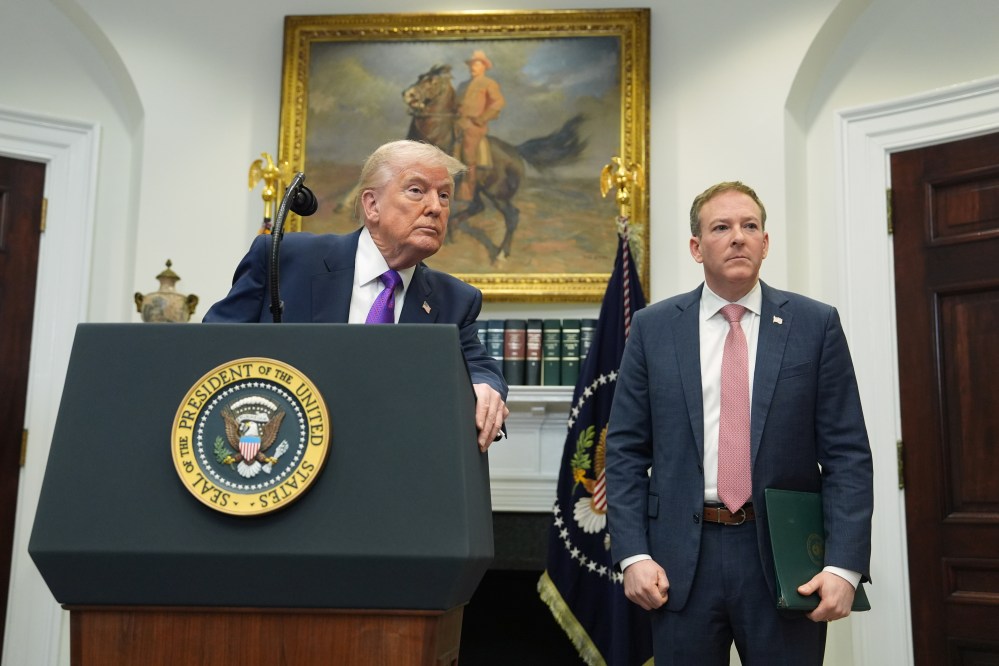
President Donald Trump listens to a question from a reporter during an event with Environmental Protection Agency director Lee Zeldin to announce the EPA will no longer regulate greenhouse gases, in the Roosevelt Room of the White House, Thursday, Feb. 12, 2026, in Washington. (AP Photo/Evan Vucci)

The EPA action repeals all greenhouse gas emissions standards for cars and trucks, but experts say it could trigger a broader undoing of climate regulations for stationary sources such as power plants and oil and gas facilities. It also could prevent future administrations from proposing rules to address global warming because they would have to restart the scientific and legal process to establish a new endangerment finding, which could take years and face legal challenges, said David Doniger, a climate expert at the Natural Resources Defense Council.

What happens next?

Environmental groups are sure to challenge the revocation in court.

So far, federal courts have repeatedly rejected legal challenges to the finding, including a 2023 decision by the U.S. Court of Appeals for the District of Columbia Circuit.

___

The Associated Press’ climate and environmental coverage receives financial support from multiple private foundations. AP is solely responsible for all content. Find AP’s standards for working with philanthropies, a list of supporters and funded coverage areas at AP.org.


Report Error Submit a Tip

More Stories

Bombers top B.C. Lions 34-10 to earn playoff spot

Taylor Allen 5 minute read Preview

Bombers top B.C. Lions 34-10 to earn playoff spot

Taylor Allen 5 minute read Yesterday at 8:41 AM CDT

Dru Brown saved the Winnipeg Blue Bombers’ season.

They were a trainwreck for the opening 40-plus minutes in Vancouver on Friday night before Brown provided the ultimate spark, accounting for 31 consecutive points in a 34-10 victory over the B.C. Lions to clinch a playoff berth.

The Lions — who had nothing to play for and rested a long list of key starters — somehow led 10-3 late in the third quarter when Bombers quarterback Zach Collaros was forced to leave the game. Lions defensive tackle Nathan Cherry was flagged for roughing the passer after driving Collaros into the turf, and the 38-year-old pivot was ruled out shortly thereafter.

And then Brown’s brilliance began.

Read
Yesterday at 8:41 AM CDT

Puzzles Palace

1 minute read Friday, Oct. 16, 2026

To solve our puzzles, please subscribe with this special offer: |

‘Tough part of the business’

Mike McIntyre 6 minute read Preview

‘Tough part of the business’

Mike McIntyre 6 minute read Yesterday at 10:11 PM CDT

Relief? Regret? Rage?

How are the Winnipeg Jets feeling following Friday’s Connor Hellebuyck trade — particularly those with deep roots and strong bonds with the franchise goaltender who now finds himself a member of the New Jersey Devils?

“It was a bit of a cloud hanging over our heads,” captain Adam Lowry admitted on Saturday. “It’s nice we can look forward now. We don’t have to keep talking about it. We’ve got guys that want to be here.”

That was a bit of a common theme around the room following an outdoor practice at Princess Auto Stadium ahead of Sunday’s Heritage Classic game against the Montreal Canadiens.

Read
Yesterday at 10:11 PM CDT

News briefs for Sunday, October 25, 2026

1 minute read Updated: 11:13 AM CDT

A collection of breaking news briefs filed on Sunday, October 25, 2026

Leaf Rapids man charged with second-degree murder

11:13 AM

RCMP have charged a 23-year-old Leaf Rapids man with second-degree murder in the death of a 55-year-old man last week.

Echoes of Idle No More as Carney set to meet with First Nations

Niigaan Sinclair 5 minute read Preview

Echoes of Idle No More as Carney set to meet with First Nations

Niigaan Sinclair 5 minute read 10:29 AM CDT

The prime minister, premiers and First Nations leaders will meet in Ottawa Monday to discuss a host of issues, including Indigenous involvement in energy and resource development projects.

Read
10:29 AM CDT

Opening of Portage and Main shows even seemingly insurmountable impasses can be overcome

Jason Syvixay 10 minute read Preview

Opening of Portage and Main shows even seemingly insurmountable impasses can be overcome

Jason Syvixay 10 minute read Yesterday at 2:00 AM CDT

There are places in a city that become more than places. Portage and Main is one of them. For generations of Winnipeggers, the intersection has represented downtown, traffic, development and civic identity. Its reopening to pedestrians in 2025, after 46 years of closure, was about more than crossing a street. It was a reminder that decisions made by one generation can shape the choices available to another — and that even seemingly permanent decisions can be reconsidered.

I have spent much of my professional life thinking about Winnipeg as a planner, working in public, private and non-profit settings. My PhD research gave me an opportunity to examine Portage and Main differently: not simply as a debate about cars and pedestrians, but as a window into how power operates in a city. I reviewed 569 archival documents spanning the 1960s to the present, interviewed 48 planners with experience in Winnipeg, and mapped the relationships between planners, politicians, developers, engineers, residents, businesses and advocacy groups.

What emerged was a story about how planning decisions become embedded in a city’s institutions, agreements, infrastructure, professional practices and political expectations — shaping not only what gets built, but who gets to influence what gets built.

The closure of Portage and Main in 1979 did not remain a decision confined to a particular political moment. Over time, it was reinforced by development agreements, physical infrastructure, property relationships, traffic-engineering practices, administrative routines, and public narratives about mobility and downtown revitalization. The people who made many of those original decisions eventually left office. The arrangements they created remained. Later planners inherited them.

Read
Yesterday at 2:00 AM CDT