Ice capades

As the Arctic landscape evolves, global powers jostle for control in the North

Advertisement

Advertise with us

Like moving chimneys, deck hands breathe out frosty clouds as their vessel splits the polar ice into huge chunks that desperately climb atop each other, as if to swallow the ship.

Read this article for free:


or

Already have an account? Log in here »

To continue reading, please subscribe:

Subscribe and receive a limited-edition Free Press branded hat or tote.

Digital Subscription

One year of digital access for only $205*

  • Enjoy unlimited reading on winnipegfreepress.com
  • Read the E-Edition, our digital replica newspaper
  • Access News Break, our award-winning app
  • Play interactive puzzles

*First annual payment billed as $205.00 + GST for one year. This annual subscription will automatically renew at $233.00 + GST every 52 weeks (10% off the regular annual price of $259.35). Offer available to new and qualified returning subscribers only. Cancel any time.

To continue reading, please subscribe:

Add Free Press access to your Brandon Sun subscription for only an additional

$1 for the first 4 weeks*

  • Enjoy unlimited reading on winnipegfreepress.com
  • Read the E-Edition, our digital replica newspaper
  • Access News Break, our award-winning app
  • Play interactive puzzles
Start now

*Your next Brandon Sun subscription payment will increase by $1.00 and you will be charged $17.95 plus GST for four weeks. After four weeks, your payment will increase to $24.95 plus GST every four weeks.

Like moving chimneys, deck hands breathe out frosty clouds as their vessel splits the polar ice into huge chunks that desperately climb atop each other, as if to swallow the ship.

This is a typical icebreaker at work above the Arctic Circle, the fastest-warming place on Earth, a worrying environment that is changing and disappearing alarmingly fast. Much of it is an unfriendly desert of ice covering roughly four per cent of the earth. It is the U.S., China, Russia and Canada shadowboxing for supremacy, in whole or in part.

Kenneth R. Rosen’s Polar War is an outstanding, in-depth, well-researched explanation of what lies ahead for the Arctic Circle — and it isn’t encouraging. Rosen believes that conflict over possession of this area may lead to world war.
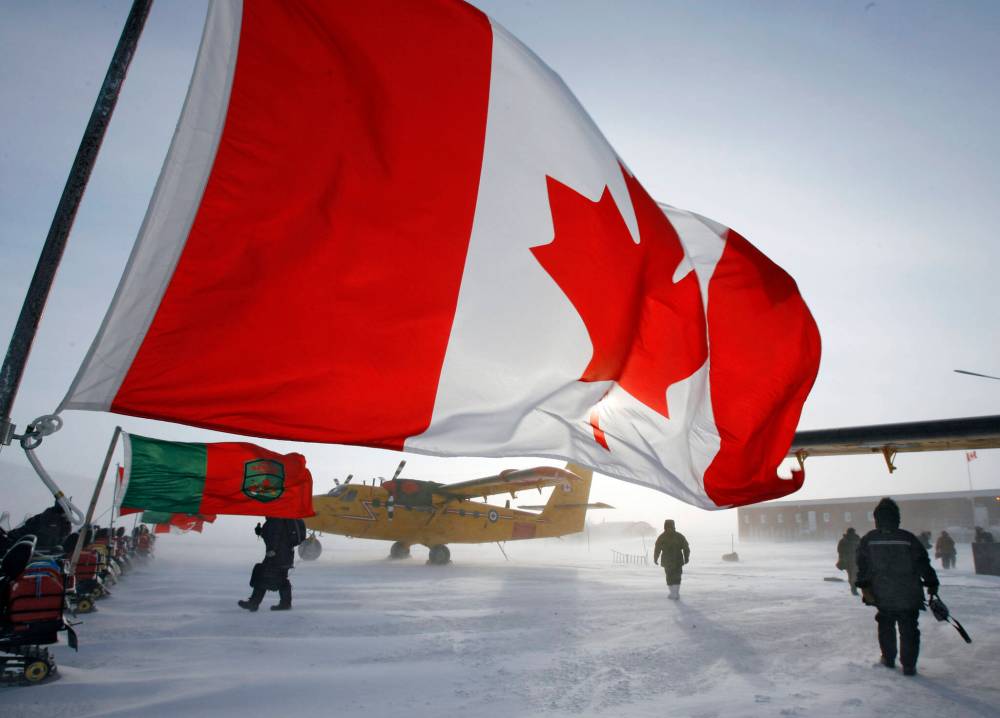
Jeff McIntosh / Canadian Press files
                                The world’s major powers yearn to own the Arctic because of its natural resources, the potential for new maritime trade routes opening up (owing to climate change) and for the purposes of national security.

Jeff McIntosh / Canadian Press files

The world’s major powers yearn to own the Arctic because of its natural resources, the potential for new maritime trade routes opening up (owing to climate change) and for the purposes of national security.

“Nations near and far from the region have seen the warming as an opportunity for expansion and military dominance and what they have cooked up is a conflict teetering toward full-blown war,” he writes.

Rosen has spent much of his time in dangerous places: Syria, Iraq, Ukraine. An American, he is particularly known for the quality of his writing and his first-class reporting. Together, they engender credibility.

He has written for the New York Times, the New Yorker and the Atlantic magazine. Previous books include 2020’s Bulletproof Vest and 2021’s Troubled: The Failed Promise of America’s Behavioral Treatment Programs.

Everybody wants a piece of the Arctic, or the whole pie, Rosen says. The world’s major powers ache to own the Arctic because it contains a virgin treasure house of natural resources and the for security of possession its conquest provides. As the snow and ice keep melting, it may dramatically reveal new sea routes, ones which could change the face of commercial shipping around the world. Such interest is acute among the major powers.

Rosen says the more the ice thaws due to climate change, the more impatient countries are to own the Arctic. And after his three years of study and on-site observations, he thinks that squabbling between the U.S. and other powers could eventually change today’s legal disagreements into lethal ones. The only question, he says, is when.

Recently, the Canadian federal government announced it will be modernizing its surveillance and communication capacities in the Arctic via satellite. It’s part of Ottawa’s $38.6-billion plan to refurbish the North American Aerospace Defense Command (NORAD), which was announced in 2022 and is slated to take two decades.

Canada is also going to build three operational support hubs in the Arctic that will consist of airstrips, logistical facilities and equipment depots.

Wayne Glowacki / Free Press files
                                The exchange of information on climate change in the North was severed when Russia invaded Ukraine.

Wayne Glowacki / Free Press files

The exchange of information on climate change in the North was severed when Russia invaded Ukraine.

One very dangerous ingredient in the race to claim ownership of parts or all the Arctic Circle is U.S. President Donald Trump, who has a habit of claiming places as his simply because he thinks they should be.

Meanwhile, Russia’s footprint in the Arctic far outstrips the United States. Russia has built numerous military facilities in the Arctic and increased its operational capabilities. To catch up, the U.S. must invest in platforms, infrastructure and training in the North.

“War in the North is wildly unthinkable. It is too cold, too harsh, too inaccessible, too unpredictable,” says Rosen. “What I’ve heard time and again, is that a maritime emergency — a stranded cruise ship, a botched fisheries inspection — will lead to conflict elsewhere, a military phenomenon known as horizontal escalation.

“To say the Arctic is warming four to five times faster than the rest of the world — a grossly unexplained punchline — means little to those living elsewhere. Will Greenland’s melting ice cap flood parts of Bangladesh? Will Cape Cod become Prairie? Will sparrows make nests at the North Pole? Will all the disasters forewarned by climatologists be realized? We do not know.

What has already come to pass is that the Earth’s climate first showed change in the Arctic. The rest of the world followed.”

There also is the problem of perennially frozen ground — permafrost — melting. When it thaws, the buildings above it can crack, shift and drop. It also releases greenhouse gas.

Unfortunately, when Russia started waging war against Ukraine, the international co-operation and joint exchange of information on climate change between the West and the Russians was severed. This is particularly unfortunate because the effects of climate change become evident in Russia first.
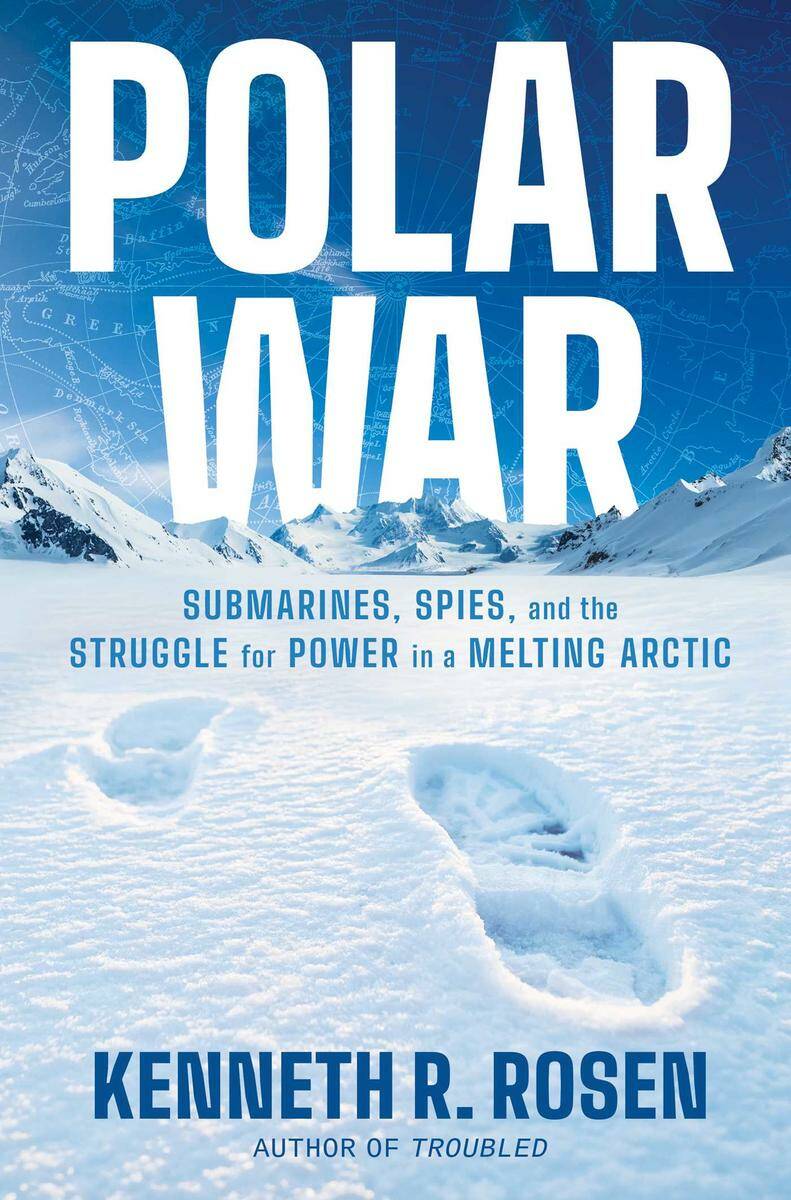
Polar War

Polar War

“Scientists want to help, but it is too late,” Rosen concludes. “The new Cold War will only get worse, in part because scientists failed to stop it and in part because the world failed to listen.”

Someday, we may become the True North, Strong and Flee.

Barry Craig and family lived 12 years in Canada’s North. As a journalist he went through the Northwest Passage east to west on the Canadian Coast Guard icebreaker John A. Macdonald in 1969.
Report Error Submit a Tip

More Stories

50 years of rare tall grass prairie celebrated

Aaron Epp 4 minute read Preview

50 years of rare tall grass prairie celebrated

Aaron Epp 4 minute read Yesterday at 7:11 PM CDT

Kristin Bestvater is always glad when she heads to Winnipeg’s St. James neighbourhood and visits the Living Prairie Museum.

“It’s beautiful,” Bestvater said of the 13-hectare site, which is one of the last remaining tall grass prairies in North America. “I don’t know how many other cities would have something like this.”

The Island Lakes resident and her nine-year-old son were among the hundreds of people who gathered at the museum on Saturday to celebrate its 50th anniversary.

Designated a park in 1974, it officially became the Living Prairie Museum in 1976 with the opening of an interpretive centre which houses a gallery of exhibits, a gift shop and an observation deck.

Read
Yesterday at 7:11 PM CDT

A measure of hope a decade after senseless death, injustice

Niigaan Sinclair 5 minute read Preview

A measure of hope a decade after senseless death, injustice

Niigaan Sinclair 5 minute read Friday, Aug. 7, 2026

I’m a few hundred kilometres from the farm near Biggar, Sask. — the place where 22-year old Colten Boushie from Cree Red Pheasant First Nation was shot and killed by farmer Gerald Stanley precisely 10 years ago.

“You need to remind people about the 10-year anniversary,” a nearby, rural school principal tells me at the education conference I just finished speaking at.

“That death is a wound that continues to bleed in all of us,” a principal from Regina adds. “I hear about it from our students all the time.”

On Aug. 9, 2016, Boushie’s death entered the Canadian consciousness, representing what then-Saskatoon mayor Charlie Clark declared “a defining moment for this community and this country.”

Read
Friday, Aug. 7, 2026

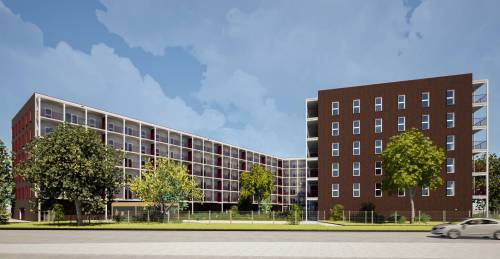
$60M, six-storey Harbourview Terrace due to open in June 2028

Aaron Epp 4 minute read Preview

$60M, six-storey Harbourview Terrace due to open in June 2028

Aaron Epp 4 minute read Friday, Aug. 7, 2026

They donned high-vis vests and brandished shovels with gold-coloured blades Friday morning at the ceremonial groundbreaking for a multi-family residential development in northeast Winnipeg.

Concord Projects has started construction of Harbourview Terrace, the inaugural development by two-year-old real estate company Foxhill Properties. Located in North Kildonan at 1820 De Vries Ave., the $60-million, six-storey apartment building will contain 179 units.

Founder and president Frank Koch-Schulte, who runs the company with his wife Alisha, said Foxhill wants to develop and manage properties with integrity.

“This is kind of like my opportunity to try to do things our way, which I feel is a way that keeps tenants in mind,” Koch-Schulte said. “We live in this neighbourhood. We’re very much invested in seeing quality housing go here.”

Read
Friday, Aug. 7, 2026

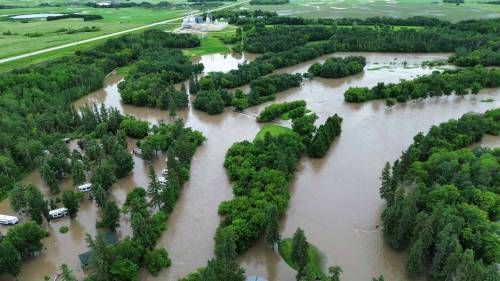
Gilbert Plains Country Club closes for remainder of season due to flood damage

Ken Wiebe 6 minute read Preview

Gilbert Plains Country Club closes for remainder of season due to flood damage

Ken Wiebe 6 minute read Thursday, Aug. 6, 2026

Scott McCallum has made the trek to the Gilbert Plains Country Club clubhouse countless times.

But this was the first time the golf professional and general manager of the course required hip waders to get to his office.

Walking hand in hand with his wife Lindsay, McCallum didn’t need much time to see the devastation caused by the flash flooding in the Parkland region in late June.

“We’re on a river and it’s a beautiful golf course, but anytime you’re on a body of water you know that you’re taking a chance of events like this happening,” McCallum said in a telephone interview. “To this magnitude, we’ve never seen anything like it before. So, this is new to us.

Read
Thursday, Aug. 6, 2026

Vibrant Norwood apartment garden a labour of love to honour green thumb’s late partner

David Sanderson 7 minute read Preview

Vibrant Norwood apartment garden a labour of love to honour green thumb’s late partner

David Sanderson 7 minute read Yesterday at 6:00 AM CDT

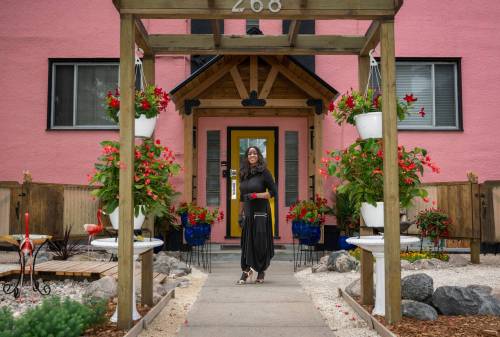
St. Vital resident Rob Duncan can’t pinpoint when he first noticed an award-winning garden blanketing the grounds of a two-storey St. Mary’s Road apartment block, near Coniston Street.

Perhaps he was on his way home from work and caught a glimpse of it out of the corner of his eye. Or maybe he was running errands in the Norwood Flats area and paused to admire the array of annuals, perennials and potted plants that extends from the block’s doorway to the front curb.

What Duncan does know for certain is that after spying the urban oasis, twice fêted in Take Pride Winnipeg’s annual Winnipeg in Bloom competition, he couldn’t unsee it.

“First of all, the pink building really stands out,” Duncan says, referring to the brightly painted California Apartments complex at 268 St. Mary’s Rd. “But then you have the pergola, the rock garden, the flowers and trees… a sea of colour on a very busy street.”

Read
Yesterday at 6:00 AM CDT

Champion curler Meleschuk never lost his passion for the game

Joshua Frey-Sam 9 minute read Preview

Champion curler Meleschuk never lost his passion for the game

Joshua Frey-Sam 9 minute read Yesterday at 3:00 AM CDT

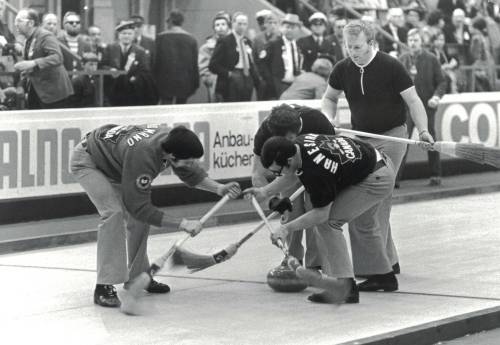
At the height of his curling career, Orest Meleschuk balanced ferocity and finesse like almost no one else.

The Winnipeg product was a fierce competitor skilful enough to thread a rock through a window and find the button.

Known as “The Big O,” he curled competitively for over six decades, finding success at the local, provincial, national and global level, and his longevity on the pebble was notable before lengthy careers became the norm.

Meleschuk is still tied with his good friend John Usackis for the most appearances in the Manitoba men’s provincial playdowns, at 30.

Read
Yesterday at 3:00 AM CDT