Judge orders changes to Columbia and Snake river dam operations to help ‘disappearing’ salmon
Advertisement
Read this article for free:
or
Already have an account? Log in here »
To continue reading, please subscribe:

Digital Subscription
One year of digital access for only $205*
- Enjoy unlimited reading on winnipegfreepress.com
- Read the E-Edition, our digital replica newspaper
- Access News Break, our award-winning app
- Play interactive puzzles
*First annual payment billed as $205.00 + GST for one year. This annual subscription will automatically renew at $233.00 + GST every 52 weeks (10% off the regular annual price of $259.35). Offer available to new and qualified returning subscribers only. Cancel any time.
To continue reading, please subscribe:
Add Free Press access to your Brandon Sun subscription for only an additional
$1 for the first 4 weeks*
- Enjoy unlimited reading on winnipegfreepress.com
- Read the E-Edition, our digital replica newspaper
- Access News Break, our award-winning app
- Play interactive puzzles
*Your next Brandon Sun subscription payment will increase by $1.00 and you will be charged $17.95 plus GST for four weeks. After four weeks, your payment will increase to $24.95 plus GST every four weeks.
Read unlimited articles for free today:
or
Already have an account? Log in here »
Hey there, time traveller!
This article was published 25/02/2026 (215 days ago), so information in it may no longer be current.
PORTLAND, Ore. (AP) — A federal judge in Oregon has ordered narrow changes to hydropower dam operations on the Columbia and Snake rivers in the Pacific Northwest in order to help salmon, saying the Trump administration’s plans for the massive structures would harm salmon runs that are “disappearing from the landscape.”
The ruling late Wednesday came in a decades-long legal effort by the states of Oregon and Washington, Native American tribes, and conservation and fishing groups to ensure better protections for migrating salmon, which are killed in large numbers by the dams.
In a landmark 2023 deal that paused the litigation in favor of finding long-term solutions, the Biden administration promised to spend $1 billion over a decade to help restore salmon while also boosting tribal clean energy projects.
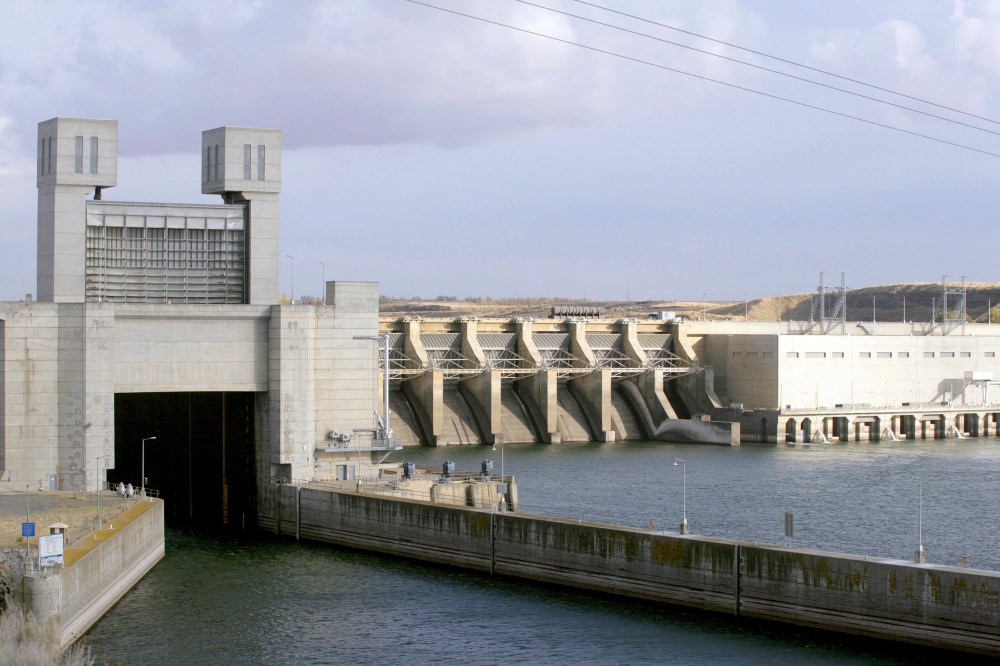
But the Trump administration torpedoed that agreement last year, calling it “radical environmentalism” that could have resulted in the breaching of four controversial dams on the Snake River, and the plaintiffs went back to court. The deal had been opposed by Republicans who said it would jeopardize the region’s power supply, irrigation and the ability to export grain to Asia.
U.S. District Judge Michael Simon in his ruling Wednesday lamented what he described as the “disappointing history of government avoidance and manipulation instead of sincere efforts at solving the problem.”
“One of the foundational symbols of the West, a critical recreational, cultural, and economic driver for Western states, and the beating heart and guaranteed resource protected by treaties with several Native American tribes is disappearing from the landscape,” Simon wrote. “And yet the litigation continues in much the same way as it has for 30 years.”
A dispute over water and spill levels
Oregon and the other plaintiffs had asked Simon to lower the levels of reservoirs behind the dams, which they argued can help fish travel through them faster, and increase the amount of water spilled past them, which can help fish pass over the dams instead of through turbines. The federal government sought higher reservoir levels.
Simon ordered that reservoirs remain at the same level as last year and wrote that the changes in his order were “narrowly tailored” and essentially maintained the status quo.
“The Federal Defendants have, for years, maintained a safe and reliable power system and dam operations with the nearly the same spill levels as ordered here, and with the same reservoir levels from 2025,” he wrote.
The Bonneville Power Administration, which markets the electricity from the dams, referred a message seeking comment to the Justice Department, which said in an email Thursday that it had no comment.
In court filings, the federal government called the request a “sweeping scheme to wrest control” of the dams that would compromise the ability to operate them safely and efficiently for power generation, navigation and irrigation. Any such court order could also raise rates for utility customers, the government said.
“Once again, environmental activists are using judicial allies to threaten our hydroelectric system, which provides clean, baseload energy to millions in our region,” U.S. Rep. Dan Newhouse, a Republican from Washington, whose district includes some of the dams, said Thursday in a social media post, adding that “dams and salmon can, and do, coexist.”
In a statement Thursday, Democratic Oregon Gov. Tina Kotek said the judge “made the right call” in rejecting “the Trump administration’s refusal to uphold salmon protections.”
The dams have altered life in a wide area
The Columbia River Basin, spanning an area roughly the size of Texas, was once the world’s greatest salmon-producing river system, with at least 16 stocks of salmon and steelhead. Today, four are extinct and seven are endangered or threatened. Another iconic but endangered Northwestern species, a population of killer whales, also depend on the salmon.
The construction of the first dams on the Columbia River, including the Grand Coulee and Bonneville in the 1930s, provided jobs during the Great Depression as well as hydropower and navigation. They made Lewiston, Idaho, the most inland seaport on the West Coast, and many farmers continue to rely on barges to ship their crops.
But the dams hurt salmon in a number of ways. Despite systems designed to help young fish bypass the turbines, some wind up going through them. The sluggish water in reservoirs behind the dams can heat up to inhospitable temperatures. The slow current delays the migration of juvenile fish to the sea.
Juvenile salmon once reached the ocean from the upper Snake River in two or three days as swift currents pushed them along. Now, the journey past eight dams can take weeks, during which time they are exposed to more predators.
The plaintiffs, which include the state of Oregon and a coalition of conservation and fishing groups such as the National Wildlife Federation, filed the motion for a preliminary injunction, with Washington state, the Nez Perce Tribe and Yakama Nation supporting it as “friends of the court.”
“If the government had been allowed to implement their proposal, it would have had really, really devastating consequences for salmon,” said Amanda Goodin, an attorney with the environmental law firm Earthjustice.

Opponents of the injunction, including the Inland Ports and Navigation Group, say increasing spill to can hinder navigation, disrupt the flow of commerce and hurt the economy. They also suggest that increasing spill also increases the turbulence and dissolved gases, including nitrogen, in the water, which can be detrimental to the fish.
“The order increases the risk of harm to infrastructure, listed species, and public safety while failing to demonstrate that there will be benefits to listed salmon and steelhead,” the organization said in a written statement.
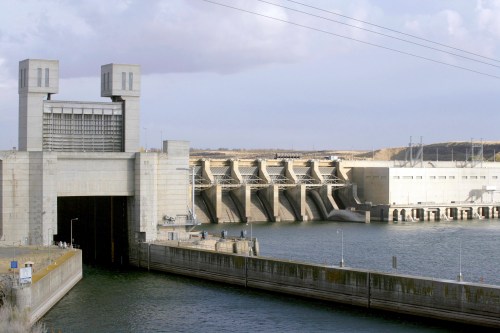
The dams at issue are the Ice Harbor, Lower Monumental, Little Goose and Lower Granite on the Snake River, and the Bonneville, The Dalles, John Day and McNary on the Columbia.
___
Johnson reported from Seattle.