

Ugandan police arrest two women for allegedly kissing in public
Advertisement
Read this article for free:
or
Already have an account? Log in here »
To continue reading, please subscribe:

Digital Subscription
One year of digital access for only $205*
- Enjoy unlimited reading on winnipegfreepress.com
- Read the E-Edition, our digital replica newspaper
- Access News Break, our award-winning app
- Play interactive puzzles
*First annual payment billed as $205.00 + GST for one year. This annual subscription will automatically renew at $233.00 + GST every 52 weeks (10% off the regular annual price of $259.35). Offer available to new and qualified returning subscribers only. Cancel any time.
To continue reading, please subscribe:
Add Free Press access to your Brandon Sun subscription for only an additional
$1 for the first 4 weeks*
- Enjoy unlimited reading on winnipegfreepress.com
- Read the E-Edition, our digital replica newspaper
- Access News Break, our award-winning app
- Play interactive puzzles
*Your next Brandon Sun subscription payment will increase by $1.00 and you will be charged $17.95 plus GST for four weeks. After four weeks, your payment will increase to $24.95 plus GST every four weeks.
Read unlimited articles for free today:
or
Already have an account? Log in here »
Hey there, time traveller!
This article was published 26/02/2026 (226 days ago), so information in it may no longer be current.
KAMPALA, Uganda (AP) — Ugandan police detained two women who were reported by their neighbors to be engaging in same-sex activities, a police spokesperson said on Thursday, one of the first known instances of arrests under an anti-LGBTQ law enacted in 2023.
The women were arrested in the northwestern city of Arua on Feb. 18 after police were notified they were often seen kissing. When officers arrived, they caught the couple “red-handed on the cement floor,” said spokesperson Josephine Angucia.
The women were later freed on police bond and have yet to be charged as the investigations are continuing, she said.
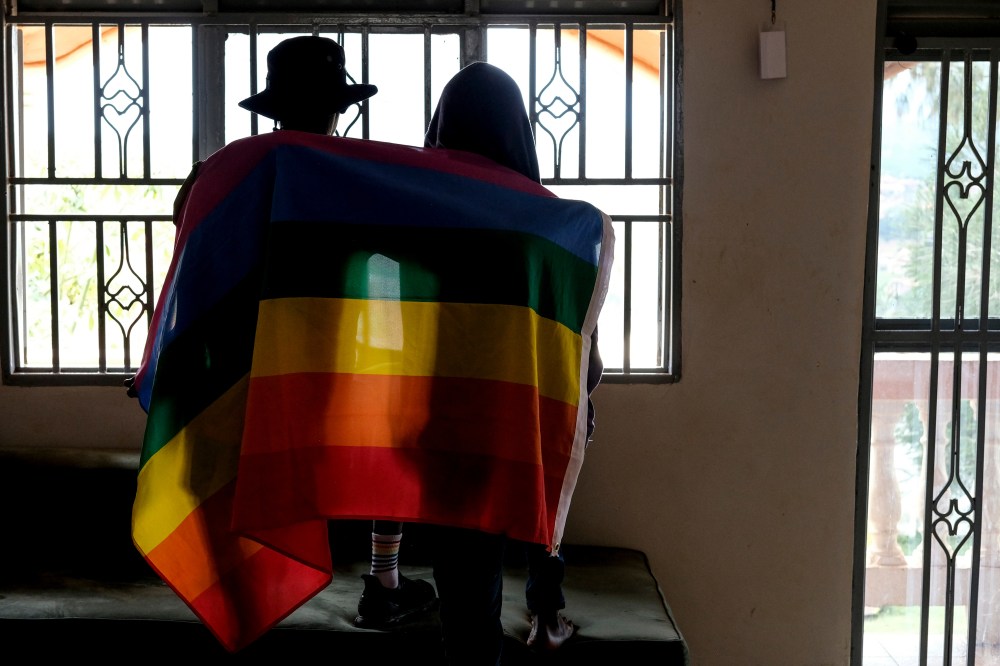
The controversial Anti-Homosexuality Act was supported by many in Uganda but widely condemned by rights activists and others abroad. Its promoters said it was necessary to protect children.
While the legislation does not criminalize identifying as LGBTQ, it mandates the death penalty for “aggravated homosexuality,” which is defined as cases of sexual relations involving people infected with HIV, as well as with minors and other categories of vulnerable people.
The detention of the women in Arua “underscores the grim reality we are facing on the ground under the Anti-Homosexuality Act,” said Frank Mugisha, a prominent LGBTQ leader in Uganda. “We have seen a surge in a targeted crackdown that goes beyond just arrests; it has fueled a dangerous cycle of blackmail and extortion.”
Same-sex activity is separately criminalized in the East African country under a colonial-era law that punishes relations against “the order of nature.”
Homosexuality is criminalized in many of Africa’s 54 countries. The West African nation of Senegal is currently trying to impose tougher penalties for same-sex activity.