

Islamic militants increase attacks in Benin, Niger and Nigeria borderlands, group says
Advertisement
Read this article for free:
or
Already have an account? Log in here »
To continue reading, please subscribe:

Digital Subscription
One year of digital access for only $205*
- Enjoy unlimited reading on winnipegfreepress.com
- Read the E-Edition, our digital replica newspaper
- Access News Break, our award-winning app
- Play interactive puzzles
*First annual payment billed as $205.00 + GST for one year. This annual subscription will automatically renew at $233.00 + GST every 52 weeks (10% off the regular annual price of $259.35). Offer available to new and qualified returning subscribers only. Cancel any time.
To continue reading, please subscribe:
Add Free Press access to your Brandon Sun subscription for only an additional
$1 for the first 4 weeks*
- Enjoy unlimited reading on winnipegfreepress.com
- Read the E-Edition, our digital replica newspaper
- Access News Break, our award-winning app
- Play interactive puzzles
*Your next Brandon Sun subscription payment will increase by $1.00 and you will be charged $17.95 plus GST for four weeks. After four weeks, your payment will increase to $24.95 plus GST every four weeks.
Read unlimited articles for free today:
or
Already have an account? Log in here »
Hey there, time traveller!
This article was published 26/02/2026 (203 days ago), so information in it may no longer be current.
DAKAR, Senegal (AP) — Islamic militant groups have stepped up attacks and deepened their presence in border areas of Benin, Niger and Nigeria in West Africa over the past year, a crisis monitoring group said Thursday.
From 2024 to 2025, the number of violent events involving jihadi groups in border areas of the three West African countries rose by around 80%, and deaths more than tripled to over 1,000, according to a report by the Armed Conflict Location & Event Data project, or ACLED.
The data show how violence in the region has entered a new phase, with Islamic militants not just expanding but also cementing their presence, said Héni Nsaibia, ACLED’s senior analyst for West Africa.
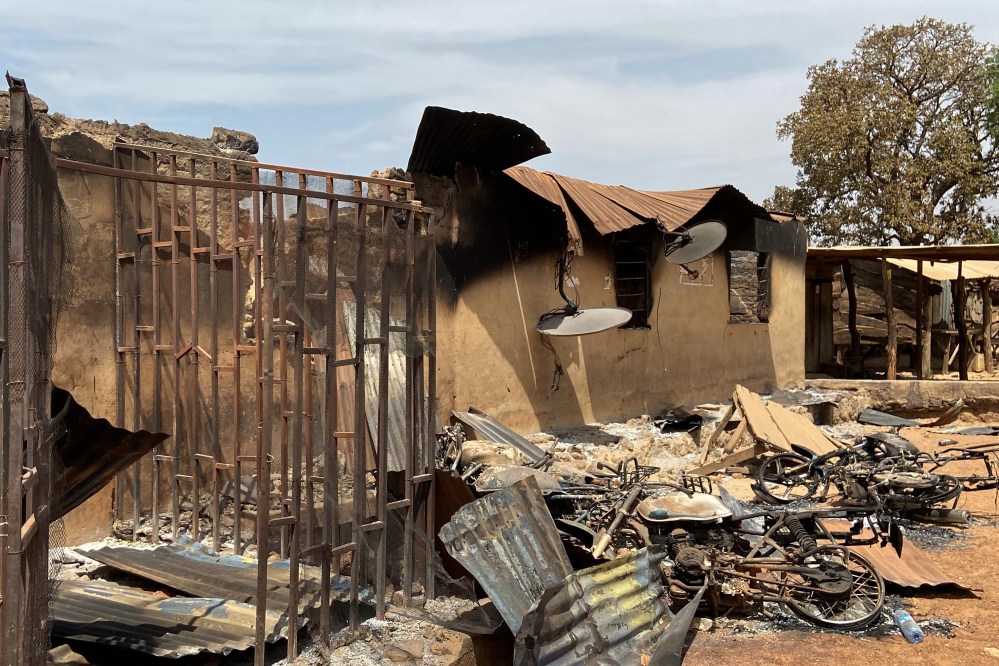
“Militant groups are taking advantage of long-standing vulnerabilities, exploiting governance gaps and weak regional military coordination,” Nsaibia said.
Over the past year, two jihadist groups — the al-Qaida-linked Jama’at Nusrat al-Islam wal-Muslimin, or JNIM, and the Islamic State Sahel Province — have rapidly expanded from the Sahel, an arid swath of land south of the Sahara, toward coastal nations along the Atlantic.
In the small coastal nation of Benin, deadly cross-border raids against the military made 2025 the country’s deadliest year, according to the report.
In Niger, the groups are consolidating control, including a deadly attack on an air base in Niamey last month. The country, which is ruled by a military junta who took power in a 2023 coup, has struggled to contain deadly jihadi violence that has battered parts of Africa’s Sahel region.
Since seizing power, Niger’s military rulers — along with those in neighboring Mali and Burkina Faso — have cut ties with France and other Western powers and turned to Russia for military support to fight insurgencies.
In Nigeria, U.S. airstrikes against the Islamic State in the northwest in December have coincided with rising attacks by multiple groups. Africa’s most populous country is battling a complex security crisis involving armed groups, including the jihadist group Boko Haram and criminal gangs often referred to as bandits. The United States has sent troops to Nigeria to advise its military in the fight against insecurity.
According to the report, extremist groups in West Africa are increasingly publicizing their attacks in the borderlands, with JNIM claiming a series of strikes along the Benin-Nigeria border, including its first operations inside Nigeria, and ISSP claiming attacks near the Niger-Nigeria border. These public claims reflect growing competition between the groups as they vie for influence and control in the region, according to ACLED.