

Portage la Prairie School Division holds firm to religious exemption refusal

Advertisement
Read this article for free:
or
Already have an account? Log in here »
To continue reading, please subscribe:
Monthly Digital Subscription
$1 per week for 24 weeks*
- Enjoy unlimited reading on winnipegfreepress.com
- Read the E-Edition, our digital replica newspaper
- Access News Break, our award-winning app
- Play interactive puzzles
*Billed as $4.00 plus GST every four weeks. After 24 weeks, price increases to the regular rate of $19.95 plus GST every four weeks. Offer available to new and qualified returning subscribers only. Cancel any time.
Monthly Digital Subscription
$4.99/week*
- Enjoy unlimited reading on winnipegfreepress.com
- Read the E-Edition, our digital replica newspaper
- Access News Break, our award-winning app
- Play interactive puzzles
*Billed as $19.95 plus GST every four weeks. Cancel any time.
To continue reading, please subscribe:
Add Free Press access to your Brandon Sun subscription for only an additional
$1 for the first 4 weeks*
*Your next subscription payment will increase by $1.00 and you will be charged $16.99 plus GST for four weeks. After four weeks, your payment will increase to $23.99 plus GST every four weeks.
Read unlimited articles for free today:
or
Already have an account? Log in here »
The Portage la Prairie School Division is upholding a decision to reject a family’s request for a religious exemption from activities related to Indigenous spirituality.
Sharon Sanders Zettler and Vince Zettler have spent the better part of the academic year seeking accommodations for their children at Yellowquill School.
“I have raised my kids in the Catholic faith from Day 1 and I am just looking for respect for that,” said Sanders Zettler, a mother of students enrolled in Grades 5 and 7 in Portage la Prairie.
Her husband echoed those comments while noting they are not interested in policing what other children learn.
The couple expressed frustration that few details were provided to families before the school division rolled out a new land-based learning program in the fall.
The program has resulted in their children engaging in spiritual activities that conflict with their personal beliefs as devout Catholics, they said.
Sanders Zettler cited concerns about her children making tobacco pouches, given these bundles are used as sacred offerings in First Nations and Métis communities, and participating in elk-hide scraping.
She said the latter crossed a line because it is linked to Indigenous peoples’ beliefs that animals have spirits.
The mother said the same when students constructed miniature teepees and were asked to identify the sacred meaning of each pole during the activity.
The family also took issue with a worksheet, which was part of an introductory Ojibwa language lesson, that referenced spirit animals.
Sanders Zettler has appealed to trustees on multiple occasions in recent months to seek permission to allow her children to study quietly when their peers engage in land-based learning.
“This objection is not to Indigenous history, culture or heritage. My children may absolutely learn about those academically and respectfully. The objection is solely to participation in religious or spiritual practices,” she told a board meeting on Dec. 16.
Her children were accommodated on a temporary basis at the end of 2025 before the school announced a U-turn for the new year, she said.
In response, she and her husband have started taking turns driving to their kids’ school throughout the week to pull their children from midday lessons.
Superintendent Pam Garnham declined to expand on the division’s decision to decline their request, citing privacy concerns, but she rejected the notion that elementary school lessons are religious.
“Land-based learning, as implemented by the division, is not religion-based education,” Garnham said in an email.
“It is curricular, based on the Mamàhtawisin framework.”
(Mamàhtawisiwin is a Cree noun that describes the inherent giftedness that an individual is born with.)
The province released its Indigenous education policy framework in 2022 to help teachers incorporate Indigenous pedagogy, languages and culture into their classrooms.
“From an Indigenous perspective, it is foundational that the human, natural, and spiritual systems are interrelated; they are not separate systems,” the framework states.
The University of Manitoba’s Frank Deer called spirituality “the orientating frame” that guides Indigenous peoples’ decision-making.
“The curricular purpose of exploring Indigenous spirituality is not to evangelize, not to situate people differently, spiritually, but to, in their reconciliatory journey, offer something to the learner on what the First Nations, Metis and Inuit experience is all about,” the professor of Indigenous education said.
Deer said it’s understandable that parents will have questions, given Indigenous education is relatively new in public schools.
“School authorities have to be courageous and bold and host these difficult conversations,” he added.
Neither Yellowquill principal Darryl Patterson nor board chairwoman Hélène Hoggarth responded to requests for comment.
Hoggarth told a Feb. 24 board meeting that the matter was considered closed after trustees penned a letter to Sanders Zettler.
Education Minister Tracy Schmidt said she wants to respect both the school board’s decision and the family’s stance.
At the same time, Schmidt called land-based learning a valuable tool to promote crosscultural understanding and encourage students to self-reflect and consider their relationship to the environment around them.
“I support, promote and value Indigenous education for every student in Manitoba,” she said.
maggie.macintosh@freepress.mb.ca
Maggie Macintosh
Education reporter
Maggie Macintosh reports on education for the Free Press. Originally from Hamilton, Ont., she first reported for the Free Press in 2017. Read more about Maggie.
Funding for the Free Press education reporter comes from the Government of Canada through the Local Journalism Initiative.
Every piece of reporting Maggie produces is reviewed by an editing team before it is posted online or published in print — part of the Free Press‘s tradition, since 1872, of producing reliable independent journalism. Read more about Free Press’s history and mandate, and learn how our newsroom operates.
Our newsroom depends on a growing audience of readers to power our journalism. If you are not a paid reader, please consider becoming a subscriber.
Our newsroom depends on its audience of readers to power our journalism. Thank you for your support.
Maggie Macintosh
Education reporter
Maggie Macintosh reports on education for the Free Press. Originally from Hamilton, Ont., she first reported for the Free Press in 2017. Read more about Maggie.
Funding for the Free Press education reporter comes from the Government of Canada through the Local Journalism Initiative.
Every piece of reporting Maggie produces is reviewed by an editing team before it is posted online or published in print — part of the Free Press‘s tradition, since 1872, of producing reliable independent journalism. Read more about Free Press’s history and mandate, and learn how our newsroom operates.
Our newsroom depends on a growing audience of readers to power our journalism. If you are not a paid reader, please consider becoming a subscriber.
Our newsroom depends on its audience of readers to power our journalism. Thank you for your support.
Related Articles
Indigenous education symposium seeks to build foundation for ‘good life’ Educators take students outside, incorporate Indigenous culture, traditions in curriculum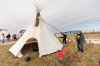
Advertisement Advertise With Us
Advertisement Advertise With Us