Virginia has a data center boon. Officials debate whether it’s time to scrap its tax breaks
Advertisement
Read this article for free:
or
Already have an account? Log in here »
To continue reading, please subscribe:

Digital Subscription
One year of digital access for only $205*
- Enjoy unlimited reading on winnipegfreepress.com
- Read the E-Edition, our digital replica newspaper
- Access News Break, our award-winning app
- Play interactive puzzles
*First annual payment billed as $205.00 + GST for one year. This annual subscription will automatically renew at $233.00 + GST every 52 weeks (10% off the regular annual price of $259.35). Offer available to new and qualified returning subscribers only. Cancel any time.
To continue reading, please subscribe:
Add Free Press access to your Brandon Sun subscription for only an additional
$1 for the first 4 weeks*
- Enjoy unlimited reading on winnipegfreepress.com
- Read the E-Edition, our digital replica newspaper
- Access News Break, our award-winning app
- Play interactive puzzles
*Your next Brandon Sun subscription payment will increase by $1.00 and you will be charged $17.95 plus GST for four weeks. After four weeks, your payment will increase to $24.95 plus GST every four weeks.
Read unlimited articles for free today:
or
Already have an account? Log in here »
RICHMOND, Va. (AP) — Nearly two decades ago, Virginia gave tech companies a tax break on equipment and software, and they began to build. The state became a data center hub, and they kept building. Residents bemoaned the noise while they built some more. Artificial intelligence boomed, and the power grid strained — still, more building.
Now, amid a growing national pushback on data centers, Virginia senators have voted to end a projected $1.6 billion annual tax break, requiring the industry to resume paying a minimum 5.3% sales tax. The proposal has left some opponents warning that it would bring construction of data centers in Virginia to a screeching halt.
“We have now left the ‘NIMBY’ phase: Not In My Backyard,” Republican state Sen. Mark Obenshain said last month. “And we’ve entered the ‘banana’ phase: Build Absolutely Nothing Anywhere Near Anything.”
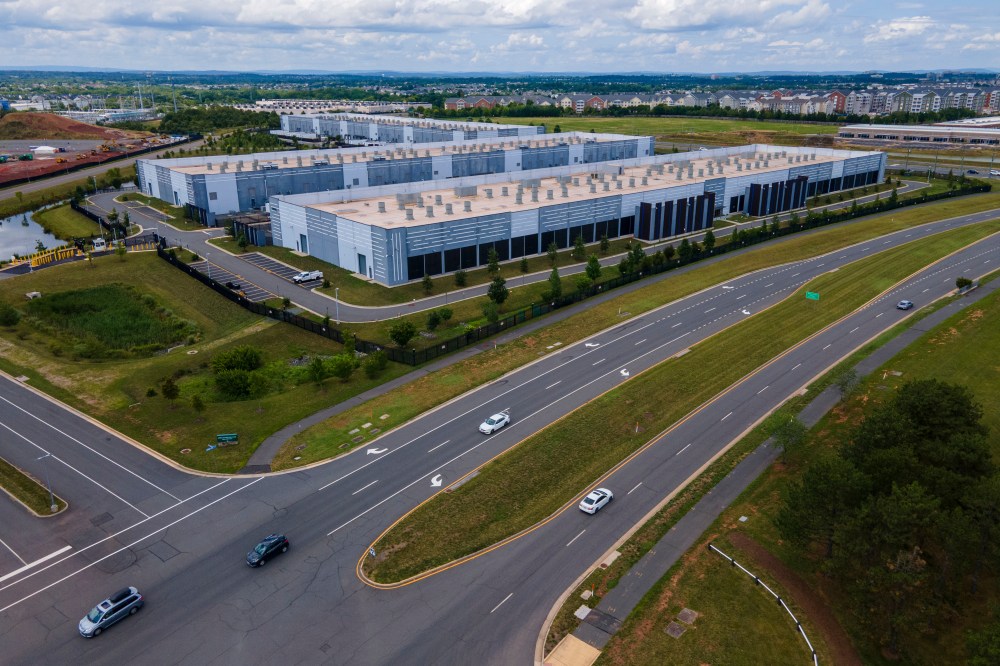
Over the past 18 years, Virginia became the world’s largest data hub. The debate taking place there comes as dozens of communities nationwide are fighting data centers in local zoning meetings, politicians are growing anxious about AI’s effect on household electricity bills and lawmakers are considering reducing tax breaks — or scrapping them altogether.
The state tax department says the industry has invested more than $80 billion in Virginia and created thousands of jobs over the past two years. Obenshain is not the only one concerned about taxing it. The Data Center Coalition, which represents tech giants, said the tax would “effectively halt investment” from the industry. Just this month, Amazon Data Services bought land from George Washington University in northern Virginia for a data center, officials said.
A big debate over a big tax break
It’s far from guaranteed that the state Senate’s proposal will pass the House. But it’s already causing infighting among Democrats, fueled by a looming budget deadline.
Gov. Abigail Spanberger’s office said she was wary of “going back on Virginia’s commitments to businesses that have invested in the Commonwealth.”
Democratic Sen. L. Louise Lucas, who chairs the finance committee and supports the tax proposal, retorted on X: “Gov. Spanberger thinks our chicken isn’t cooked — then what is the Senate supposed to pluck out of our budget? Raises for teachers, health insurance assistance, transit support, a tax rebate, or childcare slots?”
Lucas’ proposal reflects growing pushback nationwide as the aisles of server racks in data centers have gotten increasingly large and seemingly endless, with campuses of server warehouses, electrical substations and backup diesel generators dwarfing the footprints of factories and stadiums. Some need more power than a small city, more than any utility has ever supplied to a single user.
The regular perks for data centers
Tax breaks have been a regular perk for developers of data centers, both big and small. State and town officials have seen them as an economic boon and competed with each other to land them, in part by granting property tax abatements and sales tax exemptions.
Those tax breaks let developers spend money tax-free to equip a data center with pricey things like servers, routers and HVAC equipment and, in some cases, to buy the materials to build them.
In Virginia, House Democrats are pushing to keep the tax breaks in place, and are sparring with senators. Lawmakers negotiating the budget have until Saturday to agree on and pass a spending plan, when their legislative session is set to end.
The move to end the tax breaks won bipartisan support in the Senate, with 21 Democrats and seven Republicans voting for it.
Sen. Richard Stuart, a Republican, said he didn’t think repealing the tax break would affect tech’s rush to build in Virginia: “This ain’t going to slow this train down one iota.”
States rethinking tax breaks for data centers
Other states have moved to curtail such tax breaks, or add conditions.
In Minnesota, lawmakers last year removed the sales tax exemption on the purchase of electricity by the largest data centers, imposed a fee for electricity use and toughened regulations, including scrutiny over their water use.
Lawmakers in Washington state are advancing legislation this year that would keep the tax break for new data centers, but get rid of it for existing data centers that spend money to replace or upgrade equipment. That is worth $83 million for the state in the first year.

In Illinois, Gov. JB Pritzker last month called for a two-year “pause” on data center tax breaks, citing rising household electric bills, while Arizona Gov. Katie Hobbs said she wants to eliminate the state’s sales tax exemption completely. She called it a “corporate handout.”
Bills to repeal the tax breaks have been introduced this year in Arizona, Michigan and Georgia, even as tech companies have proven adept at lobbying in statehouses.
Lawmakers in Georgia passed a bill imposing a two-year pause on the state’s sales tax exemption for building and equipping data centers, but Georgia Gov. Brian Kemp in 2024 vetoed it.
Virginia senators still face opposition. The International Brotherhood of Electrical Workers lobbied at the statehouse, urging lawmakers to protect data centers.
“We need this industry,” Dorian Hargrave, a Virginia-based electrical worker, said in a statement. “If we lose it, our economy is going to take a very big hit.”