

Conflict and concern
Winnipeggers with ties to the Middle East feel impact of war

Advertisement
Read this article for free:
or
Already have an account? Log in here »
To continue reading, please subscribe:

Digital Subscription
One year of digital access for only $205*
- Enjoy unlimited reading on winnipegfreepress.com
- Read the E-Edition, our digital replica newspaper
- Access News Break, our award-winning app
- Play interactive puzzles
*First annual payment billed as $205.00 + GST for one year. This annual subscription will automatically renew at $233.00 + GST every 52 weeks (10% off the regular annual price of $259.35). Offer available to new and qualified returning subscribers only. Cancel any time.
To continue reading, please subscribe:
Add Free Press access to your Brandon Sun subscription for only an additional
$1 for the first 4 weeks*
- Enjoy unlimited reading on winnipegfreepress.com
- Read the E-Edition, our digital replica newspaper
- Access News Break, our award-winning app
- Play interactive puzzles
*Your next Brandon Sun subscription payment will increase by $1.00 and you will be charged $17.95 plus GST for four weeks. After four weeks, your payment will increase to $24.95 plus GST every four weeks.
Read unlimited articles for free today:
or
Already have an account? Log in here »
Yosef Benarroch’s phone sets off an alarm when Israel’s security forces detect incoming missiles.
He doesn’t have to hide for cover; he’s safe in Winnipeg. But that’s not so for his wife and the rest of his family — they live in Israel.
Benarroch, the retired longtime rabbi at Adas Yeshurun Herzlia, a modern Orthodox synagogue in River Heights, has two phones — one for Canada and one he bought in Israel, which has an app that sends notifications when there’s a missile attack.
Ruth Bonneville / Free Press Retired Winnipeg rabbi Yosef Benarroch longs to be in Israel with his wife and family as they endure missile attacks but has been unable to secure a flight as the U.S.-Israeli war on Iran rages.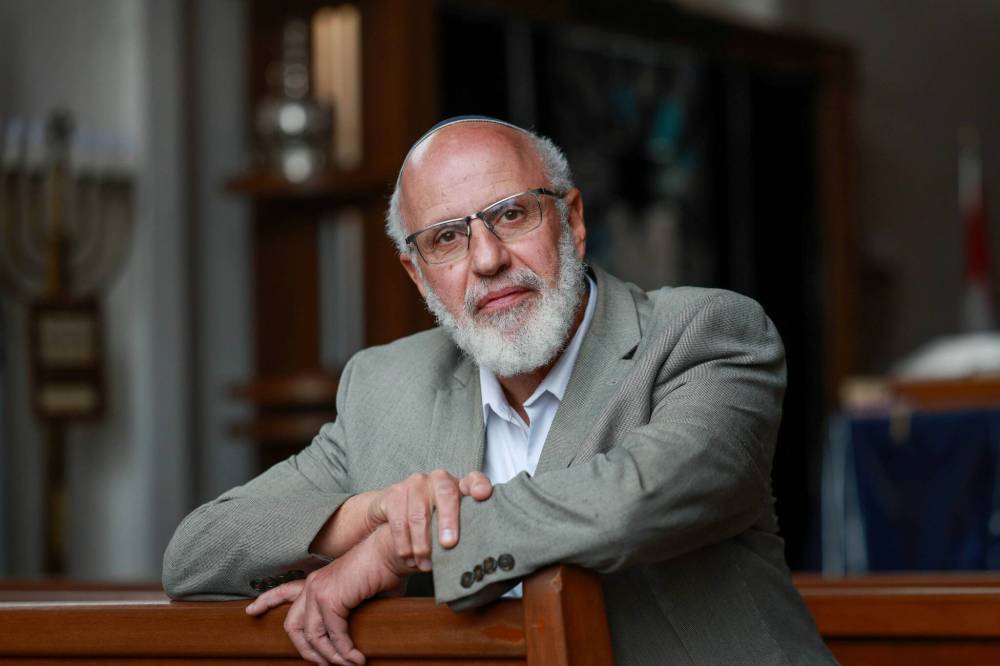
“I want it to be on here so I feel some sense of what they are feeling there,” says Benarroch, who works part time at the synagogue while they find his replacement.
“I know exactly when there are missiles coming there and when the siren goes off on my phone. I quickly call my wife to make sure she is OK.”
He says his family spends a lot of time in bomb shelters.
“I would rather be there holding her hand than being here, but I’m not having success getting flights back right now.”
It’s been like that since U.S. President Donald Trump and Israeli Prime Minister Benjamin Netanyahu combined their forces and launched a war on Iran two weeks ago.
Iran’s supreme leader, Ayatollah Ali Khamenei, was killed by an Israeli strike at the start of the war. He has been replaced by his son Mojtaba Khamenei, who is more hard-line than his father. Iran has retaliated by launching missiles at Israel and neighbouring Persian Gulf nations, and its forces have attacked oil tankers, causing gas prices to rise sharply.
The Free Press asked Winnipeggers who have connections to Iran, Israel or other nations in the region about their perspectives on the conflict.
Benarroch’s family came to Winnipeg from Morocco in 1963. He went to high school here before graduating from the University of Manitoba. He immigrated to Israel in 1982, but for most of the past decade, has spent nine months living and working in Winnipeg and three months in Israel. Besides Benarroch and his wife, his seven children and “lots of grandchildren” live in Israel.
“The war was really inevitable,” Benarroch says. “Iran has basically spread terror throughout the Middle East and more. They are kind of the ‘head of the snake.’
“When you think about all the instability that has been going on in the Middle East, and all their proxies and everything, they are basically behind it all.”
That’s why Benarroch says it was probably better to attack now — both the U.S. and Israel have claimed Iran is close to becoming a nuclear threat — and he is hoping it will eventually bring stability for ordinary Iranians.
“I hope they have a better government and the people of Iran will be able to feel a little bit of freedom and be able to live their lives in a free country,” he says. “There are so many people there who would love to see a change, and they deserve it.”
“There are so many people there who would love to see a change, and they deserve it.”
And he’s hoping that “better government” is less hostile toward the West.
“We would create so much more stability in the Middle East and it (would) open the door for so many more positive developments in terms of peace accords (and) economic prosperity,” he says.
Winnipeggers Abdullah Olivierre and his wife Aya Al Habrawi were on vacation in Kuwait, introducing their three-year-old son and five-month-old daughter to relatives there, when the attacks were launched against nearby Iran. At its closest point, the two countries are only 200 kilometres away from each other on the Persian Gulf.
Iran responded by launching missiles at nearby Gulf nations, including Kuwait. Six American army reservists were killed at the Shuaiba port in Kuwait and, since then, the Pentagon has said there have been seven more deaths and more than 140 service members injured.
The couple reached out to the Canadian Embassy in Kuwait and, a few days later, they are staying with friends in Riyadh, Saudi Arabia’s capital, trying to book flights home.
Supplied Abdullah Olivierre, his wife Aya Al Habrawi and their two children were visiting family in Kuwait when Israel and the U.S. attacked Iran, forcing them to flee for safety to Saudi Arabia.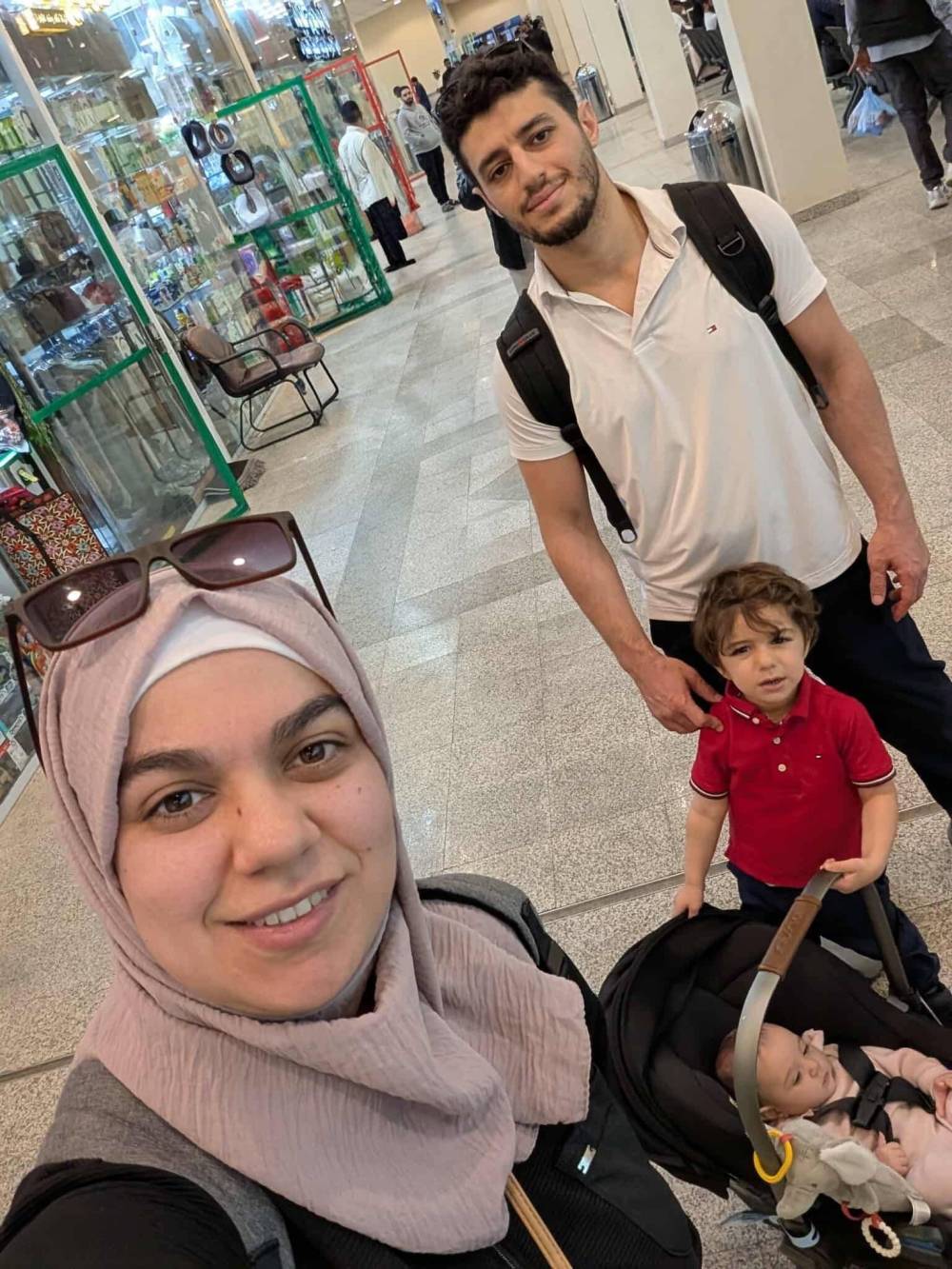
“They called us the day before to give notice and time to get ready,” Olivierre says. “Then the next morning, we were picked up by a free, embassy-organized shuttle from a hotel in Kuwait City and dropped off at a hotel here in Riyadh. It was organized, calm and professional. We really felt looked after.”
Olivierre says they didn’t see any debris or damage from the missile strikes while in Kuwait.
“But the situation was tense,” he says “Sirens were going off every couple of hours, which was unsettling, especially with the kids.”
The conflict is “heartbreaking,” he says.
“Kuwait is a peaceful country and its people want nothing to do with this,” he says. “They are caught in a regional situation far bigger than them. What I’d want Canadians to understand is that behind the headlines are real families — people just like us — who are scared and just want things to be calm again.”
Al Habrawi agrees.
“It is always heartbreaking that civilians get killed with no reason as in many wars… there’s a pressure to try to involve the whole area in the war, which is bad,” she says.
“May God protect all civilians wherever they are.”
Laila Chebib, who was among the first Muslims to settle in Winnipeg, arrived from Syria in 1958 with her husband, when he was working on a master’s degree. They returned for good in 1964 and helped establish the Manitoba Islamic Association and the Pioneer Mosque.
Decades later, Chebib worries about the relatives and friends she has in Syria, including her sister, now a Canadian, who is there visiting relatives.
Chebib says she’s no fan of Trump, but thinks even less of Israel.
“It’s like a cancer,” she says. “It keeps going on and on and on and on. It just won’t stop. They just keep on killing people. They invaded Syria… they took half of Lebanon. They are taking all of Palestine. They are after Iran now.
“The whole world is going crazy.”
“I don’t know what the U.S. is doing with the Middle East, putting their fingers in and stirring the pot.”
Chebib says she’s also worried about her nephew, who lives in Dubai.
“He lives close to the American Embassy (and) he is really concerned about himself and his safety about the bombing that is going on,” she says. “I know it is from Iran, but it doesn’t matter. The whole world is going crazy.”
Mehdi Naghibzadeh, who left Iran years ago, opened the Tehran Market and Café on Pembina Highway. It’s something he would not have been able to do in his home country.
“If things had been different, I would have stayed in Iran,” he says. “I couldn’t go to university, I couldn’t get an education, I couldn’t do business, I couldn’t do anything.”
Naghibzadeh has relatives and friends in Iran.
“It’s kind of like a mixed feeling happening nowadays,” he says. “They are happy (the U.S. and Israel) attacked. We are not happy, innocent people dying there… we just are hoping something good happens for the Iranian people.”
He says the theocratic, authoritarian regime that has ruled since the Iranian Revolution in 1979 has to go.
“This is the time for the regime to give up and let people actually have a free country and a free government, he says. “A secular government without any religion involved like we had 50 years ago.”
Shahram Sahraei, a Kurdish Iranian, came to Canada 10 years ago. He went to the University of Manitoba, got his PhD and is now a senior water supply engineer.
He is worried about his family in Iran. Since the conflict began, Iran has included the bases of Kurdish opposition groups in northern Iraq in its retaliatory barrages, in an effort to prevent them from joining the U.S. and Israeli forces.
“The Israeli army and the U.S. have bombarded most of the bases and fortifications in the western part of Iran and Kurdistan is located in the western part,” he says. “So lots of bombing in my hometown — my relatives have been affected… they are scared, but hoping good things will come out of it, at least.”
Randy Falk, a devout Christian who lives near Altona, found himself in Jerusalem last month.
“I was there with Friends of Israel,” he says. “It has been on my bucket list for many years and my wife encouraged me to go. I’m a believer in Jesus Christ and I wanted to see where he preached and walked.”
SUPPLIED Randy Falk, a devout Christian from the Altona area, was on a bucket-list trip to Jerusalem with the group Friends of Israel last month when the current conflict erupted and missiles started raining down. Falk and fellow travellers fled to Cairo where they caught a flight home.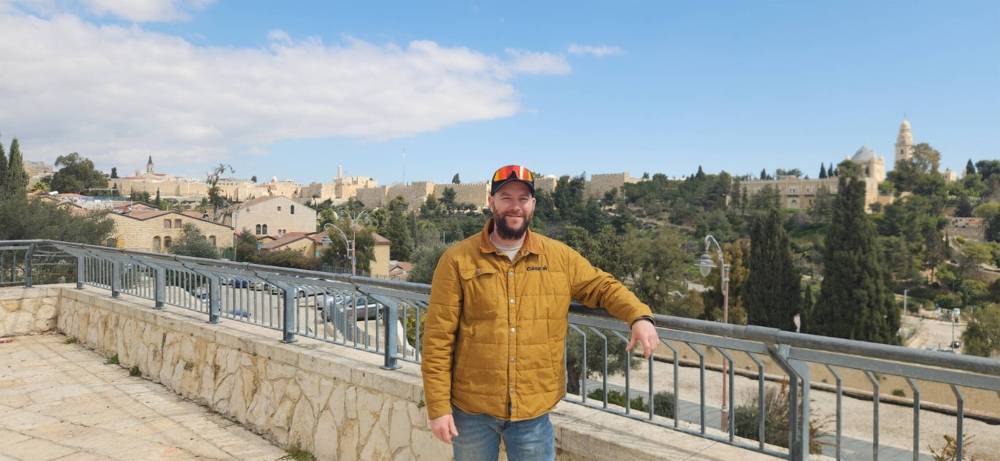
Falk was able to see the Sea of Galilee, but shortly after arriving in Jerusalem, there were warnings to find a bomb shelter because missiles would be incoming within minutes.
“Thankfully, we were all safe,” he says, a few days after arriving back in Manitoba.
“But we could hear rockets, some went over our hotel.”
Falk says he and others in his group had to seek the safety of bomb shelters 27 times.
The travelling group had to make their way to the Egyptian border and then take a bus to Cairo, where they got a flight back to Canada.
“I’m hopeful for a peaceful solution and to have it resolved,” he says. “I don’t want anyone to be hurt. There is too much misunderstanding there. There is pain on both sides.”
kevin.rollason@freepress.mb.ca
Kevin Rollason is a general assignment reporter at the Free Press. He graduated from Western University with a Masters of Journalism in 1985 and worked at the Winnipeg Sun until 1988, when he joined the Free Press. He has served as the Free Press’s city hall and law courts reporter and has won several awards, including a National Newspaper Award. Read more about Kevin.
Every piece of reporting Kevin produces is reviewed by an editing team before it is posted online or published in print — part of the Free Press‘s tradition, since 1872, of producing reliable independent journalism. Read more about Free Press’s history and mandate, and learn how our newsroom operates.
Our newsroom depends on a growing audience of readers to power our journalism. If you are not a paid reader, please consider becoming a subscriber.
Our newsroom depends on its audience of readers to power our journalism. Thank you for your support.
Kevin Rollason is a general assignment reporter at the Free Press. He graduated from Western University with a Masters of Journalism in 1985 and worked at the Winnipeg Sun until 1988, when he joined the Free Press. He has served as the Free Press’s city hall and law courts reporter and has won several awards, including a National Newspaper Award. Read more about Kevin.
Every piece of reporting Kevin produces is reviewed by an editing team before it is posted online or published in print — part of the Free Press‘s tradition, since 1872, of producing reliable independent journalism. Read more about Free Press’s history and mandate, and learn how our newsroom operates.
Our newsroom depends on a growing audience of readers to power our journalism. If you are not a paid reader, please consider becoming a subscriber.
Our newsroom depends on its audience of readers to power our journalism. Thank you for your support.
Advertisement Advertise With Us
Advertisement Advertise With Us