Thinking and feeling

Pollan’s search for self, musings on consciousness a dense, delightful trip

Advertisement

Advertise with us

Have you ever thought about what’s it like to be you? How is it that you can see, think, feel and experience everything from the taste of coffee to the pain of grief, or the redness of a rose?

Read this article for free:


or

Already have an account? Log in here »

To continue reading, please subscribe:

Subscribe and receive a limited-edition Free Press branded hat or tote.

Digital Subscription

One year of digital access for only $205*

  • Enjoy unlimited reading on winnipegfreepress.com
  • Read the E-Edition, our digital replica newspaper
  • Access News Break, our award-winning app
  • Play interactive puzzles

*First annual payment billed as $205.00 + GST for one year. This annual subscription will automatically renew at $233.00 + GST every 52 weeks (10% off the regular annual price of $259.35). Offer available to new and qualified returning subscribers only. Cancel any time.

To continue reading, please subscribe:

Add Free Press access to your Brandon Sun subscription for only an additional

$1 for the first 4 weeks*

  • Enjoy unlimited reading on winnipegfreepress.com
  • Read the E-Edition, our digital replica newspaper
  • Access News Break, our award-winning app
  • Play interactive puzzles
Start now

*Your next Brandon Sun subscription payment will increase by $1.00 and you will be charged $17.95 plus GST for four weeks. After four weeks, your payment will increase to $24.95 plus GST every four weeks.

Hey there, time traveller!
This article was published 14/03/2026 (189 days ago), so information in it may no longer be current.

Have you ever thought about what’s it like to be you? How is it that you can see, think, feel and experience everything from the taste of coffee to the pain of grief, or the redness of a rose?

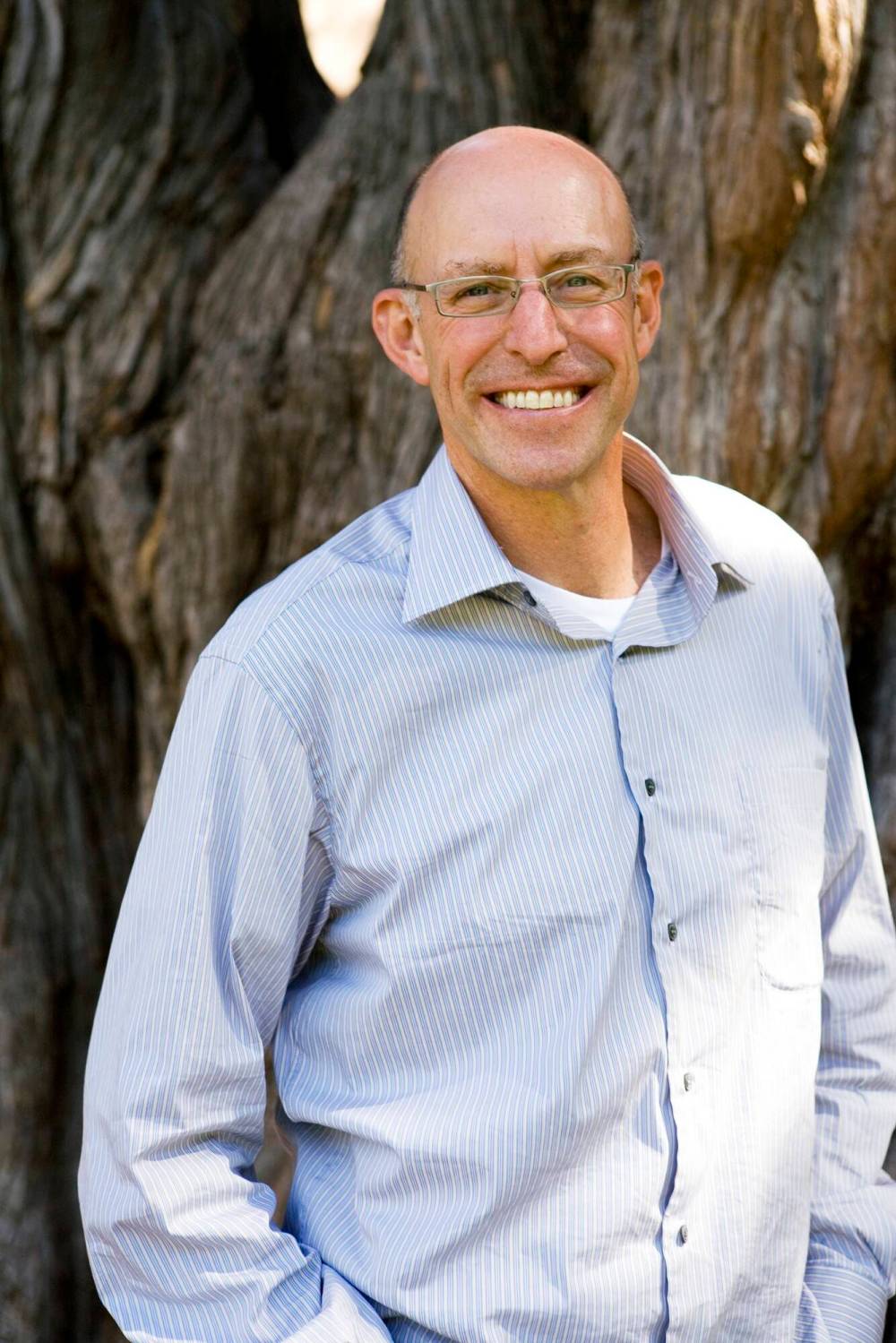
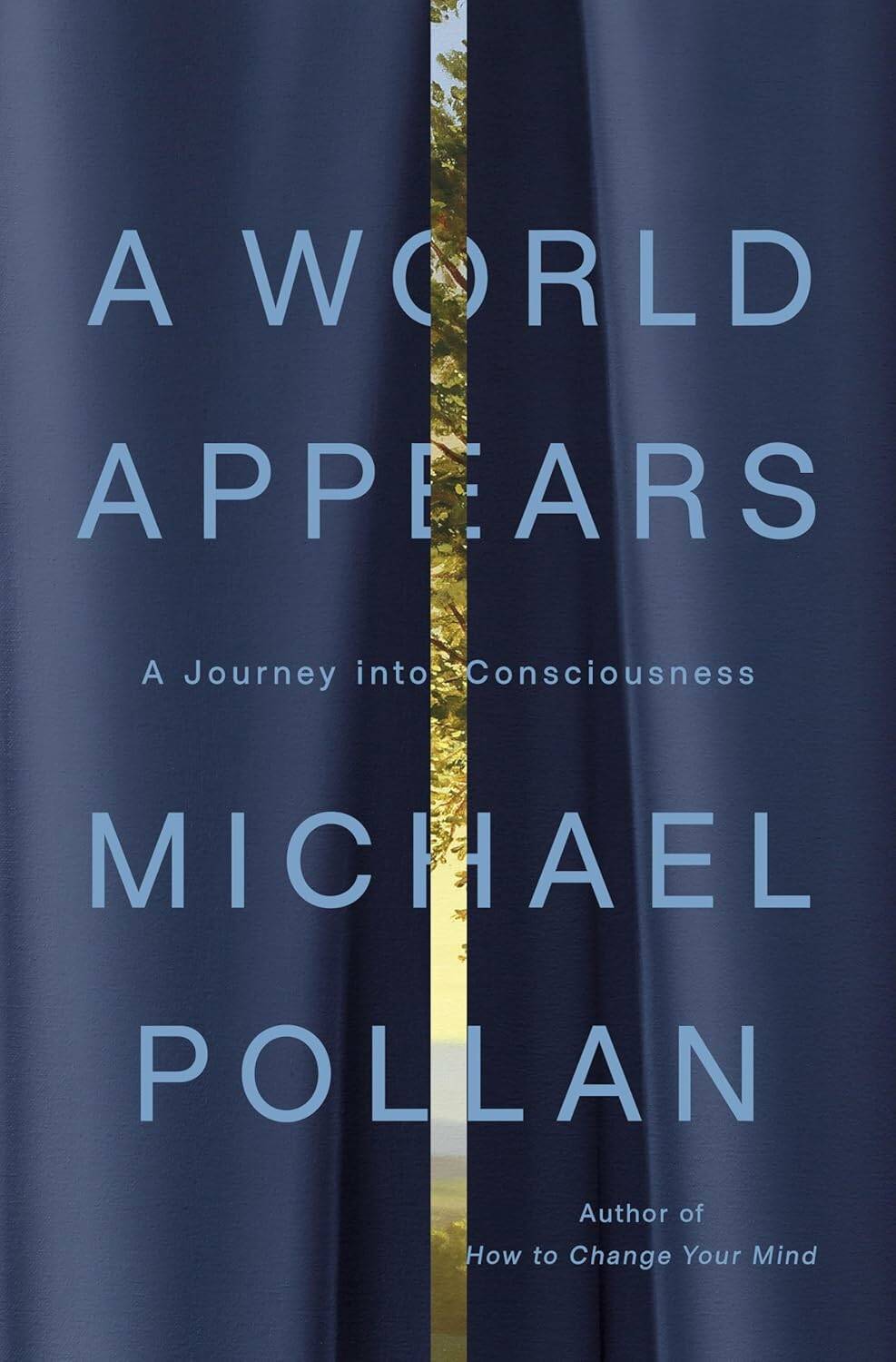
If your head is already swimming then buckle up, as journalist and Harvard professor Michael Pollan takes us on a journey into consciousness in his new book, A World Appears.

Pollan has written about plants, food sustainability and, most recently, psychedelics. All of these prior subjects play a part in his newest and most complex book.
Alia Malley / Associated Press files
                                Michael Pollan

Alia Malley / Associated Press files

Michael Pollan

He begins by naming the “hard problem:” how is it that we have consciousness, and how the brain processes subjective experiences known as qualia (such as the list in the first paragraph.) In his journey into the relatively new field of consciousness study, Pollan interviews different scientists and philosophers as well as exploring literary and spiritual perspectives.

In each of the four long chapters — Sentience, Feeling, Thought and Self — there is consideration of what it means to be conscious.

The opening chapter delves into the question of whether plants have consciousness. This is perhaps the book’s strongest and clearest argument. Through close observation, plants exhibit markers of sentience. One experiment has a plant following the angles of a maze to find not cheese, but an ammonium nitrate gift at the end. The plant root is not as fast as a mouse, but through time-lapse photography the same intent and desire exhibited in the rodent is discovered in the plant.

Not surprisingly, Pollan’s journey goes toward artifical intelligence (AI) and scientists who are attempting to create a machine with true feelings, as well as ones with subjective experience. The AI section grows repetitive, and the reader gets a sense of how much Pollan is against machines gaining consciousness.

Singularity (the moment when AI surpasses human intelligence and begins improving itself) emerges as an ominous threat to humankind. A group working on creating a robot has promised that as soon as they achieve a conscious machine, they will pull the plug. Pollan doubts this, as does a Canadian psychologist who, observing this project, remarks “why don’t we just make a baby? We know how to do that.”

Pollan also shows how writers such as Virginia Woolf, James Joyce and Jane Austen have been showing us what it means to live inside another person. This is likened to Thomas Nagel’s seminal 1974 scientific paper What Is It Like to Be a Bat? Literature is dealing with a similar question posed to humans, and gives one of the best reasons we should all be reading more fiction.

This is a complex book, and you need to take your time with it — there are certainly parts that may not initially be understood, potentially requiring a re-read. In the coda to the book, The Cave, Pollan goes on a long, silent retreat, sent there by Roshi Joan Halifax, a Buddhist monk. In a literal cave, Pollan considers many of these questions, including the problem of how to get outside of his own consciousness so he can view it. He speaks freely of his use of psychedelics as a way of achieving this. In his psychedelic experiences, he becomes aware of the sentience of plants.

Other scientists share their experiences with psychedelics. One of the people currently trying to build a robot with feelings ingested a powerful venom from a desert toad. When the scientist came out of the trip, he said, “I now think there’s a spark of the divine or a spirit involved that is beyond what we are able to capture… I understood for the first time that everything is connected by the same substance, and that substance is love.”
A World Appears

A World Appears

Throughout all the interviews, Pollan describes each of the scientists by their physical appearance, notably their hairstyle, facial expressions and choice of clothing. Perhaps this is to make a dense book more welcoming, or to humanize those we think of in lab coats peering into microscopes.

But by the end the reader (and Pollan) is left with the same hard problem of consciousness. It doesn’t spoil anything to say that in concluding, Pollan knows even less than when he began five years earlier.

As Roshi Joan tells him, “that’s good! That’s progress.” She encourages Pollan to “always keep a don’t-know mind… sometimes not-knowing opens us up to more possibilities…”

When we consider the deepest of mysteries, consciousness, this makes sense. It is, after all, more about the journey than the clear destination.

Craig Terlson is a Winnipeg writer and science geek who is fairly certain he is conscious most of the time.

Report Error Submit a Tip

More Stories

Family account spiced with magic realism, geopolitical intrigue and a ghost story

Reviewed by Zilla Jones 4 minute read Preview

Family account spiced with magic realism, geopolitical intrigue and a ghost story

Reviewed by Zilla Jones 4 minute read 2:01 AM CDT

Tom Lin’s second novel Babylon, South Dakota moves beyond a historical account of an immigrant family’s struggle, delightfully blending and bending genres.

Lin is a Chinese-born novelist whose family emigrated to the U.S. when he was four years old. His debut novel, The Thousand Crimes of Ming Tsu, won the 2022 Andrew Carnegie Medal for Excellence in Fiction, making him the youngest ever recipient of that award. He earned a PhD in English from the University of California Davis and is currently an assistant professor of English and creative writing at the University of Iowa.

Babylon, South Dakota takes place in an unspecified time period that can be understood to be during the Mao era — likely the 1950s or ’60s. A young Chinese couple, the Hsuis, immigrate to the rural community that gives the book its title. They take the names Saul and Mei and settle on a 160-acre homestead left to them by a distant relative.

Saul’s dream is to breed and sell chrysanthemums from seeds he brought from China, while Mei wants to raise livestock. They speak no English, know nothing of life in the United States, are unprepared for the harshness of winter and the isolation of the farm and bring nothing with them except some gold, which Mei hides around the house for emergencies. Their only link to the outside world is a discarded and marginally functioning TV set, which Saul rescues and rigs up.

Read
2:01 AM CDT

Jets vets weigh in on franchise goalie Hellebuyck not reporting to training camp

Mike McIntyre 7 minute read Preview

Jets vets weigh in on franchise goalie Hellebuyck not reporting to training camp

Mike McIntyre 7 minute read Thursday, Sep. 17, 2026

Hockey is the ultimate team sport, where it’s supposed to be about the crest on your chest rather than the name on your back.

So how is Connor Hellebuyck’s trade request and subsequent training camp strike playing out inside the Winnipeg Jets locker room — particularly among other core players he’s gone to battle with over the years?

“Obviously the news is heartbreaking,” Jets forward Kyle Connor said Thursday.

“It feels like we had such a special group here and for whatever reason — I can’t speak to the reason until we hear from the man, I’m not going to speculate on what it is but I know that a lot of guys in that room that are heartbroken.”

Read
Thursday, Sep. 17, 2026

Not falling back means time loop remains unclosed

Jen Zoratti 4 minute read 2:01 AM CDT

I demand restitution. Where’s my hour?

In the traditional fall-back, spring-forward time change set up — you know, ol’ trusty that’s been effect for lo these 63 years — we lost an hour in the spring that we got back in the fall.

That was the social contract: you commit to feeling like you’re on cold medication for a week in March because you know a glorious extra hour of sleep will be returned to you in November. (Unless, of course, you have little kids, but look: we all make our choices.)

Well, that transaction, flawed as it was, isn’t happening this year. That hour you sacrificed to the sun gods in the spring? Gone. Not coming back. We’ve sprung forward and we shan’t be falling back — not in November, and (possibly) not ever. The scale shall remain unbalanced and the loop shall remain unclosed as Manitoba has adopted permanent daylight time.

Siloam Mission, WFPS discussing on-site paramedic to reduce staggering number of emergency calls

Scott Billeck 4 minute read Preview

Siloam Mission, WFPS discussing on-site paramedic to reduce staggering number of emergency calls

Scott Billeck 4 minute read Yesterday at 2:00 AM CDT

Winnipeg’s fire-paramedic service and its largest homeless-serving organization are discussing what it would look like to station at least one paramedic at Siloam Mission, as emergency calls to the downtown facility surge.

The ongoing discussions come as Winnipeg Fire Paramedic Service crews were dispatched 1,771 times during the first eight months of the year to the two adjacent Siloam properties at 303 Stanley St. and 300 Princess St.

WFPS said most of the calls were related to overdoses or other consequences of substance use, with the total nearly double the 854 calls recorded over the same period last year. By comparison, there were 831 calls during the same span in 2024, and 591 in 2023.

“The number of emergency calls isn’t sustainable for us as a service, but it’s certainly not sustainable for them as an agency trying to provide services,” WFPS chief Ryan Sneath told the Free Press. “And they recognize that they’re impacting emergency services, not them specifically, but the site in a significant way.”

Read
Yesterday at 2:00 AM CDT

Grieving child builds backyard rocket ship

Harriet Zaidman 4 minute read 2:01 AM CDT

I Built a Rocket Ship (Kids Can Press, 32 pages, hardcover, $22) by Winnipegger Anna Lazowski is a tender story for children ages 4-8 about a little girl trying to make sense of her mother’s death. The child engages in conversation with her late mom, agreeing and disagreeing about things said as she carries objects (and of course, the cat) to the backyard. There, she is building a rocket ship she will pilot into the skies to find her mom again.

Jennica Lounsbury’s varied perspectives show the range of emotions the little girl experiences.

● ● ●

Northwoods Lullaby by Mary Casanova (University of Minnesota Press, 32 pages, hardover, $25) is a bedtime book for readers up to age eight, perfect to bring a busy, happy day to a close. Just like children who are listening to adults reading the book, all the animal babies are being tucked into their nests and burrows by loving parents: “Thump and scamper,/nimble clover./ Soon it’s time to rest. Baby loon/ nestles in/as Papa floats along.”

Klein has burned bridges with PM, Gillingham says

Joyanne Pursaga 3 minute read Preview

Klein has burned bridges with PM, Gillingham says

Joyanne Pursaga 3 minute read Yesterday at 5:51 PM CDT

One mayoral candidate accused another of writing a column so critical it could compromise his ability to work with the federal government.

Read
Yesterday at 5:51 PM CDT