

Years of training keep Artemis II crew mission-ready, researcher says
Advertisement
Read this article for free:
or
Already have an account? Log in here »
To continue reading, please subscribe:

Digital Subscription
One year of digital access for only $205*
- Enjoy unlimited reading on winnipegfreepress.com
- Read the E-Edition, our digital replica newspaper
- Access News Break, our award-winning app
- Play interactive puzzles
*First annual payment billed as $205.00 + GST for one year. This annual subscription will automatically renew at $233.00 + GST every 52 weeks (10% off the regular annual price of $259.35). Offer available to new and qualified returning subscribers only. Cancel any time.
To continue reading, please subscribe:
Add Free Press access to your Brandon Sun subscription for only an additional
$1 for the first 4 weeks*
- Enjoy unlimited reading on winnipegfreepress.com
- Read the E-Edition, our digital replica newspaper
- Access News Break, our award-winning app
- Play interactive puzzles
*Your next Brandon Sun subscription payment will increase by $1.00 and you will be charged $17.95 plus GST for four weeks. After four weeks, your payment will increase to $24.95 plus GST every four weeks.
Read unlimited articles for free today:
or
Already have an account? Log in here »
Hey there, time traveller!
This article was published 15/03/2026 (193 days ago), so information in it may no longer be current.
MONTREAL – Despite the delays for NASA’s Artemis II mission around the moon and back, a space medicine researcher says the crew, which includes Canadian astronaut Jeremy Hansen, are physically ready for when the time comes to launch.
“They’ve been preparing for years, so what is a few more months,” said Dr. Farhan Asrar, a physician, space medicine researcher and associate dean at Toronto Metropolitan University’s School of Medicine.
“One thing that I’ve always kind of appreciated and respected in the life of astronauts … is it’s always expecting the unexpected and how do you best prepare for that?”
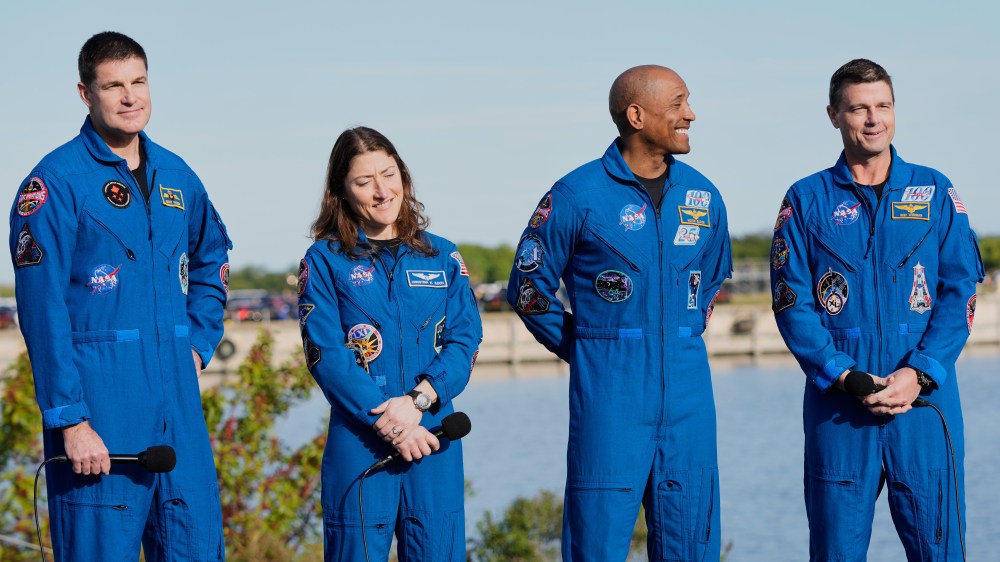
NASA has targeted an April 1 launch for Artemis II, with a six-day launch window running through April 6 announced last week.
Hansen, 50, of London, Ont., will serve as mission specialist during Artemis II, becoming the first non-American to travel beyond low Earth orbit, a historic achievement for Canada. His crewmates are veteran NASA astronauts Reid Wiseman, Victor Glover and Christina Koch. The mission is scheduled to last 10 days.
Apart from Hansen, fellow Canadian astronaut Jenni Gibbons, 37, of Calgary, is also serving as Hansen’s backup and will be supporting the crew from ground control.
The mission has been delayed a few times since an intended February launch window opening due to hydrogen fuel leaks and helium flow problems with the Space Launch System rocket.
But Asrar notes that delays are part of the game and the astronauts have been on a multi-year program that includes physical training, technical simulations and scenarios of what could happen during the mission.
So physically they are always ready, but there are other aspects, such as team-building, getting to know each other and carving out personal time with families, Asrar said.
“It’s just basically continuing that same process in order to be prepared for eventually once that mission day comes in,” Asrar said.
While the lunar mission is only 10 days, Asrar said one of the interesting things about the Artemis II mission from a health perspective is the four astronauts will be confined to the Orion capsule, which is about the size of a camper van.
“The crews must really get along with each other, know each other really well, because interestingly, with the exception of the bathroom, there is no other privacy or door that is separated,” Asrar said.
“So they’ll be eating, drinking, working, even their own personal time and reflection or self-reflection times would be with everybody around you though as well.”
For a possible April 1 launch, NASA said pre-launch quarantine for the crew would begin around March 18 before they travel to the Kennedy Space Center in Florida on March 27.
Artemis II is also historic in that it moves thinking toward long duration deep space missions. Asrar’s research looks at human health in space, which includes deep space missions.
“It is opening the doors to basically now looking at living on the moon for longer periods, and then are we also then looking toward the Mars space missions,” he said.
For those long-distance missions, considerations include how to deliver care when there isn’t an easy way to connect with Earth, as is the case with the International Space Station.
In the event of a medical emergency, as occurred recently with the Crew-11 mission that was cut short in January, there was a quick return to Earth in NASA’s first-ever medical evacuation.
“However, when you look at, let’s say for example, Mars, it might take us close to seven to 10 months to just travel one way,” Asrar said. That raises the question of whether crews can handle all medical issues from assessment to recovery. There is also the issue of how to handle limited medical supplies.
Artemis II, Asrar said, will provide more insight about how to answer some of those questions.
This report by The Canadian Press was first published March 15, 2026.
Related Articles
NASA hauls its repaired moon rocket from the hangar back to the pad for an early April launch
Advertisement Advertise With Us
Advertisement Advertise With Us