

Lack of details hampered response to remote derailment, fire chief tells inquest into 2018 fatality

Advertisement
Read this article for free:
or
Already have an account? Log in here »
To continue reading, please subscribe:

Digital Subscription
One year of digital access for only $205*
- Enjoy unlimited reading on winnipegfreepress.com
- Read the E-Edition, our digital replica newspaper
- Access News Break, our award-winning app
- Play interactive puzzles
*First annual payment billed as $205.00 + GST for one year. This annual subscription will automatically renew at $233.00 + GST every 52 weeks (10% off the regular annual price of $259.35). Offer available to new and qualified returning subscribers only. Cancel any time.
To continue reading, please subscribe:
Add Free Press access to your Brandon Sun subscription for only an additional
$1 for the first 4 weeks*
- Enjoy unlimited reading on winnipegfreepress.com
- Read the E-Edition, our digital replica newspaper
- Access News Break, our award-winning app
- Play interactive puzzles
*Your next Brandon Sun subscription payment will increase by $1.00 and you will be charged $17.95 plus GST for four weeks. After four weeks, your payment will increase to $24.95 plus GST every four weeks.
Read unlimited articles for free today:
or
Already have an account? Log in here »
Hey there, time traveller!
This article was published 17/03/2026 (207 days ago), so information in it may no longer be current.
The chief of a fire department that responded to a fatal train accident in northern Manitoba said better initial communication about the incident could have led to a more robust response.
Chief Cory Anaka of the volunteer Snow Lake Fire Department had just arrived at his mine mill job when he got a call from a 911 dispatcher, who was looking for a number to contact the volunteer Wabowden Fire Department to get to the scene of the derailment.
Anaka asked what the circumstances were and, upon learning the geographical location of the incident, told 911 that it was within his department’s jurisdiction and asked to dispatch his crew.
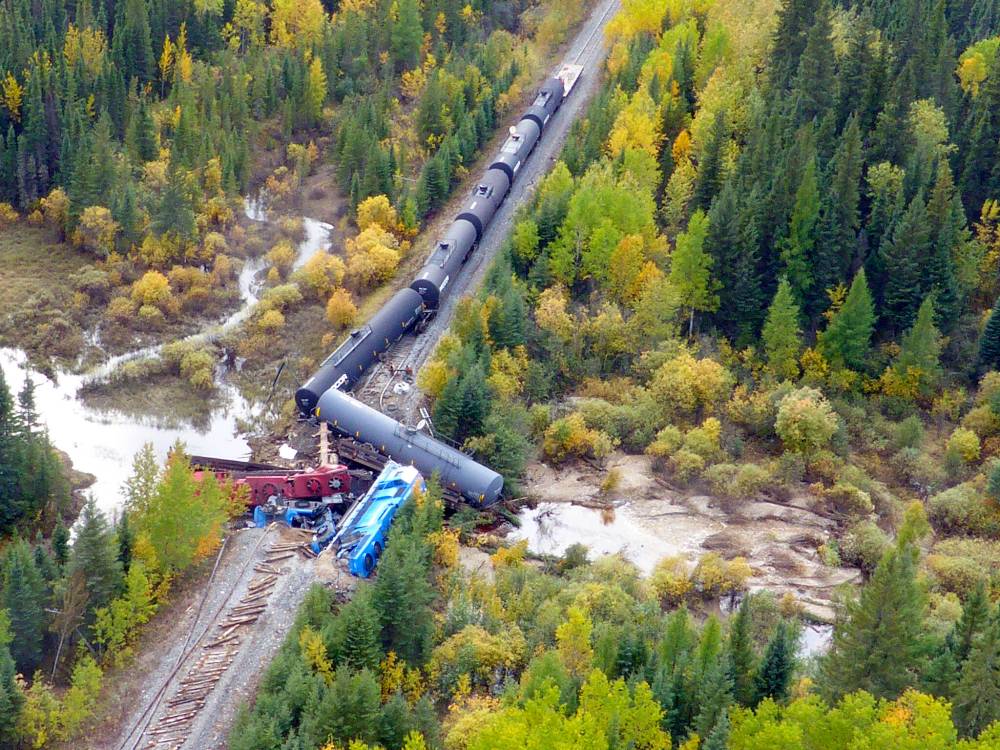
“It was actually west of Highway 6, so that would put that in our area of response. So I asked 911 to page our fire department out,” he said before provincial judge Timothy Killeen, who is overseeing an inquest into the circumstances of Kevin Anderson’s death in 2018.
Anderson was conducting a Hudson Bay Railway train with cars full of propane that derailed in a remote area near Wabowden, approximately 650 kilometres north of Winnipeg, on Sept. 15.
Anderson’s colleague Chris Rushton, the train’s engineer, was rescued but Anderson died from internal bleeding; he had been trapped under debris in the train’s engine car for nearly nine hours.
But even after Anaka’s firefighting crew was dispatched to the accident, the chief said he knew little about what he was responding to.
“… the only information that was given to me was that we had two men trapped in the train.”
“And whether or not 911 knew if they needed gas detection or extrication or what, I think that’s the only information that was given to me was that we had two men trapped in the train,” he told the inquest, which is being held in The Pas.
RCMP officers arrived at the derailment at about 7 p.m. Emergency medical responders also arrived, but decided to bar access to the site until trained and equipped personnel could assess the scene over concerns about propane and other fuel potentially leaking from cars.
Those trained responders, and emergency medical personnel, didn’t arrive until hours later, delaying treatment for the trapped and injured railroaders.
Anaka said if he’d known more about the situation, he could have borrowed a gas detector from his workplace to take to the scene.
Anaka’s workplace is located several kilometres outside of Snow Lake. He said he doesn’t know what information, if any, beyond the little bit he had at that point, was included in the official page for assistance delivered to the fire hall.
“If there was any other information to be handed over, I did not get that,” he said.
Anderson and Rushton were operating the train when it hit a washed-out section of a rail in a remote area south of Thompson at about 4:30 p.m. They became pinned under the wreckage and couldn’t use their radios to call for help.
“If there was any other information to be handed over, I did not get that.”
A mining prospecting team flying in the area in a helicopter, saw the derailment and landed in order to check on the men, then flew out to alert emergency responders.
The fire chief said a more robust communication system between agencies would “absolutely” help with responses in the future. Anaka told the inquest that there have been jurisdiction issues with 911 dispatchers in the past; they don’t know the geographical boundaries of Snow Lake’s response area and will call a neighbouring department.

“I’ve had a few conversations… and I think maybe it might be due to turnover with employees and 911, just not very good communications on their side when I tell them that this is the area that we do cover,” he said.
Snow Lake’s department covers about 158 kilometres of highway between Flin Flon and Thompson.
Snow Lake, Thompson and Wabowden’s fire departments responded to the accident that day, Anaka said.
The three-week inquest began March 2 and is meant to review the circumstances of Anderson’s death and examine the co-ordination of a multi-agency response to a serious incident in a remote area. Testimony is expected to wrap up on Friday.
nicole.buffie@freepress.mb.ca
Nicole Buffie
Multimedia producer
Nicole Buffie is a reporter for the Free Press city desk. Born and bred in Winnipeg, Nicole graduated from Red River College’s Creative Communications program in 2020 and worked as a reporter throughout Manitoba before joining the Free Press newsroom as a multimedia producer in 2023. Read more about Nicole.
Every piece of reporting Nicole produces is reviewed by an editing team before it is posted online or published in print — part of the Free Press‘s tradition, since 1872, of producing reliable independent journalism. Read more about Free Press’s history and mandate, and learn how our newsroom operates.
Our newsroom depends on a growing audience of readers to power our journalism. If you are not a paid reader, please consider becoming a subscriber.
Our newsroom depends on its audience of readers to power our journalism. Thank you for your support.
Nicole Buffie
Multimedia producer
Nicole Buffie is a reporter for the Free Press city desk. Born and bred in Winnipeg, Nicole graduated from Red River College’s Creative Communications program in 2020 and worked as a reporter throughout Manitoba before joining the Free Press newsroom as a multimedia producer in 2023. Read more about Nicole.
Every piece of reporting Nicole produces is reviewed by an editing team before it is posted online or published in print — part of the Free Press‘s tradition, since 1872, of producing reliable independent journalism. Read more about Free Press’s history and mandate, and learn how our newsroom operates.
Our newsroom depends on a growing audience of readers to power our journalism. If you are not a paid reader, please consider becoming a subscriber.
Our newsroom depends on its audience of readers to power our journalism. Thank you for your support.
Related Articles
Inquest in The Pas examining 2018 death of train conductor in remote derailment


Advertisement Advertise With Us
Advertisement Advertise With Us