

NDP budget highlights cost-of-living help, health care, funds for Churchill port expansion

Advertisement
Read this article for free:
or
Already have an account? Log in here »
To continue reading, please subscribe:
Digital Subscription
One year of digital access for only $1.44 a week*
- Enjoy unlimited reading on winnipegfreepress.com
- Read the E-Edition, our digital replica newspaper
- Access News Break, our award-winning app
- Play interactive puzzles
*Billed as $5.77 plus GST every four weeks. After 52 weeks, price increases to the regular rate of $19.95 plus GST every four weeks. Offer available to new and qualified returning subscribers only. Cancel any time.
To continue reading, please subscribe:
Add Free Press access to your Brandon Sun subscription for only an additional
$1 for the first 4 weeks*
- Enjoy unlimited reading on winnipegfreepress.com
- Read the E-Edition, our digital replica newspaper
- Access News Break, our award-winning app
- Play interactive puzzles
*Your next Brandon Sun subscription payment will increase by $1.00 and you will be charged $17.95 plus GST for four weeks. After four weeks, your payment will increase to $24.95 plus GST every four weeks.
Read unlimited articles for free today:
or
Already have an account? Log in here »
The Manitoba government provided cost-of-living relief, new efforts to address health care wait times and more cash for the Churchill trade corridor in Tuesday’s budget, which predicts a smaller deficit of $500 million.
Finance Minister Adrien Sala said the NDP is on track to fulfil its 2023 election promise to balance the books in their first term, with the province having Canada’s lowest deficit-to-GDP ratio this fiscal year.
“This is a progressive budget focused on helping Manitobans where they need it. This is focused on people, really those Manitobans that drive our economy,” Sala told reporters.
“We want to make sure that they feel and hear that our government is listening, that we’re responding to the challenges they’re facing and that they know that we’re helping them.”
The spending plan – the government’s third since it won a majority – was delivered against the backdrop of affordability, health-care and trade concerns, while cross-border tariffs and a new Middle East war drive prices higher.
The plan fails to spur the economic growth needed for Manitoba to reduce the deficit and work toward eliminating the deficit, Progressive Conservative Leader Obby Khan said.
“We are in trouble as a province,” he told reporters, adding the budget lacked announcements about projects to grow the economy.
He said Manitoba has to rely on federal transfer payments for 36 per cent of its revenue, and he called that “a major red flag.”
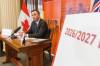
MIKE DEAL / FREE PRESS Finance Minister Adrien Sala said Manitoba is on track to fulfil a 2023 election promise to balance the budget in the NDP’s first term.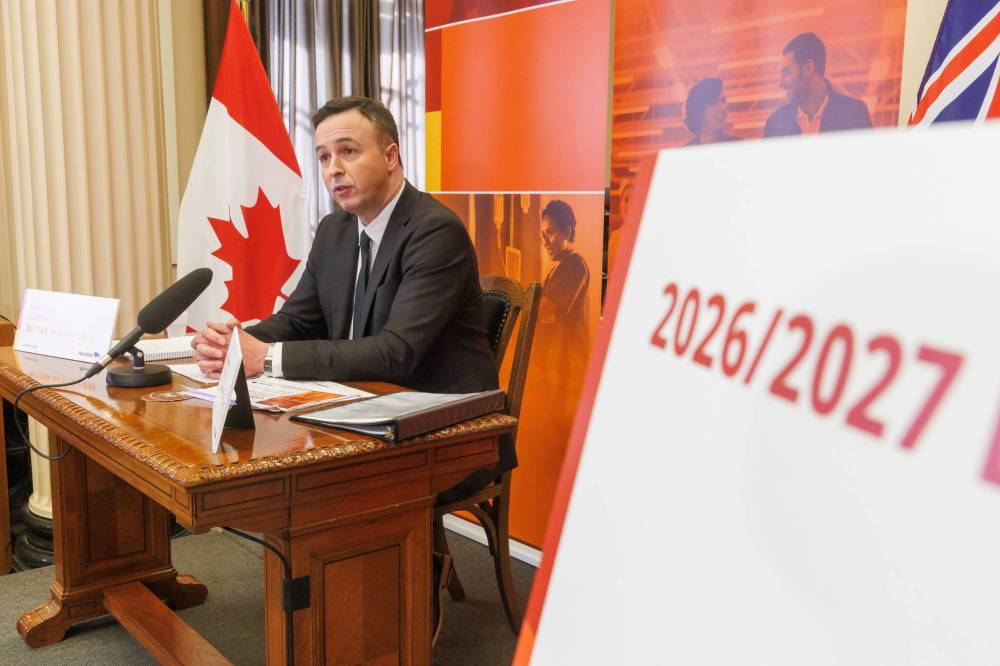
Sala said the budget contains $10 million for a Churchill “catalyst fund” to generate more private-sector interest in an energy corridor to the North.
On affordability, the province is making ready-to-eat prepared foods and snacks such as chips, candy and soft drinks less expensive.
“This is focused on people, really those Manitobans that drive our economy.”
Starting July 1, the provincial sales tax will be removed from all food sold in grocery stores that is currently not exempt. The province cited rotisserie chickens, samosas and carbonated beverages as examples of items that will be PST-free, mirroring an earlier move by B.C.
The PST cut prompted questions about potential health implications if snack food, which is typically more affordable than fresh food, becomes even less expensive.
“When I work in the emergency room and I see a kid with a sore ear that’s drinking Pepsi and eating Doritos, I don’t want that to be the easiest accessible option for them and their family,” said Dr. Nichelle Desilets, president of Doctors Manitoba.
Sala said average Manitobans have told the government they’re buying potato chips and soda for birthday parties, and ready-to-eat chicken because they’re pressed for time before their children’s after-school activities.
“We know the biggest affordability challenge that Manitobans are facing are groceries and their grocery costs,” Sala said. “This is another lever, and our government is going to do everything we can to reduce grocery prices for Manitobans.”
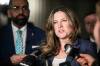
MIKAELA MACKENZIE / FREE PRESS Progressive Conservative Opposition Leader Obby Khan says the new budget fails to spur economic growth in the province.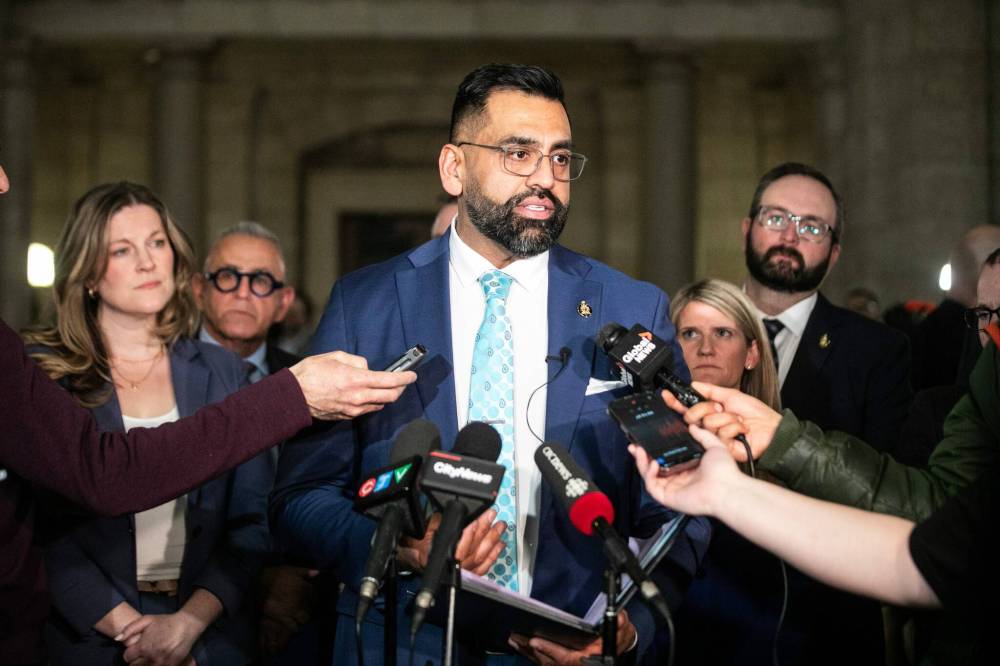
Touted as a “more progressive” initiative, Manitobans with higher-valued homes will pay more for education property taxes thanks to changes to the homeowners affordability tax credit.
The annual credit will rise from $1,600 to $1,700 in 2027 for a majority of homeowners, but it will be reduced on a sliding scale for homes with assessed values of more than $1 million. A home worth $1.25 million will receive an $850 credit, for example. Homes valued at more than $1.5 million will no longer receive the credit.
“We are in trouble as a province.”
“In many communities, we’ve seen this wipe out education property tax bills entirely,” Sala said.
“Ultimately, we’re going to take those revenues to support the costs associated for creating more help for those who need it. That’s because we believe those who’ve done really well in Manitoba are OK with supporting a little bit more to help those that need that help.”
The measure will try to soften the blow for many homeowners while some school divisions propose tax hikes of about 10 per cent to balance their budgets because, they say, provincial funding has not kept pace with rising costs.
Child care will become free for 3,500 families who pay $2 a day, equalling about 5,000 kids. The measure will cost the government $3.1 million annually.
A raft of health-care measures is intended to reduce wait times, highlighted by $22 million for a new cardiac centre of excellence, called Heart Care Manitoba, at St. Boniface Hospital. It will add 18 beds and put a cardiologist in the emergency room to assess certain patients.
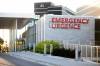
MIKE DEAL / FREE PRESS Dr. Nichelle Desilets, president of Doctors Manitoba, questioned the potential health implications of removing provincial sales tax from all food sold in grocery stores.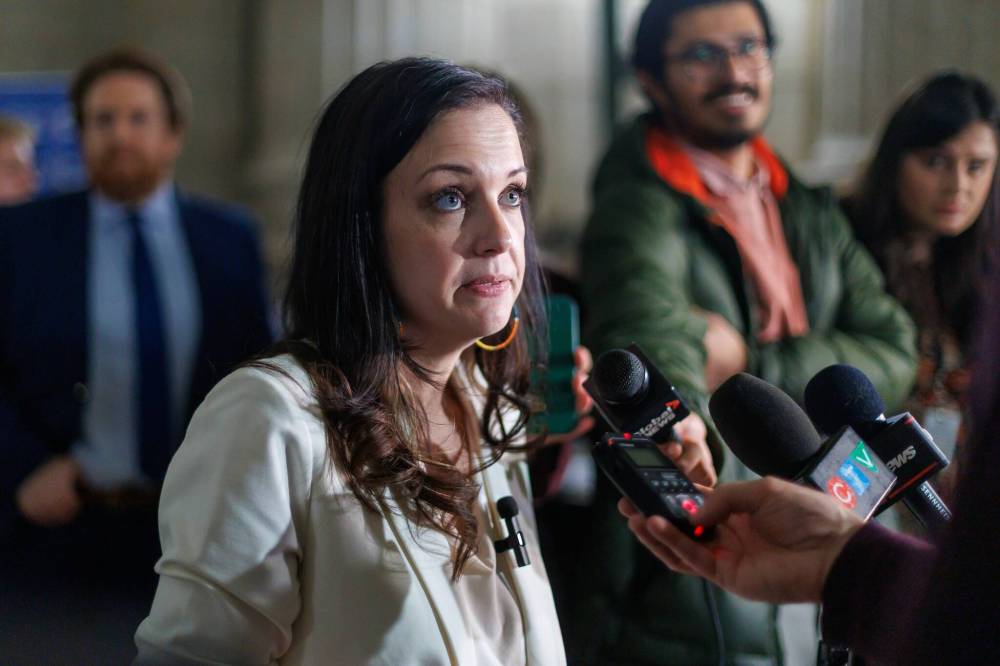
For its part, the Manitoba Nurses Union said the budget has no money to establish promised nurse-to-patient ratios to improve patient care and nurse recruitment and retention.
President Darlene Jackson said that funding for safety measures is not new, and that nurses are considering grey-listing three more health care facilities in addition to the Health Sciences Centre, St. Boniface and Thompson General Hospital.
Winnipeg Mayor Scott Gillingham said the budget ignored one major “shovel-ready project” that city desperately needs the province to help fund — the third phase of the North End sewage treatment plant.
“In my view, that is the most important project in the province of Manitoba right now because Manitoba’s economy runs through Winnipeg’s economy,” Gillingham said Tuesday.
“When I work in the emergency room and I see a kid with a sore ear that’s drinking Pepsi and eating Doritos, I don’t want that to be the easiest accessible option for them and their family.”
“If we don’t get that project built fully within the next few years, we’re gonna have to put a complete stop on all future growth,” he said.
In terms of the deficit, Premier Wab Kinew has said Manitoba would have the “best” deficit number in Canada in the 2026-27 fiscal year (which begins April 1).
Tuesday’s budget projects a deficit of just under $500 million. Total net debt climbed to $39.7 billion, with interest on the debt climbing $100 million to $2.4 billion. The debt-to-GDP ratio is forecast at 38.2 per cent, which is the lowest in Canada, the province said.
In December, the NDP projected a $1.6-billion deficit for 2025-26, double the prediction a year ago, partly due to the worst wildfire season in 30 years, drought-related losses at Manitoba Hydro and increased health-care costs.
Sala said the latest projection is 75 per cent lower than the $2-billion deficit the NDP inherited from the previous Progressive Conservative government.

“That’s a function of planning and the good work we’ve done together as a team,” he said.
Sala said 9.9 cents on every dollar received went toward paying the government’s debt when the NDP was sworn in. The debt-servicing amount was lowered to 8.9 cents in this budget, equalling $270 million that can be spent on health care or other measures, he said.
The 2026-27 budget outlines $27.3 billion in spending, an increase of $1.6 billion from last year.
Revenue is expected to rise by $1.8 billion to $26.8 billion, driven by increases in federal transfers, and income and education property taxes.
Before the budget was tabled, a moment of silence was held for NDP MLA Amanda Lathlin (The Pas-Kameesak), who died aged 49 on Saturday following an illness. Sala said a new clinic will open in Lathlin’s memory in The Pas in 2030.
— with files from Carol Sanders
chris.kitching@freepress.mb.ca
Chris Kitching is a general assignment reporter at the Free Press. He began his newspaper career in 2001, with stops in Winnipeg, Toronto and London, England, along the way. After returning to Winnipeg, he joined the Free Press in 2021, and now covers a little bit of everything for the newspaper. Read more about Chris.
Every piece of reporting Chris produces is reviewed by an editing team before it is posted online or published in print — part of the Free Press‘s tradition, since 1872, of producing reliable independent journalism. Read more about Free Press’s history and mandate, and learn how our newsroom operates.
Our newsroom depends on a growing audience of readers to power our journalism. If you are not a paid reader, please consider becoming a subscriber.
Our newsroom depends on its audience of readers to power our journalism. Thank you for your support.
Chris Kitching is a general assignment reporter at the Free Press. He began his newspaper career in 2001, with stops in Winnipeg, Toronto and London, England, along the way. After returning to Winnipeg, he joined the Free Press in 2021, and now covers a little bit of everything for the newspaper. Read more about Chris.
Every piece of reporting Chris produces is reviewed by an editing team before it is posted online or published in print — part of the Free Press‘s tradition, since 1872, of producing reliable independent journalism. Read more about Free Press’s history and mandate, and learn how our newsroom operates.
Our newsroom depends on a growing audience of readers to power our journalism. If you are not a paid reader, please consider becoming a subscriber.
Our newsroom depends on its audience of readers to power our journalism. Thank you for your support.
Related Articles
NDP’s spin machine kicks into high gear when it comes to deficit








Advertisement Advertise With Us
Advertisement Advertise With Us
History
Updated on Tuesday, March 24, 2026 6:19 PM CDT: Adds quotes, details
Updated on Tuesday, March 24, 2026 6:29 PM CDT: Adds photos