

Those guaranteed rights and freedoms we all have? Well, here’s the thing…

Advertisement
Read this article for free:
or
Already have an account? Log in here »
To continue reading, please subscribe:

Digital Subscription
One year of digital access for only $205*
- Enjoy unlimited reading on winnipegfreepress.com
- Read the E-Edition, our digital replica newspaper
- Access News Break, our award-winning app
- Play interactive puzzles
*First annual payment billed as $205.00 + GST for one year. This annual subscription will automatically renew at $233.00 + GST every 52 weeks (10% off the regular annual price of $259.35). Offer available to new and qualified returning subscribers only. Cancel any time.
To continue reading, please subscribe:
Add Free Press access to your Brandon Sun subscription for only an additional
$1 for the first 4 weeks*
- Enjoy unlimited reading on winnipegfreepress.com
- Read the E-Edition, our digital replica newspaper
- Access News Break, our award-winning app
- Play interactive puzzles
*Your next Brandon Sun subscription payment will increase by $1.00 and you will be charged $17.95 plus GST for four weeks. After four weeks, your payment will increase to $24.95 plus GST every four weeks.
Read unlimited articles for free today:
or
Already have an account? Log in here »
How’s this for perverse?
At a time when democracies all over the world are under siege from messianic, authoritarian leaders with no regard for basic human rights, the Supreme Court of Canada is gripped by hearings about whether we should maintain a loophole that allows the provinces to violate basic rights and freedoms at will.
The high court held four days of hearings last week on Quebec’s Bill 21, the law that bans public-sector workers from wearing religious symbols such as crosses, turbans or hijabs while at work. The Coalition Avenir Québec government believes the law is a key part of its official policy of secularism.
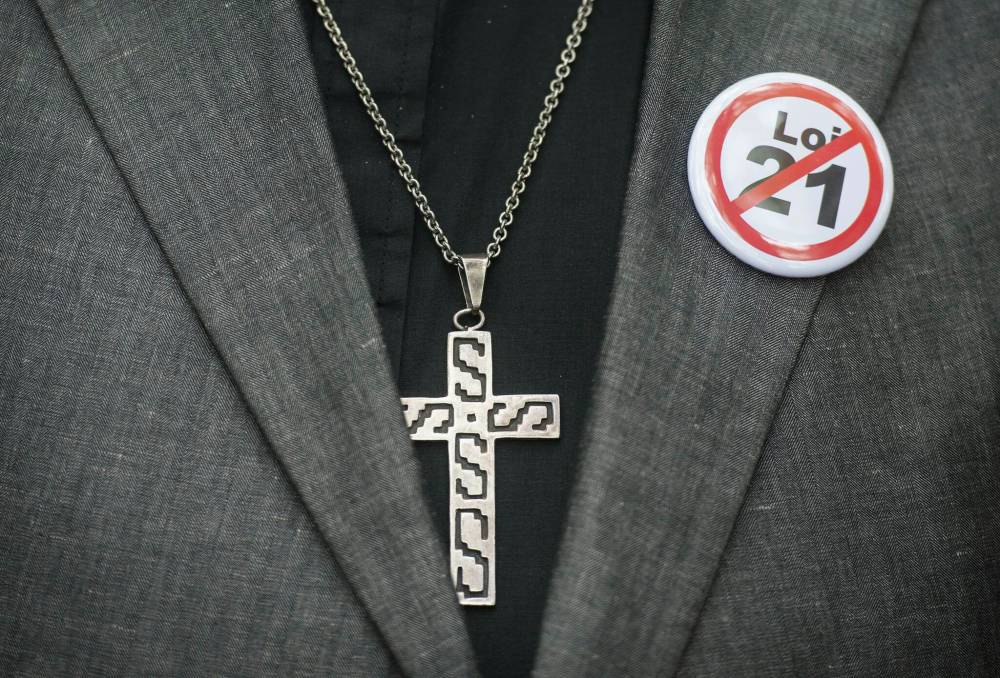
The legal challenge centres on Quebec’s decision to use Sec. 33 of the Charter — the “notwithstanding clause” — which allows governments to pass laws that violate guaranteed rights and freedoms. In this instance, Bill 21 violates Sec. 2 of the Charter, which guarantees the freedom of conscience and religion, but is protected by the notwithstanding clause.
Perhaps it is a feature of a strong and functional democracy that its citizens can openly debate the violation of protected freedoms. Even so, the notwithstanding clause is nothing less than an attack on democracy itself.
Many of us already know about the dismantlement of democratic institutions and protections for civil and human rights in the United States under President Donald Trump. But the same trend is occurring across other continents, including Europe. The 2026 Liberties Rule of Law Report, produced by the Civil Liberties Union for Europe, charted attacks on democracy and the rule of law across 22 countries.
The report found significant degradation is basic rights and freedoms.
“Concerted dismantling and cumulative decline sum up the state of the rule of law across large parts of the EU and increasingly within the European Institutions themselves,” the report said.
Canadians might think we are immune to such an awful trend. The fight over Bill 21 shows that although we may be lagging, we are fighting the same battle.
The bill was initially struck down by a lower court in Quebec, before being upheld by the Court of Appeal. Subsequently, the Canadian Civil Liberties Association and the National Council of Canadian Muslims asked the Supreme Court to review Quebec’s use of the notwithstanding court. The high court agreed to hear the case even though Sec. 33 exempts laws created under the notwithstanding clause from judicial review.
What, then, will the court attempt to do? Most observers believe the Supreme Court will rule on whether there should be additional limits or conditions placed on the use of the notwithstanding clause.
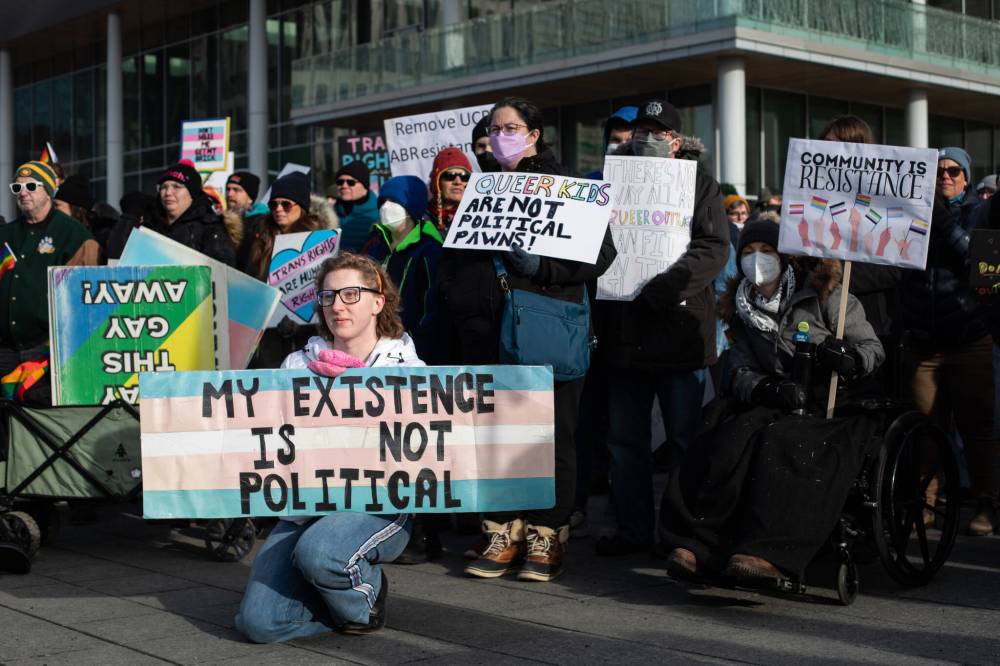
For those of you who might be a little confused, let’s look at some hard facts about Sec. 33 and how it has been used.
The notwithstanding clause has been used about two dozen times, most often by Quebec (first by a mile, with invocation 16 times on 20 separate pieces of legislation), Ontario and Alberta. However, starting in 2018, there has been an increasing use of Sec. 33. Civil right advocates hope the high court finds a way to limit the use of what has been called the “nuclear option” of constitutional law.
The second thing to know is that there is little salient legal rationale for Sec. 33. It was a tool of convenience, devised quickly and without due consideration as a way of achieving consensus in 1982 on the creation of the Charter of Rights and Freedoms. Some premiers felt the Charter was too strong, and the notwithstanding was the loophole that allowed provinces to violate Charter rights in pursuit of some other legal goal.
Third, Canada is the only democracy in the world that offers political leaders a legal path to violate constitutionally guaranteed rights and freedoms. Other countries do challenge those notions with policies and laws, but they do not have a total veto on their constitutions.
And finally, the proponents of an unfettered notwithstanding clause — both in government and in the news media — are almost entirely from the right side of the political spectrum. In Canada, conservative political leadership and opinion spend a lot of time driving the debate on Sec. 33 away from the issue of civil and human rights, and towards a debate over the federal government’s role in the federation.
In short, the politicians and opinion writers increasingly assert that a weakening of Sec. 33 is an attack on the federation itself.

It would be hard to find a more absurd notion in an otherwise deadly serious debate. Canada, as a country, must have strong democratic institutions — laws, courts, checks and balances on government — to protect our shared identity and values. That’s a principle that conservative premiers wholeheartedly reject.
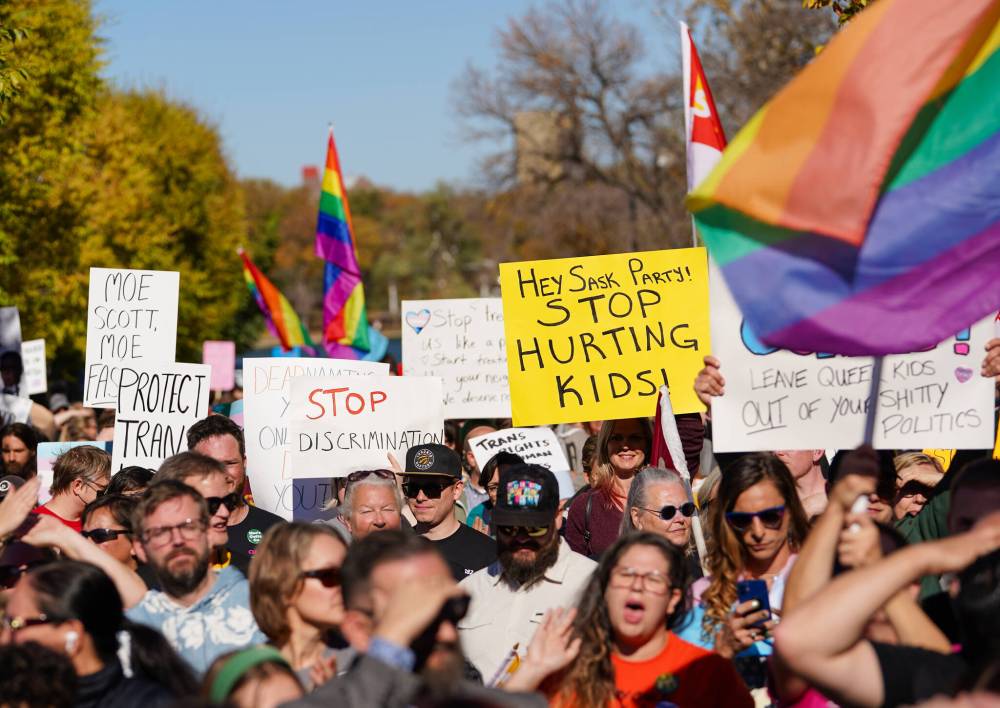
Quebec Premier Francois Legault, Ontario Premier Doug Ford, Saskatchewan Premier Scott Moe and Alberta Premier Danielle Smith want to be left to chart their own courses when it comes to rights and freedoms, with little regard for the Constitution or Charter. Unfortunately, the notwithstanding clause allows them to do just that.
If the high court cannot find some sort of balance on Sec. 33, its use will increase as political leaders try to remake their provinces in their own ideological images with little regard to civil or human rights.
The Constitution allows our leaders to violate these rights. But that doesn’t make it right.
dan.lett@freepress.mb.ca
Dan Lett is a columnist for the Free Press, providing opinion and commentary on politics in Winnipeg and beyond. Born and raised in Toronto, Dan joined the Free Press in 1986. Read more about Dan.
Dan’s columns are built on facts and reactions, but offer his personal views through arguments and analysis. The Free Press’ editing team reviews Dan’s columns before they are posted online or published in print — part of the our tradition, since 1872, of producing reliable independent journalism. Read more about Free Press’s history and mandate, and learn how our newsroom operates.
Our newsroom depends on a growing audience of readers to power our journalism. If you are not a paid reader, please consider becoming a subscriber.
Our newsroom depends on its audience of readers to power our journalism. Thank you for your support.
Dan Lett is a columnist for the Free Press, providing opinion and commentary on politics in Winnipeg and beyond. Born and raised in Toronto, Dan joined the Free Press in 1986. Read more about Dan.
Dan’s columns are built on facts and reactions, but offer his personal views through arguments and analysis. The Free Press’ editing team reviews Dan’s columns before they are posted online or published in print — part of the our tradition, since 1872, of producing reliable independent journalism. Read more about Free Press’s history and mandate, and learn how our newsroom operates.
Our newsroom depends on a growing audience of readers to power our journalism. If you are not a paid reader, please consider becoming a subscriber.
Our newsroom depends on its audience of readers to power our journalism. Thank you for your support.
Related Articles
Ottawa says laws that override Charter rights aren't shielded from legal scrutiny





Advertisement Advertise With Us
Advertisement Advertise With Us