

Defending Canada’s notwithstanding clause
Advertisement
Read this article for free:
or
Already have an account? Log in here »
To continue reading, please subscribe:

Digital Subscription
One year of digital access for only $205*
- Enjoy unlimited reading on winnipegfreepress.com
- Read the E-Edition, our digital replica newspaper
- Access News Break, our award-winning app
- Play interactive puzzles
*First annual payment billed as $205.00 + GST for one year. This annual subscription will automatically renew at $233.00 + GST every 52 weeks (10% off the regular annual price of $259.35). Offer available to new and qualified returning subscribers only. Cancel any time.
To continue reading, please subscribe:
Add Free Press access to your Brandon Sun subscription for only an additional
$1 for the first 4 weeks*
- Enjoy unlimited reading on winnipegfreepress.com
- Read the E-Edition, our digital replica newspaper
- Access News Break, our award-winning app
- Play interactive puzzles
*Your next Brandon Sun subscription payment will increase by $1.00 and you will be charged $17.95 plus GST for four weeks. After four weeks, your payment will increase to $24.95 plus GST every four weeks.
Read unlimited articles for free today:
or
Already have an account? Log in here »
Hey there, time traveller!
This article was published 06/01/2026 (255 days ago), so information in it may no longer be current.
A quick survey of the history of constitutions worldwide, including that of our neighbour next door, will tell you that “constitutions” are frequently tossed aside as a result of leadership with a disdain for those governed. On other occasions, the military establishment has been the prime mover against a country’s constitution.
History tells us that having a constitution is no guarantee of justice or liberty in the long run.
Ironically, one of the longest-lasting democracies in human history, Great Britain, has no constitution. Instead, they have placed their faith, quite successfully, in democracy. The hope that “the people” will make the right decisions over time to create stability and good governance.
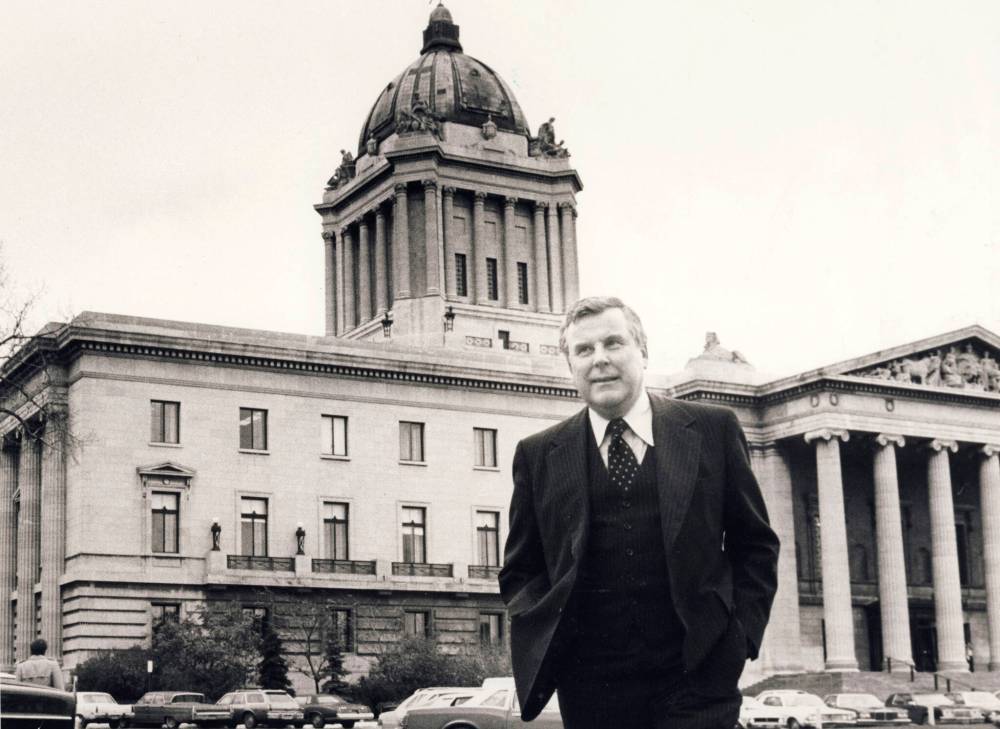
Gerry Cairns / FREE PRESS FILES
Former premier Sterling Lyon in front of the Manitoba legislature in 1981
Having no constitution means that parliament, or provincial legislatures in certain areas of its jurisdiction, are the ultimate lawmakers.
The principle behind a sovereign parliament is that the power to define and create legislation or repeal or amend legislation belongs to the people freely elected to represent us. The court’s role in a parliamentary democracy is to ensure that the laws passed are reasonable and do not violate existing laws or the jurisdiction’s own legislation.
This means that while the court has the power to limit government overreach in certain areas, it does so based on existing laws and practices and not on a constitutional document drafted in another era.
That was the purpose of the notwithstanding clause in our constitution.
Section 33 provided Parliament and our legislatures with the power to enact legislation despite the potential for court challenges based on certain sections of our Charter of Rights and Freedoms. Section 33, the notwithstanding clause, was included because the framers of our Charter recognized the legitimacy of Parliament and our legislatures as expressions of public will, and as part of the democratic process.
The notwithstanding clause was added to our Charter of Rights and Freedoms at the last minute.
The so-called “Kitchen Accord” was negotiated in a private meeting with then-federal justice minister Jean Chrétien, Ontario attorney general Roy McMurtry and Saskatchewan attorney general Roy Romanow, and supported by then Manitoba premier Sterling Lyon.
The notwithstanding clause was, according to reports at the time, the final piece of the constitutional puzzle needed to ensure unanimous support for the Charter of Rights and Freedoms. Although Quebec never did sign our constitutional document, representatives of all three main political parties supported the inclusion of the notwithstanding clause.
The Canadian Constitution, like most constitutions, is hard to change. That is why Section 33, while unique in respect to other countries’ constitutions, has proved to be a practical tool for some provincial governments. The parliament of Canada has not used Section 33, but it has been used by five provinces to protect provincial legislation.

Dave Johnson / WINNIPEG FREE PRESS
Former premier Sterling Lyon in 1986.
And while the notwithstanding clause can be invoked, the initial protection it provides is for a period of five years. Enough time in our electoral process for any measure defended to prove its worth in the public sphere.
Perhaps the best way to illustrate the value of a constitutional notwithstanding provision is to consider the American experience with their constitution’s second Amendment — the “right to bear arms.” A clause included in the American constitution more than 200 years ago seemingly cannot be changed.
Although almost 70 per cent of Americans, and the vast majority in many U.S. states, would gladly introduce more stringent gun laws, opponents have consistently relied on the courts to uphold their version of the Constitution to protect gun owners and manufacturers.
Although the drafters of the American constitution understood that it would be necessary to amend the constitution from time to time, they could not have predicted how difficult it would become to change.
Thomas Jefferson understood this. The constitution needed to be a living document, reflecting the views and understandings of the population of the era. He said. “We might as well require a man to wear still the coat which fitted him when a boy as a civilized society to remain ever under the regime of their barbarous ancestors.”
A simple clause, a notwithstanding clause in the U.S. Constitution, allowing state legislatures to override that Constitutional protection for gun owners and gun manufacturers, would likely have saved hundreds of thousands of needless gun deaths in America.
For many in Manitoba, the tension between individual rights and collective rights has taken on new meaning in the face of growing concern over public safety.
Letters to the editor, and stories about brazen thefts , vandalism and violence in public places and in businesses are likely to force our government to act.
As we struggle with how to protect our collective rights; the right to enjoy our public spaces safely, ride on public transit or protect ourselves from theft, legislation which infringes on perceived individual rights and freedoms, particularly judicial rights, are logical government and civic responses.
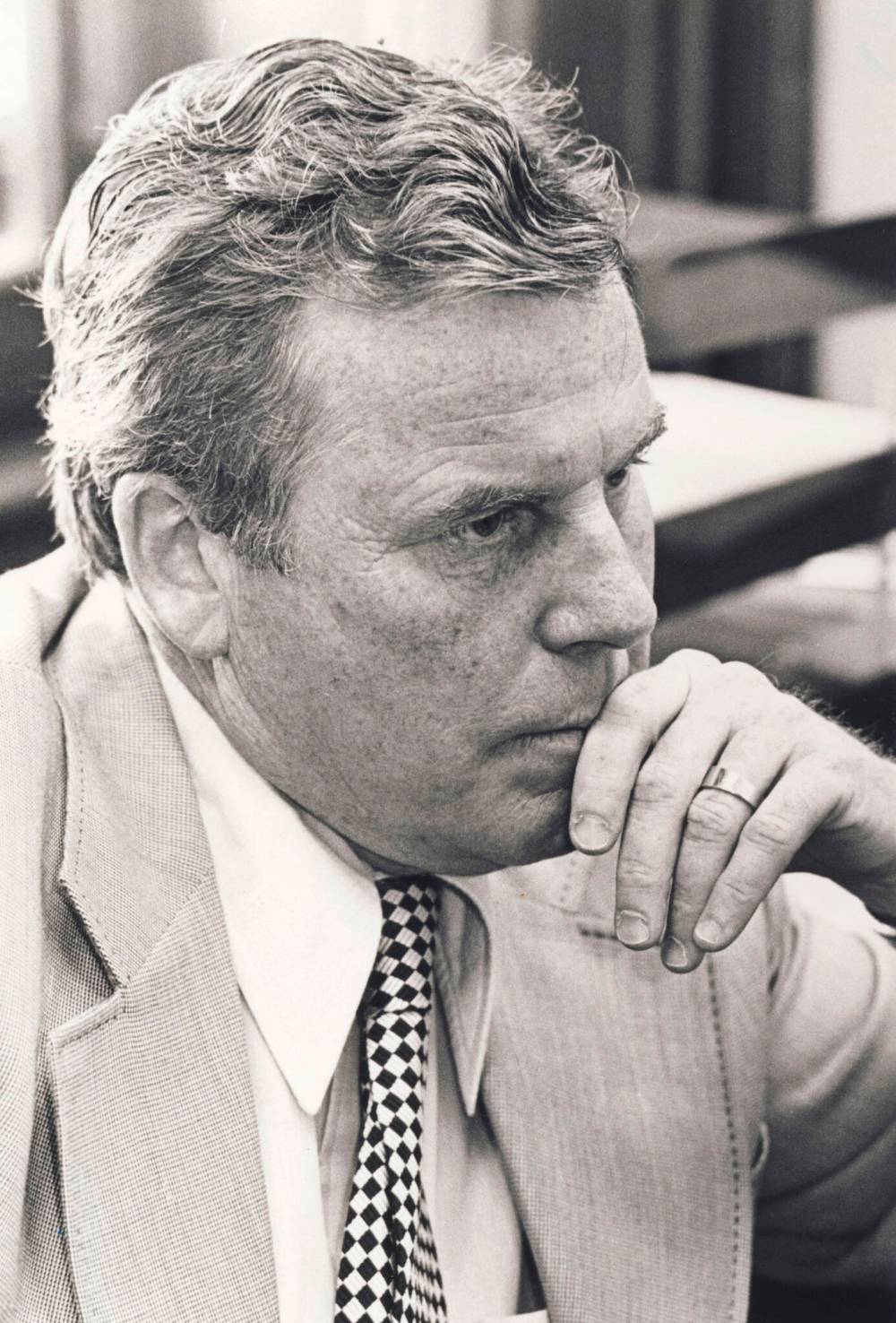
Gerry Cairns / WINNIPEG FREE PRESS
Former Manitoba premier Sterling Lyon in 1977
Our Charter also includes our fundamental right to feel safe in our community. Section 7 reads “Everyone has the right to life, liberty and security of the person and the right not to be deprived thereof except in accordance with the principles of fundamental justice.”

Proposals concerning safe injection sites and the use of 72-hour detention centres are perfect examples of the government trying to balance individual legal and personal rights with their responsibility to ensure that citizens feel safe in their own community.
Our public and personal safety has seemingly been compromised. The unwillingness to focus on the rights or needs of our community, rather than the judicial rights of the individual, may be compounding the problem.
Governments that choose to support public and community expectations and ignore potential court challenges to legislation based on individual rights may enjoy public support.
The experience in other provinces suggests that a growing number of Canadians may feel that the use of the notwithstanding clause in our Charter could serve a useful purpose in protecting our community.
Jerry Storie is a former Manitoba MLA and attended constitutional conferences as minister of Northern Affairs.

Advertisement Advertise With Us
Advertisement Advertise With Us