Ontario Autism Program spend now nearly $1B, advocates hope it makes dent in waitlist

Advertisement

Advertise with us

TORONTO - A new infusion of cash for the Ontario Autism Program in the recent provincial budget will bring annual spending to nearly $1 billion, money advocates hope will go directly toward core therapy for children.

Read this article for free:


or

Already have an account? Log in here »

To continue reading, please subscribe:

Subscribe and receive a limited-edition Free Press branded hat or tote.

Digital Subscription

One year of digital access for only $205*

  • Enjoy unlimited reading on winnipegfreepress.com
  • Read the E-Edition, our digital replica newspaper
  • Access News Break, our award-winning app
  • Play interactive puzzles

*First annual payment billed as $205.00 + GST for one year. This annual subscription will automatically renew at $233.00 + GST every 52 weeks (10% off the regular annual price of $259.35). Offer available to new and qualified returning subscribers only. Cancel any time.

To continue reading, please subscribe:

Add Free Press access to your Brandon Sun subscription for only an additional

$1 for the first 4 weeks*

  • Enjoy unlimited reading on winnipegfreepress.com
  • Read the E-Edition, our digital replica newspaper
  • Access News Break, our award-winning app
  • Play interactive puzzles
Start now

*Your next Brandon Sun subscription payment will increase by $1.00 and you will be charged $17.95 plus GST for four weeks. After four weeks, your payment will increase to $24.95 plus GST every four weeks.

TORONTO – A new infusion of cash for the Ontario Autism Program in the recent provincial budget will bring annual spending to nearly $1 billion, money advocates hope will go directly toward core therapy for children.

Michael Parsa, the minister of children, community and social services, said the “vast majority” of the new funding will go toward core services since that is the largest part of the program, but it is an overall budget boost of $189 million.

“It will continue funding all the programs, and it’ll allow us to invite more and more families every day,” he said.
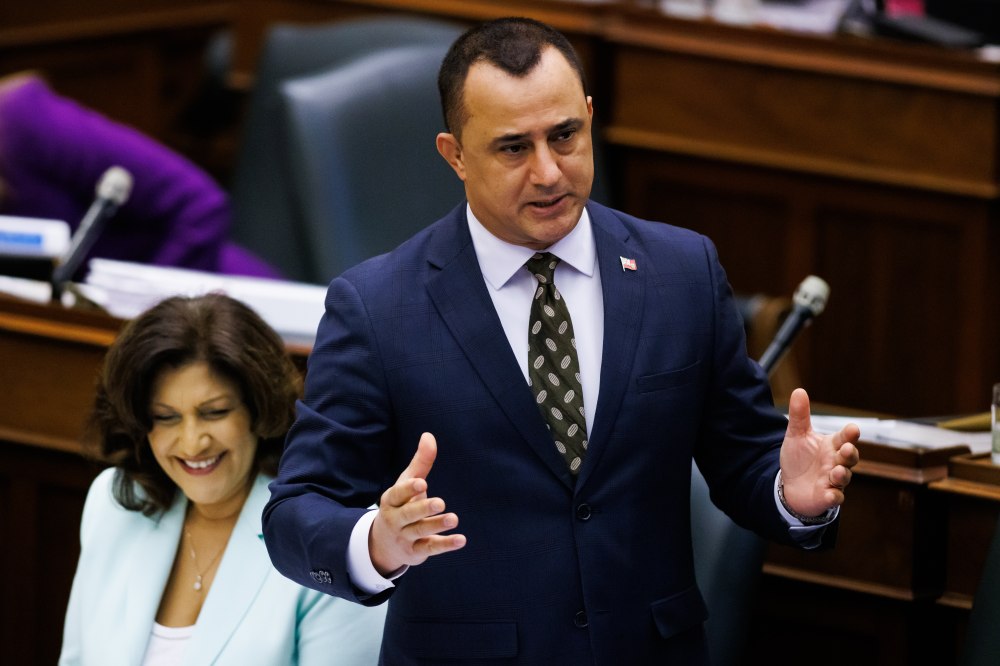
PC MPP Michael Parsa attends Question Period at Queen's Park in Toronto on Tuesday, May 13, 2025. THE CANADIAN PRESS/Cole Burston

The Ontario Autism Coalition said it welcomes the new money, but worries it will not make enough of a dent in the waitlist for core therapy, which includes applied behaviour analysis, speech language pathology and occupational therapy.

“I think it comes down to what happened last year with a similar funding increase,” said president Alina Cameron. “When we look back at where movement would have mattered the most to families, we didn’t see a lot of movement at all.”

Advocates say the wait to access those services is now five years and figures obtained through freedom-of-information requests show that growth in the number of families seeking services is outpacing the number of families being enrolled and receiving funding.

Enrolment figures show that 17,138 children had funding for core services at the end of 2024 and by the end of 2025 that number rose by 3,500 — but the number of children registered to seek services rose by more than 9,800 during that same time frame.

That number now stands at more than 88,000.

Advocates have also been calling for non-monetary ways to make the program more efficient, including simplifying an annual, four-hour determination of needs process. As of the end of 2025, more than half of those interviews being conducted are renewals.

“We’re asking for efficiencies within the program too, not just funding,” Cameron said. “They aren’t ever going to move that wait list if they’re just doing these year-over-year injections of the same amount.”

Parsa was noncommittal about structural program changes.

“Obviously we have to continue looking at the programs,” he said. “Some of the program that’s developed today might need some revisiting in the future, and that’s why we have to always have those conversations but make sure that families are on board.”

Parsa also touts the “pillar” programs families can access on a time-limited basis as they wait for funding for core services, including an entry-to-school program, urgent response services and support training for families. 

But after accessing a program like urgent response services for 12 weeks, families are often left waiting years more for funding for core services, NDP critic Alexa Gilmour noted. 

“They’re Band-Aids,” she said. “Families have told me over and over again that it is a bit of a hope killer. They get into that program, they think it’s going to offer them something. They leave it more discouraged than ever.”

This report by The Canadian Press was first published March 31, 2026.

Report Error Submit a Tip

More Stories

Bison kicker Turner named captain, shows she belongs

Joshua Frey-Sam 8 minute read Preview

Bison kicker Turner named captain, shows she belongs

Joshua Frey-Sam 8 minute read Saturday, Sep. 26, 2026

Even on nights like this, Maya Turner can appreciate how far she’s come.

Though it feels like yesterday that the Manitoba Bisons kicker arrived on the scene with an unheralded right leg and a point to prove, these days the fifth-year student-athlete is lining up to split the uprights with a veteran boot and the added responsibility of being a team captain.

Getting to this point wasn’t easy, though.

It’s now four years ago that Turner ditched her NCAA Division 1 soccer career at Loyola University in Chicago to kick a different ball on the gridiron and signed with the Bisons, who were one of more than one hundred programs across North America that she sent tape to in hopes of realizing a new dream.

Read
Saturday, Sep. 26, 2026

Winnipeg Police Service recognizes, honours residential school survivors as Orange Shirt Day approaches

Malak Abas 3 minute read Preview

Winnipeg Police Service recognizes, honours residential school survivors as Orange Shirt Day approaches

Malak Abas 3 minute read Yesterday at 7:27 PM CDT

Winnipeg Police Service members lit a sacred fire outside of their North District Station in recognition of residential school survivors ahead of the upcoming Orange Shirt Day.

“We know that the relationship between policing and Indigenous communities has not always been one of trust,” WPS Chief Gene Bowers told visitors at a gathering outside of the station Sunday afternoon.

“We cannot change that history, but we can acknowledge it, we can learn from it, and we can take responsibility for how we move forward.”

The sacred fire, guided by elder Mike Calder, will burn for 24 hours at the Sinclair Street station, and then be allowed to extinguish naturally. It’s the second year the WPS has lit a sacred fire in recognition of residential school survivors — last year, the fire was lit outside of WPS headquarters on Smith Street.

Read
Yesterday at 7:27 PM CDT

Positive anticipation is growing about major housing developments underway in Winnipeg’s downtown

Gabrielle Piché 10 minute read Preview

Positive anticipation is growing about major housing developments underway in Winnipeg’s downtown

Gabrielle Piché 10 minute read Friday, Sep. 25, 2026

If traffic is light and the wind is down, Somia Sadiq is able to hear the roar of Winnipeg Jets fans twice: first through her window, then on TV.

From her apartment view high above downtown, she can look out at Graham Avenue’s painted pedestrian landscape, see construction cranes and hear the heavy equipment at work as massive housing projects take shape at The Forks, at what used to be Portage Place shopping centre and at the former Hudson’s Bay building.

Sadiq has lived at 300 Main for 2 1/2 years, a few steps from the city’s famous, windy and reopened-to-pedestrians Portage Avenue intersection. At 42 storeys, it’s the tallest building in Winnipeg.

She is among 18,000 downtown residents who will soon be joined by thousands of others attracted to the city’s core by the new wave of major construction projects.

Read
Friday, Sep. 25, 2026

Uncaring hubby fell flat at first hurdle

Maureen Scurfield 4 minute read 2:00 AM CDT

DEAR MISS LONELYHEARTS: I re-rented my favourite summer cabin this fall because I’m trying to finish my thesis. My husband of just over a year was very annoyed with me for going on my own, but didn’t say much about it because I paid.

I thought we were both OK with this arrangement, until I got the flu up at the lake very badly and couldn’t keep anything down. I felt faint. I phoned him and he said he was at a party with the guys. I could hear music and girls laughing.

He wouldn’t come for me, so at 4 a.m. when I was getting even more sick and scared, I drove back to the city unannounced.

I went straight to my parents’ house and pretty much fell through the door. Mom said to me when she grabbed me: “This is not right. You could have died in the ditch. Where is your husband?”

Respectful separation: an obvious oxymoron

Judy Waytiuk 6 minute read Preview

Respectful separation: an obvious oxymoron

Judy Waytiuk 6 minute read 2:00 AM CDT

“We want a fair and respectful relationship with Canada,” Alberta separatist leader Keith Wilson told the CBC commentator. He paused. Briefly. “On our terms.”

He followed up with a poorly-veiled threat. Trade goods moving east or west across Canada, especially to and from Vancouver, must pass through Alberta, he mused, so…

Wilson and his ilk are blackmailing Canada. If they win this referendum vote, he intends — with Alberta Premier Danielle Smith’s acquiescence — to pull the pin on a genuine separation referendum grenade. The separatists’ transition plan has been largely anonymously authored — much like Trump’s blueprint Project 2025.

Smith claims Albertans will vote against separation. She’s bluffing. Her precarious personal political survival tightrope as she tries to balance atop the UCP could easily carry Canada down a potentially disastrous road. All it will take is for separatists to turn out en masse (about 25 per cent of Albertans, if you believe the polls), and those supporting Canada to stay home because they think it’s in the bag for them.

Read
2:00 AM CDT

Wab Kinew as ‘communicator in chief’

Paul G. Thomas 6 minute read Preview

Wab Kinew as ‘communicator in chief’

Paul G. Thomas 6 minute read 2:00 AM CDT

Premier Wab Kinew and his party have been riding high in the polls longer than normal for a government one year or less away from its first re-election contest. One reason is his ubiquitous, dominating communications presence as NDP leader and premier.

The argument here is that Kinew has supplemented his prerogatives as premier and party leader (such as appointing cabinet ministers and approving party nominations) with the skilful use of communications to advance his policy agenda, boost his personal popularity and maintain the competitive advantage of his party over the opposition Progressive Conservatives.

Communications has always been a significant part of politics and policy making. However, in the contemporary political and media environments, communications considerations have moved from the background to the foreground of decision-making by political parties, including when they are performing in the role of government. Campaigning and governing now overlap in what has been described as a permanent election campaign.

Political parties use communications strategies for several purposes: to establish an image of the leader which makes a positive emotional connection with voters; to promote a coherent message and to keep party members on message; and to gain favourable media coverage for its policies and other actions on almost a daily basis.

Read
2:00 AM CDT