Artemis II mission highlights deep space effects on astronauts’ bodies

Advertisement

Advertise with us

MONTREAL -  The Artemis II mission is showing how even a short 10-day journey in deep space presents significant challenges to the human body, including exposure to radiation and other effects scientists are still studying.

Read this article for free:


or

Already have an account? Log in here »

To continue reading, please subscribe:

Subscribe and receive a limited-edition Free Press branded hat or tote.

Digital Subscription

One year of digital access for only $205*

  • Enjoy unlimited reading on winnipegfreepress.com
  • Read the E-Edition, our digital replica newspaper
  • Access News Break, our award-winning app
  • Play interactive puzzles

*First annual payment billed as $205.00 + GST for one year. This annual subscription will automatically renew at $233.00 + GST every 52 weeks (10% off the regular annual price of $259.35). Offer available to new and qualified returning subscribers only. Cancel any time.

To continue reading, please subscribe:

Add Free Press access to your Brandon Sun subscription for only an additional

$1 for the first 4 weeks*

  • Enjoy unlimited reading on winnipegfreepress.com
  • Read the E-Edition, our digital replica newspaper
  • Access News Break, our award-winning app
  • Play interactive puzzles
Start now

*Your next Brandon Sun subscription payment will increase by $1.00 and you will be charged $17.95 plus GST for four weeks. After four weeks, your payment will increase to $24.95 plus GST every four weeks.

MONTREAL –  The Artemis II mission is showing how even a short 10-day journey in deep space presents significant challenges to the human body, including exposure to radiation and other effects scientists are still studying.

The combination of radiation exposure, microgravity, and confined living conditions can place significant strain on the human body, said Dr. Farhan Asrar, a physician, space medicine researcher and associate dean at Toronto Metropolitan University’s School of Medicine.

The Artemis II mission marks a return to deep space for the first time in 50 years, offering a rare opportunity to closely monitor how astronauts are affected.

“There are still many effects of deep space on the body that we don’t fully understand,” Asrar said.

Radiation is the primary concern in deep space, Asrar said.

“Levels are higher than in low Earth orbit or on the (International Space Station), and it’s not just the amount — it’s the type.”

He explained that this form of cosmic radiation can affect cells, organs, and DNA differently than what astronauts experience closer to Earth.

“Some of these particles are more penetrating and potentially more damaging, which makes this mission a step into the unknown,” he said.

The space mission will provide data for scientists, despite its short length.

“Even short exposures can help us understand how the cardiovascular system, immune system, and even cognitive function might be impacted on longer missions,” Asrar said.
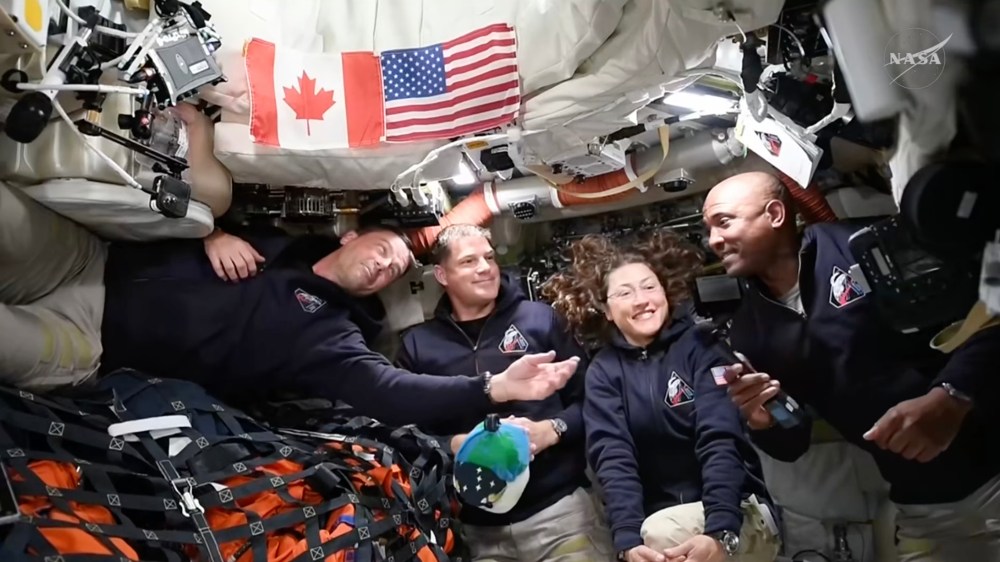
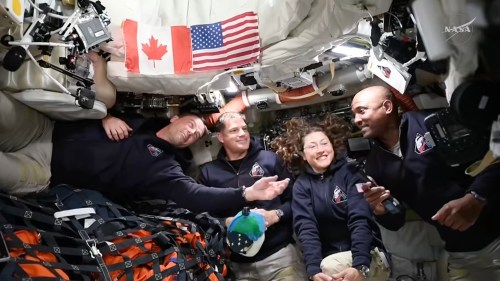
In this image from video provided by NASA, Artemis II astronauts, from left, Reid Wiseman, Jeremy Hansen, Christina Koch and Victor Glover gather for an interview en route to the moon on Saturday, April 4, 2026. (NASA via AP)

The mission, which launched earlier this month, is on a 10-day journey where the spacecraft will circle the moon. Its crew includes Canadian astronaut Jeremy Hansen, who will become the first Canadian in deep space, as well as American astronauts Reid Wiseman, Christina Koch, and Victor Glover.

Every stage of the mission affects the astronauts’ bodies, Asrar said, adding, “It’s quite a disabling and extreme environment.” The most common side-effect tends to be motion sickness.

He noted that extensive training helps the crew manage these challenges.

“Many of them are also trained as pilots, which factors into how they handle symptoms and adapt to the conditions,” he said.

The mission also marks the first time a woman has gone into deep space, with Koch joining the flight. “The female perspective is a critical part of understanding how different bodies respond to deep space,” Asrar said. “We’ve never had a woman in deep space before, so this mission provides essential data for future exploration.”

Understanding these differences, believes Asrar, is not just about observation — it also informs how astronauts must care for their bodies during the mission.

Astronauts must rely on specialized exercise to stay fit in space, Asrar said, with about 30 minutes a day recommended for the Artemis II crew — far less than the up to two hours required on the International Space Station.
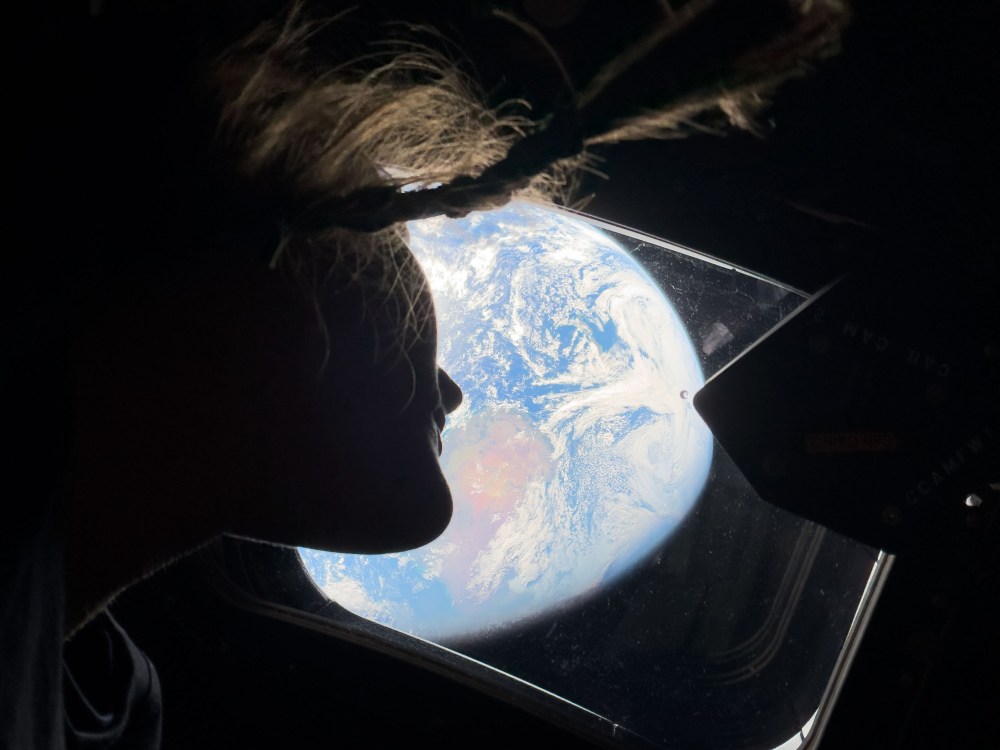
This image provided by NASA, astronaut and Artemis II mission specialist Christina Koch peers out of one of the Orion spacecraft's main cabin windows, looking back at Earth, as the crew travels towards the Moon on Thursday, April 2, 2026. (NASA via AP)

He said staying active is critical to slowing rapid muscle and bone loss in microgravity.

“Even a short mission can cause deconditioning if the body isn’t kept active,” he said, noting astronauts can lose up to one to 1.5 per cent of bone mass for each month spent in space.

During a live question-and-answer session with Canadian children, Hansen described one of the most noticeable effects of microgravity.

“I’m sure my face is a lot puffier now because there’s a lot more blood up in my upper regions of my body,” he said.

Asrar explained that the sensation is caused by fluid shifts that push blood toward the head in the absence of gravity.

“Without gravity pulling fluids downward, there’s increased pressure in the upper body, which can affect the eyes, sinuses, and balance,” he said.

Asrar added that these changes can also affect vision, kidney function, and the immune system, underscoring how even short missions trigger a cascade of physiological adjustments.
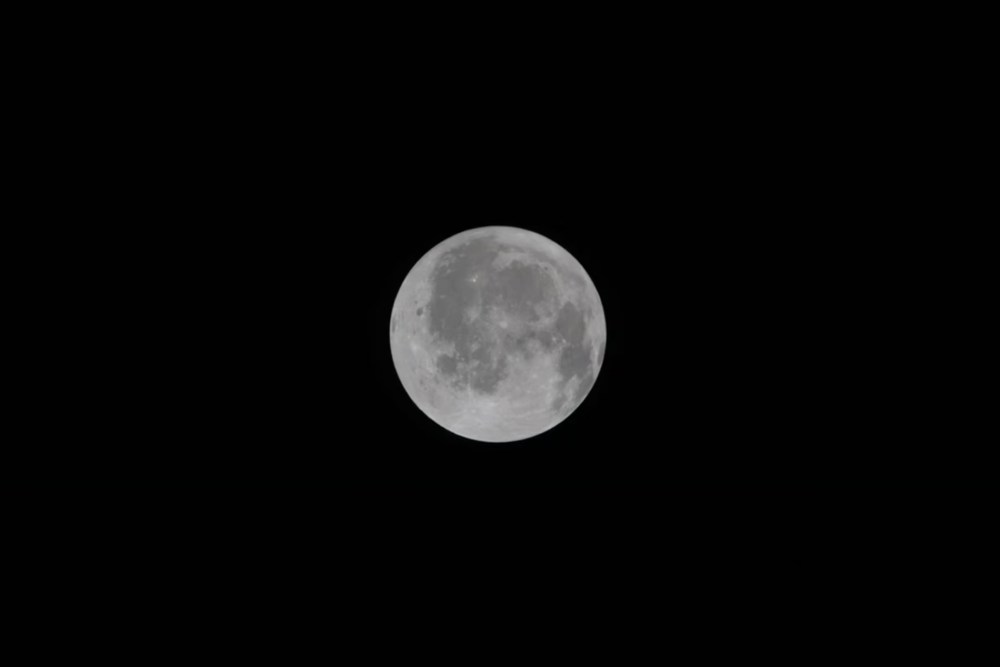
This photo provided by NASA shows the moon seen from the Orion spacecraft Integrity during the Artemis II mission on Friday, April 3, 2026. (NASA via AP)

Beyond the physical strain, deep space missions also bring significant mental and logistical challenges. Astronauts must carefully manage limited food, water and medical supplies while living in tight quarters with little privacy, Asrar explained.

Asrar said team dynamics are crucial, as crews eat, sleep and work side by side throughout the mission.

“It’s important to have a team you want to be with and can work with, because literally 24/7 you’re together,” he said, adding that aside from the toilet, there are no real barriers separating crew members.

After returning to Earth, the crew will undergo rehabilitation to rebuild muscle strength, restore bone density and readjust to gravity. Asrar said tracking that recovery is just as important as studying the mission itself.

“The way the body adapts and re-apapts gives us critical information for designing countermeasures for longer missions,” he said.

He added that even a 10-day flight can provide valuable data on fluid shifts, cardiovascular changes and organ function, helping prepare humans for future missions to Mars and beyond.

The Artemis II capsule and its crew are scheduled to splash down in the Pacific Ocean off San Diego on April 10. Asrar noted that re-entry also places additional strain on the body.
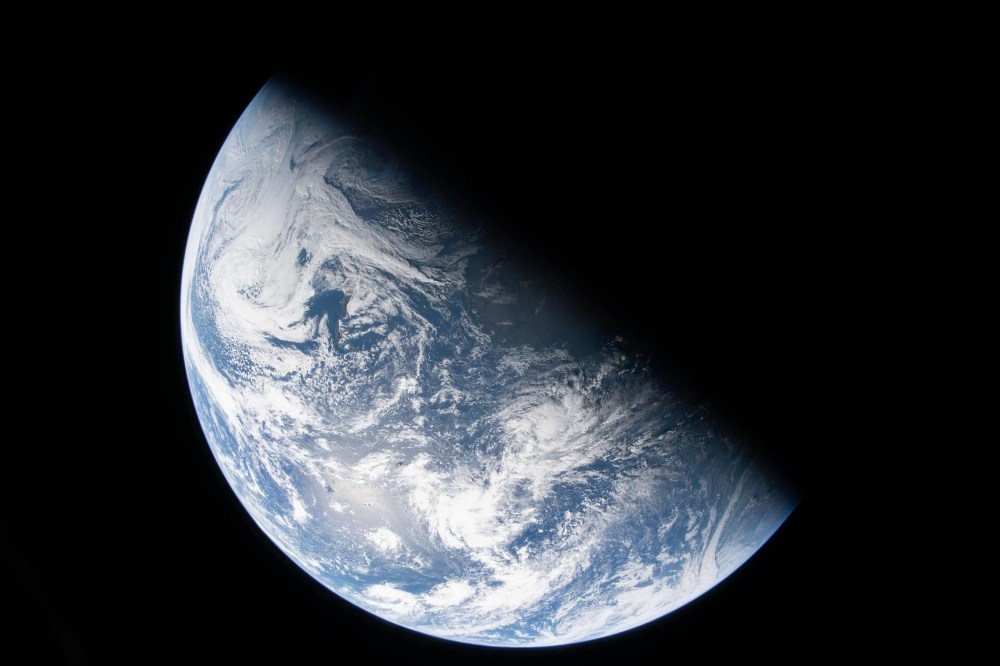
This image from video provided by NASA shows a view of earth taken by NASA astronaut and Artemis II Commander Reid Wiseman from one of the Orion spacecraft's four windows after completing the translunar injection burn, Thursday, April 2, 2026. (NASA via AP)

“The forces during re-entry can be strenuous,” he said, “and the body needs time to readjust to gravity.”

This report by The Canadian Press was first published April 5, 2026.


Report Error Submit a Tip

More Stories

Best to fess up about grandkid-sitting fatigue

Maureen Scurfield 5 minute read 2:00 AM CDT

DEAR MISS LONELYHEARTS: We love our grandchildren, but now we’re sick of them. The two sets of parents — our adult children — have been parking their kids out here on the farm with us while they take back-to-back road trips to see their friends. We’ve had enough.

Grandma and I want them to come back and get the “brats” (just joking, they’re nice kids) so we can relax.

You have to be so careful with city kids around the farm who don’t know when they’re going to make a mistake and get hoofed by an animal or run over by a farm implement.

How do we tell our kids the party is over early, and they really need to come back before grandma and I give out?

‘You vote with your bike’: cyclists celebrate freedoms, call for increased safety

Maggie Macintosh 6 minute read Preview

‘You vote with your bike’: cyclists celebrate freedoms, call for increased safety

Maggie Macintosh 6 minute read Updated: 9:24 AM CDT

Patty Wiens got dressed up in her sparkly, hot pink cowboy boots to pedal and talk politics with more than 100 other people on Sunday.

The founder of Winnipeg’s Fancy Women Bike Ride called on attendees of the 2026 event to ask candidates in the upcoming civic election — a half-dozen of whom were in attendance — about their active transportation platforms.

“We’re here today, in an election year, to remind you that you vote with your bike,” Wiens told a crowd of nearly 120 cyclists gathered on the legislature grounds for the group ride.

“When (city council) candidates come to your door and ask what’s important to you, you’re going to say, ‘I want to ride my bike safely in the city. What are you going to do about it?’”

Read
Updated: 9:24 AM CDT

Artemis II mission highlights deep space effects on astronauts’ bodies

Charlotte Glorieux, The Canadian Press 6 minute read Preview

Artemis II mission highlights deep space effects on astronauts’ bodies

Charlotte Glorieux, The Canadian Press 6 minute read Monday, Apr. 6, 2026

MONTREAL -  The Artemis II mission is showing how even a short 10-day journey in deep space presents significant challenges to the human body, including exposure to radiation and other effects scientists are still studying.

The combination of radiation exposure, microgravity, and confined living conditions can place significant strain on the human body, said Dr. Farhan Asrar, a physician, space medicine researcher and associate dean at Toronto Metropolitan University's School of Medicine.

The Artemis II mission marks a return to deep space for the first time in 50 years, offering a rare opportunity to closely monitor how astronauts are affected.

“There are still many effects of deep space on the body that we don’t fully understand,” Asrar said.

Read
Monday, Apr. 6, 2026

Shelters overwhelmed as rising vet costs forcing some owners to surrender pets

Tiago Resko 4 minute read Preview

Shelters overwhelmed as rising vet costs forcing some owners to surrender pets

Tiago Resko 4 minute read 6:00 AM CDT

In the fall of 2022, Tara Miller was faced with a difficult decision: keep her car or sell it to pay for a second knee surgery for her dog.

Ultimately, she needed her car to commute during the winter and decided to manage her dog Corby’s arthritis with medication and home therapy.

“Mentally it probably broke me,” said the 54-year-old.

While insurance covered two-thirds of the dog’s initial $6,000 surgery, Miller had to pay the remaining $2,000. That was on top of the $500 checkup before the surgery and the monthly $175 pet insurance premium.

Read
6:00 AM CDT

Free fix is in: repair café aims to keep items out of landfills

Tiago Resko 3 minute read Preview

Free fix is in: repair café aims to keep items out of landfills

Tiago Resko 3 minute read 6:00 AM CDT

Stephen Kirk wants to give people a chance to fix items they’re not ready to let go of.

The Spence Neighbourhood Association staffer took notice when repair cafés started popping up around the world, and he decided to bring the idea to Winnipeg.

The café invites people to bring broken items like bikes, clothes and small kitchen appliances to the association’s headquarters to get free repairs by a team of skilled volunteers.

“Certainly in our neighbourhood, a lot of people’s motivation is economic, they would rather fix it than have to buy a new one,” said Kirk, the environmental and open spaces coordinator for the Spence Neighbourhood Association.

Read
6:00 AM CDT

Cross-border abduction under investigation

1 minute read Updated: Yesterday at 12:40 PM CDT

A cross-border kidnapping from Winnipeg to Minnesota is under investigation, according to North Dakota state patrol.

A 31-year-old Manitoba man abducted a 37-year-old Manitoba man in Winnipeg and drove across the border into North Dakota, the North Dakota State Highway Patrol said in a Facebook post Sunday. The state patrol said it became aware of the possible abduction Sunday morning and worked with local, federal and Canadian law enforcement to investigate.

Authorities identified a suspect vehicle using cameras at multiple locations and used cell-phone location information and licence-plate reader technology to find the vehicle in Alexandria, Minnesota.

"The victim was able to break free from the suspect and run into a nearby store. The suspect was taken into custody shortly afterward by the Douglas County Sheriff’s Office and Alexandria Police Department. The victim was recovered safely," the North Dakota state patrol's post reads.