

Era of political violence means higher costs for candidate security, a new report says
Advertisement
Read this article for free:
or
Already have an account? Log in here »
To continue reading, please subscribe:

Digital Subscription
One year of digital access for only $205*
- Enjoy unlimited reading on winnipegfreepress.com
- Read the E-Edition, our digital replica newspaper
- Access News Break, our award-winning app
- Play interactive puzzles
*First annual payment billed as $205.00 + GST for one year. This annual subscription will automatically renew at $233.00 + GST every 52 weeks (10% off the regular annual price of $259.35). Offer available to new and qualified returning subscribers only. Cancel any time.
To continue reading, please subscribe:
Add Free Press access to your Brandon Sun subscription for only an additional
$1 for the first 4 weeks*
- Enjoy unlimited reading on winnipegfreepress.com
- Read the E-Edition, our digital replica newspaper
- Access News Break, our award-winning app
- Play interactive puzzles
*Your next Brandon Sun subscription payment will increase by $1.00 and you will be charged $17.95 plus GST for four weeks. After four weeks, your payment will increase to $24.95 plus GST every four weeks.
Read unlimited articles for free today:
or
Already have an account? Log in here »
Security spending for congressional and presidential campaigns has jumped fivefold over the past decade as an increasingly hostile political environment has led to escalating threats against public officials, ranging from doxing to assassination plots, according to a report released Thursday.
Federal political committees spent more than $40 million on expenses labeled as security during the 2023-24 campaign cycle, the most recent one for which data is publicly available, according to the report from the Public Service Alliance, a nonpartisan group that focuses on security for public officials.
The report did not specify which candidates spent the most on security. The tally also did not count the escalating security costs of the federal government, which includes augmented Capitol Police services for members of Congress and heightened U.S. Secret Service protection for presidential candidates, as well as former and current presidents and their families.
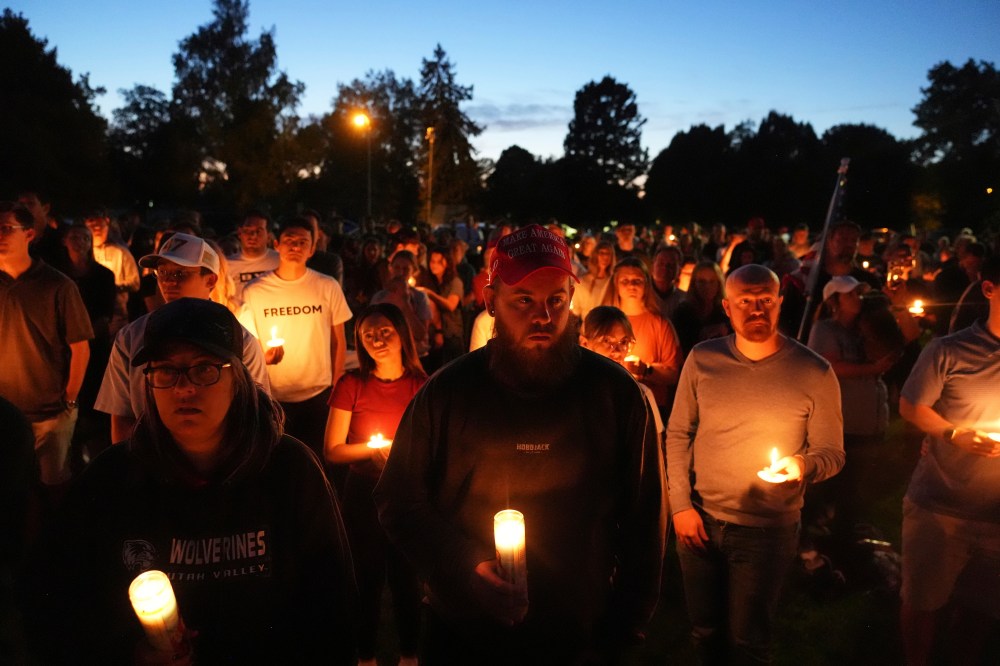
It comes after a grim roll call of political violence over the past decade. That includes the 2017 shooting at a Republican congressional baseball team practice in Alexandria, Virginia; the 2022 hammer assault on the husband of Democratic then-House Speaker Nancy Pelosi in California; the 2024 assassination attempt on Republican then-candidate Donald Trump at a Pennsylvania rally; and the assassinations last year of a Democratic Minnesota state lawmaker and her husband and of conservative commentator Charlie Kirk in Utah.
“This is not a good place to be as a country,” said Justin Sherman, the report’s author.
The report calculated security costs by looking at publicly available filings with the Federal Election Commission and tallied only the expenses that were explicitly marked for that purpose, even though other expenses may have a security component.
The total listed security spending represented a small fraction of the billions of dollars spent every two-year election cycle on presidential and congressional campaigns. But Sherman noted that the report totals are conservative and likely understate the financial costs of security for political campaigns.
One of the biggest increases has been in the rapidly growing field of digital security, which includes protecting against hackers and monitoring online threats. Spending went from $50,000 total in the 2015-16 election cycle to $900,000 in 2023-24.
Sherman noted one of the more disturbing findings is campaigns spending nearly $1 million on home security during the past decade, after spending nothing in that category during the 2015-16 election cycle. That includes such expenses as contracts with response companies, window bars and surveillance cameras. That’s a reflection of the increased threats to public officials at their homes.
Critics are increasingly likely to post the home addresses of elected officials on social media, a practice known as doxing. Attacks like the one on Pelosi’s husband in San Francisco and on the Minnesota state lawmaker, Melissa Hortman, and her husband occurred at their homes.
“It’s expected that, say, a GOTV event or a campaign rally is going to have metal detectors and security,” Sherman said. But targeting the homes of candidates and officeholders is a new frontier.
He noted that members of Congress get money in their office budgets that can be used to pay for security, but people thinking of running for office now have to factor home security costs into their decision-making.
“It’s a troubling time when the security spend is becoming a greater barrier for someone running for office,” Sherman said.