

A trial in a tent draws crowds as Uganda debuts mobile court for man accused of killing 4 kids
Advertisement
Read this article for free:
or
Already have an account? Log in here »
To continue reading, please subscribe:

Digital Subscription
One year of digital access for only $205*
- Enjoy unlimited reading on winnipegfreepress.com
- Read the E-Edition, our digital replica newspaper
- Access News Break, our award-winning app
- Play interactive puzzles
*First annual payment billed as $205.00 + GST for one year. This annual subscription will automatically renew at $233.00 + GST every 52 weeks (10% off the regular annual price of $259.35). Offer available to new and qualified returning subscribers only. Cancel any time.
To continue reading, please subscribe:
Add Free Press access to your Brandon Sun subscription for only an additional
$1 for the first 4 weeks*
- Enjoy unlimited reading on winnipegfreepress.com
- Read the E-Edition, our digital replica newspaper
- Access News Break, our award-winning app
- Play interactive puzzles
*Your next Brandon Sun subscription payment will increase by $1.00 and you will be charged $17.95 plus GST for four weeks. After four weeks, your payment will increase to $24.95 plus GST every four weeks.
Read unlimited articles for free today:
or
Already have an account? Log in here »
KAMPALA, Uganda (AP) — The trial of a Ugandan man accused of killing four children began on Monday in a tent not far from where the crime was committed, after the president ordered a mobile court session that could be attended by locals.
It is the first test of the country’s controversial mobile court sessions intended to allow people to directly follow cases that draw widespread public interest.
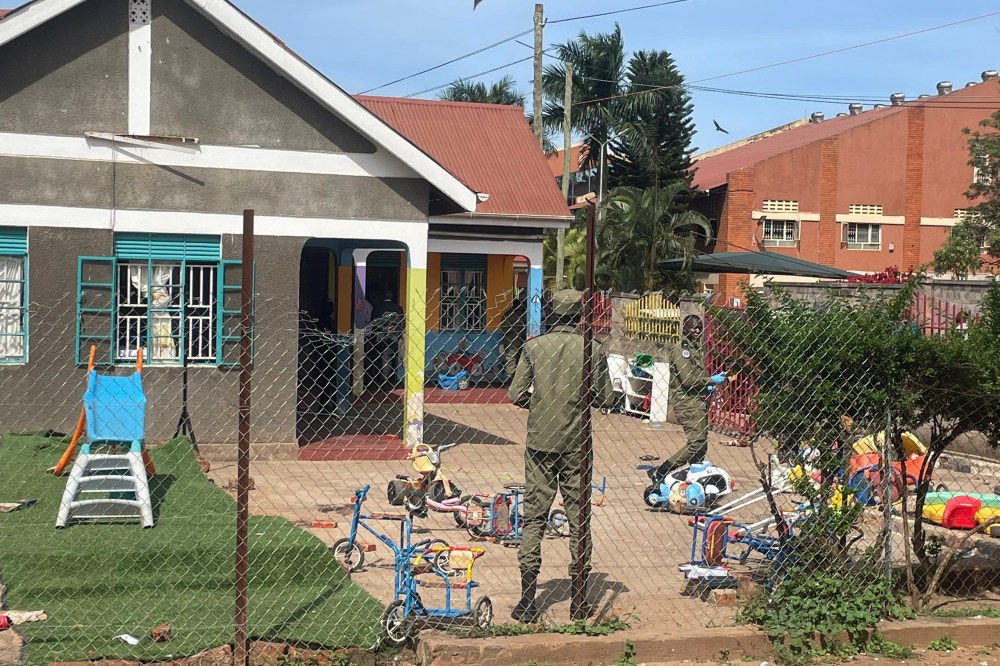
The suspect, Christopher Okello Onyum, is accused of killing the children in a machete attack inside a nursery school in a suburb of the Ugandan capital of Kampala on April 2. The motive remains unclear in the incident that shocked many in this East African country.
Onyum on Monday pleaded not guilty to four counts of murder.
Witnesses said the attacker targeted a nursery school known as Gaba Early Childhood Development Program by disguising himself as a parent. He is said to have briefly talked to administrators there before locking the gate and then attacking the children.
An angry crowd later tried to lynch Onyum, who was rescued and taken into custody by police. He could face the death penalty if convicted.
President Yoweri Museveni’s order to have the case tried quickly and in the very public setting of a mobile court has proved controversial, with some critics saying it threatens to sensationalize a matter of obvious pain for the bereaved while also interfering with justice.
In a statement, the Uganda Law Society said the president’s directive amounted to executive interference and undermined the suspect’s right to a fair trial.
“This is not justice,” the society said in a statement. “It’s a judicial lynching rally.”
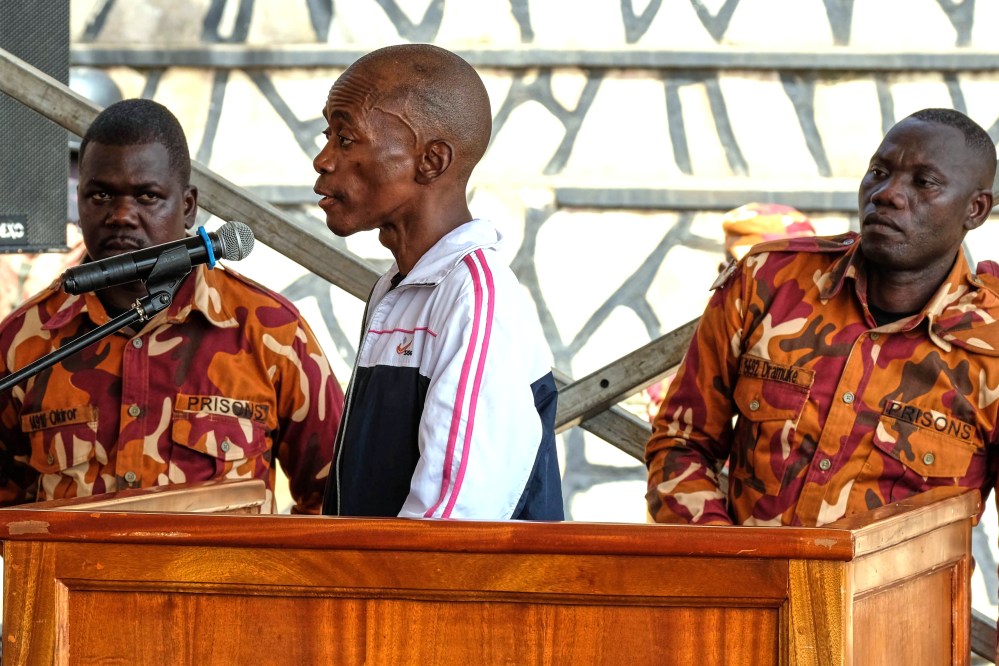
Hundreds of people gathered for the trial, which was being held in a large tent erected in the grounds of a church.
This is the first time mobile courts are being put into practice after a legal notice with formal directives for their operations were published in March.
The judiciary defended the decision, saying it highlighted its “commitment to taking justice closer to the people through innovative approaches.”