

Sweden blames pro-Russian group for cyberattack last year on its energy infrastructure
Advertisement
Read this article for free:
or
Already have an account? Log in here »
To continue reading, please subscribe:
Digital Subscription
One year of digital access for only $1.44 a week*
- Enjoy unlimited reading on winnipegfreepress.com
- Read the E-Edition, our digital replica newspaper
- Access News Break, our award-winning app
- Play interactive puzzles
*Billed as $5.77 plus GST every four weeks. After 52 weeks, price increases to the regular rate of $19.95 plus GST every four weeks. Offer available to new and qualified returning subscribers only. Cancel any time.
To continue reading, please subscribe:
Add Free Press access to your Brandon Sun subscription for only an additional
$1 for the first 4 weeks*
- Enjoy unlimited reading on winnipegfreepress.com
- Read the E-Edition, our digital replica newspaper
- Access News Break, our award-winning app
- Play interactive puzzles
*Your next Brandon Sun subscription payment will increase by $1.00 and you will be charged $17.95 plus GST for four weeks. After four weeks, your payment will increase to $24.95 plus GST every four weeks.
Read unlimited articles for free today:
or
Already have an account? Log in here »
Sweden said Wednesday that a pro-Russian group with links to Russia’s security and intelligence services was behind a cyberattack on a heating plant last year. The announcement followed warnings from officials in Poland, Norway, Denmark and Latvia that Russia is attacking critical infrastructure across Europe.
In what was Sweden’s first public mention of the attack, the country’s minister for civil defense, Carl-Oskar Bohlin, said it targeted a heating plant in western Sweden but the attack failed. He gave no further details.
Bohlin compared it to incidents in Poland in December, when coordinated cyberattacks hit combined heat and power plants supplying heat to almost 500,000 customers, as well as wind and solar farms. Poland later said evidence indicated hackers were “directly linked to the Russian services.”
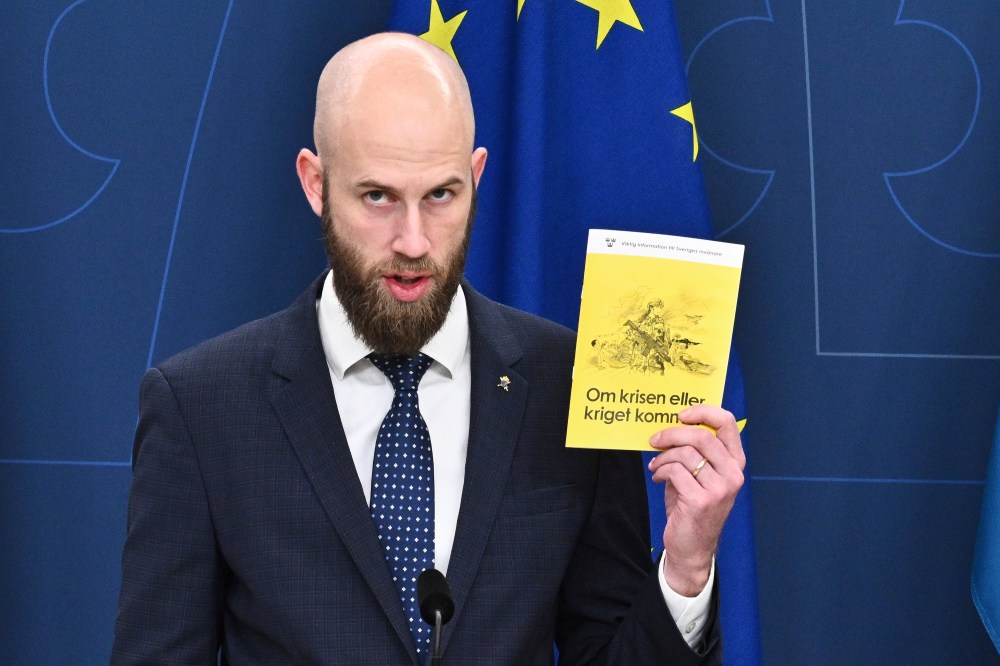
Bohlin said the cyberattacks in Sweden and Poland are directed at systems controlling critical infrastructure with potentially serious consequences for society.
The attacks show Russia is engaging in risky and careless behavior, he said.
The attacks are among more than 150 incidents of sabotage and malign activity across Europe tracked by The Associated Press and linked to Russia by Western officials since Moscow’s full-scale invasion of Ukraine in February 2022. Officials say a goal of the attacks is to undermine support for Ukraine, spread fear and discord in European societies and drain investigative resources.
The Kremlin has previously denied carrying out any kind of sabotage campaign across Europe.
Danish officials in December said cyberattacks carried out by Russia in 2024 on a water utility left some houses without water, while in August, Norwegian police said pro-Russian hackers remotely opened a valve in a dam, allowing water to pour out. In March, Latvia’s State Security Service said a train and railway infrastructure were set on fire by people acting in Russia’s interests.
___
Ciobanu reported from Warsaw, Poland.