

Carney’s pragmatic political monster not much to look at, but… ‘it’s moving, it’s alive!’

Advertisement
Read this article for free:
or
Already have an account? Log in here »
To continue reading, please subscribe:

Digital Subscription
One year of digital access for only $205*
- Enjoy unlimited reading on winnipegfreepress.com
- Read the E-Edition, our digital replica newspaper
- Access News Break, our award-winning app
- Play interactive puzzles
*First annual payment billed as $205.00 + GST for one year. This annual subscription will automatically renew at $233.00 + GST every 52 weeks (10% off the regular annual price of $259.35). Offer available to new and qualified returning subscribers only. Cancel any time.
To continue reading, please subscribe:
Add Free Press access to your Brandon Sun subscription for only an additional
$1 for the first 4 weeks*
- Enjoy unlimited reading on winnipegfreepress.com
- Read the E-Edition, our digital replica newspaper
- Access News Break, our award-winning app
- Play interactive puzzles
*Your next Brandon Sun subscription payment will increase by $1.00 and you will be charged $17.95 plus GST for four weeks. After four weeks, your payment will increase to $24.95 plus GST every four weeks.
Read unlimited articles for free today:
or
Already have an account? Log in here »
Say hello to Dr. Carney’s Frankenparty, constructed of disparate — and in some instances, unwanted — body parts shed from other political parties that have come together around a common purpose.
We’re talking, of course, about the new, and possibly improved, conglomeration of stalwart MPs from the Trudeau years, new faces elected in last year’s general election and Monday night’s byelections and five MPs (four Tories and a New Democrat) who left the parties that brung them to Ottawa to jump on Carney’s seemingly unstoppable bandwagon.
In the annals of Canadian political history, what’s happening right now is fascinating, no matter which side of the partisan divide you occupy.
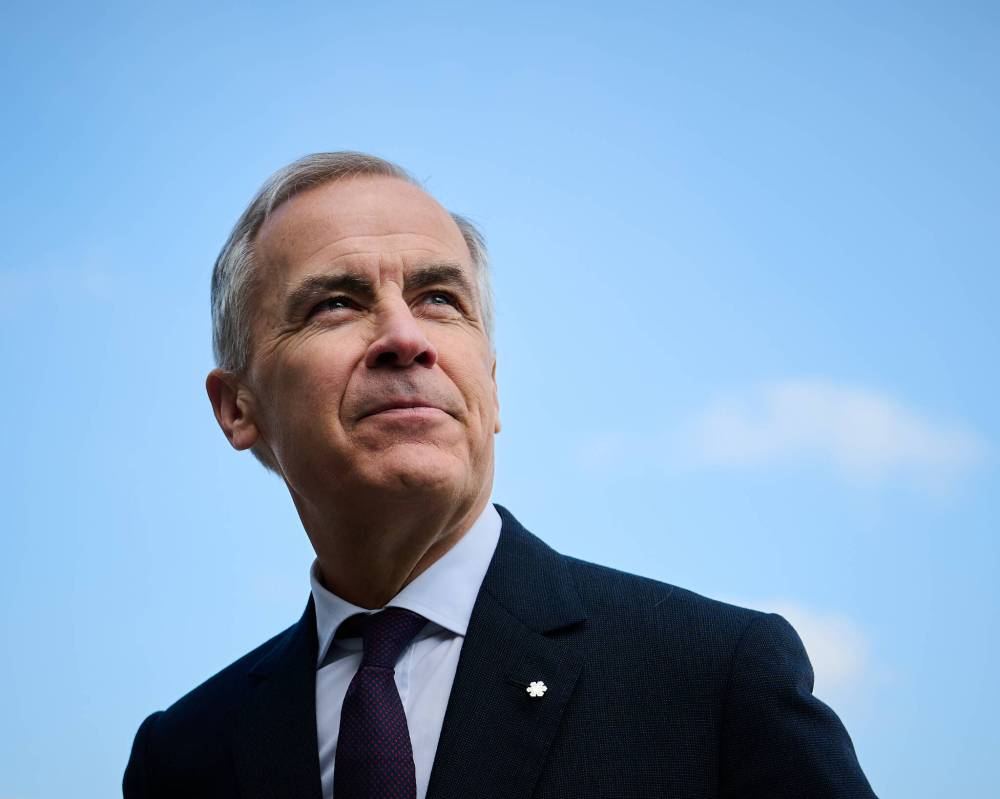
SAMMY KOGAN / THE CANADIAN PRESS FILES
We don’t know what kind of government Prime Minister Mark Carney has built after all of the aftermarket additions.
For hardcore Tories, and for some parliamentary purists, the floor-crossings that gave the Liberals a majority are a threat to democratic institutions. These naysayers, some of whom are drunk on wine made from sour grapes, lament the monster Liberal government’s lack of common philosophy or vision.
But even for those who are infuriated by Carney’s capacity for luring backbench MPs to his cause, this is one helluva story, even if it is shrouded in a certain degree of mystery.
The source of the intrigue is thus: although we know a lot about how Carney snatched a majority from the jaws of the minority mandate he won in last year’s election, we do not know what kind of government he has built after all of the bolt-on, aftermarket additions.
Could it all backfire on the prime minister? Just as Victor Frankenstein underestimated the collateral damage from building his monster, Carney has to wonder what consequences he may face from absorbing opposition MPs simply on the basis that they were willing to change sides.
Fortunately for Carney, political history has shown us that accepting floor-crossers has little or no long-term downside.
Floor-crossers are the political equivalent of a “rental” player acquired at the trade deadline by a playoff-bound hockey team: a quick fix for an immediate problem, but not necessarily something that is going to change the DNA of your group.
The fact is that Carney had already remade the Liberal party from stem to stern before MPs from other parties offered to switch sides.
Former leader and prime minister Justin Trudeau started out his decade in power with an ambitious, if not ambiguous, common philosophy: to be a progressive force for economically disadvantaged Canadians, women, Indigenous peoples and immigrants, and to build a new economy that could thrive while also combating climate change.
There were lots of other progressive pledges — electoral reform, for example — that accompanied Trudeau’s core beliefs. But the point was that he was going to be antithesis of former Tory prime minister Stephen Harper, who left politics as the bitter leader of a cynical party.
When Trudeau was finally pushed into retirement by Liberals who had grown tired and anxious about the enormous lead Conservative Leader Pierre Poilievre had built in opinion polls, the party started searching for a new leader. Carney arrived with expectations he would right the good ship Grit; few understood or believed he would transform it from the hot progressive mess that Trudeau left behind to an intensively pragmatic, “small c” conservative government that sees aggressive economic development as its single, over-arching virtue.
There are some critics who continue to argue that the mere act of recruiting floor-crossers delegitimizes the Carney government. Andrew MacDougall, former communications director for Harper, argued in a Toronto Star commentary that the Carney government will be to Canadian politics what no-name vanilla ice cream is to confections.
“After the thrill of this latest floor crossing fades, the Liberals will have to reckon with a party that is now completely devoid of ideological shape,” he wrote.
Commentators such as MacDougall have ignored, or choose not to acknowledge, that Carney has forged an ideological shape that does not rely on poaching MPs from other parties.
Facing an existential economic threat from U.S. President Donald Trump’s administration, the prime minister has prioritized federal investments in oil and gas production, global trade, increasing housing stock and fast-tracking strategic infrastructure and resource development. These are — save perhaps for the longer-term impacts of oil and gas development, which completely ignore the impacts of climate change — practical policies in the face of volatile trade policies emanating from the White House.
That identity was evident Tuesday morning, when Carney announced a gasoline excise-tax holiday from now until Labour Day.

In fiscal terms, a gas-tax holiday is a horrible strategy. It’s super costly, which is a bad thing at a time when the federal deficit is growing exponentially. And although it’s billed as an “affordability” measure for all Canadians, it really only directly helps people with the income to own larger cars and drive them more often.
Politically, however, it’s a winner. Poilievre was left scrambling for a response. Later Tuesday, the Tory leader said his party wanted all federal taxes on gasoline removed. It was a proposal that no sane government would consider, and no voter will remember come the next election.
The main takeaway here is that with or without floor-crossers, Carney has chosen his path.
For now, Dr. Carney’s Frankenparty government will forge ahead on that path. Unsightly, but still undeniably functional.
dan.lett@freepress.mb.ca
Dan Lett is a columnist for the Free Press, providing opinion and commentary on politics in Winnipeg and beyond. Born and raised in Toronto, Dan joined the Free Press in 1986. Read more about Dan.
Dan’s columns are built on facts and reactions, but offer his personal views through arguments and analysis. The Free Press’ editing team reviews Dan’s columns before they are posted online or published in print — part of the our tradition, since 1872, of producing reliable independent journalism. Read more about Free Press’s history and mandate, and learn how our newsroom operates.
Our newsroom depends on a growing audience of readers to power our journalism. If you are not a paid reader, please consider becoming a subscriber.
Our newsroom depends on its audience of readers to power our journalism. Thank you for your support.
Dan Lett is a columnist for the Free Press, providing opinion and commentary on politics in Winnipeg and beyond. Born and raised in Toronto, Dan joined the Free Press in 1986. Read more about Dan.
Dan’s columns are built on facts and reactions, but offer his personal views through arguments and analysis. The Free Press’ editing team reviews Dan’s columns before they are posted online or published in print — part of the our tradition, since 1872, of producing reliable independent journalism. Read more about Free Press’s history and mandate, and learn how our newsroom operates.
Our newsroom depends on a growing audience of readers to power our journalism. If you are not a paid reader, please consider becoming a subscriber.
Our newsroom depends on its audience of readers to power our journalism. Thank you for your support.
Related Articles
Conservative MPs back Poilievre after he says he'll lead party into next election



Advertisement Advertise With Us
Advertisement Advertise With Us