

U.S. leads spike in applications for Canadian citizenship by descent
Advertisement
Read this article for free:
or
Already have an account? Log in here »
To continue reading, please subscribe:

Digital Subscription
One year of digital access for only $205*
- Enjoy unlimited reading on winnipegfreepress.com
- Read the E-Edition, our digital replica newspaper
- Access News Break, our award-winning app
- Play interactive puzzles
*First annual payment billed as $205.00 + GST for one year. This annual subscription will automatically renew at $233.00 + GST every 52 weeks (10% off the regular annual price of $259.35). Offer available to new and qualified returning subscribers only. Cancel any time.
To continue reading, please subscribe:
Add Free Press access to your Brandon Sun subscription for only an additional
$1 for the first 4 weeks*
- Enjoy unlimited reading on winnipegfreepress.com
- Read the E-Edition, our digital replica newspaper
- Access News Break, our award-winning app
- Play interactive puzzles
*Your next Brandon Sun subscription payment will increase by $1.00 and you will be charged $17.95 plus GST for four weeks. After four weeks, your payment will increase to $24.95 plus GST every four weeks.
Read unlimited articles for free today:
or
Already have an account? Log in here »
OTTAWA – Interest in Canadian citizenship by descent among citizens in a handful of countries — especially the United States — surged after the federal government passed a new law clarifying the rules.
C-3, which took effect on Dec. 15, 2025, allows someone born outside Canada before that date to a Canadian parent who also was born outside Canada to file a citizenship claim. Anyone born or adopted on or after Dec. 15, 2025 can make a claim as long as the parent, who was also born or adopted abroad, spent at least three years in Canada before their child’s birth or adoption.
The law was drafted and passed in response to a 2023 Ontario Superior Court order that found a law on citizenship by descent passed by Stephen Harper’s government was unconstitutional.
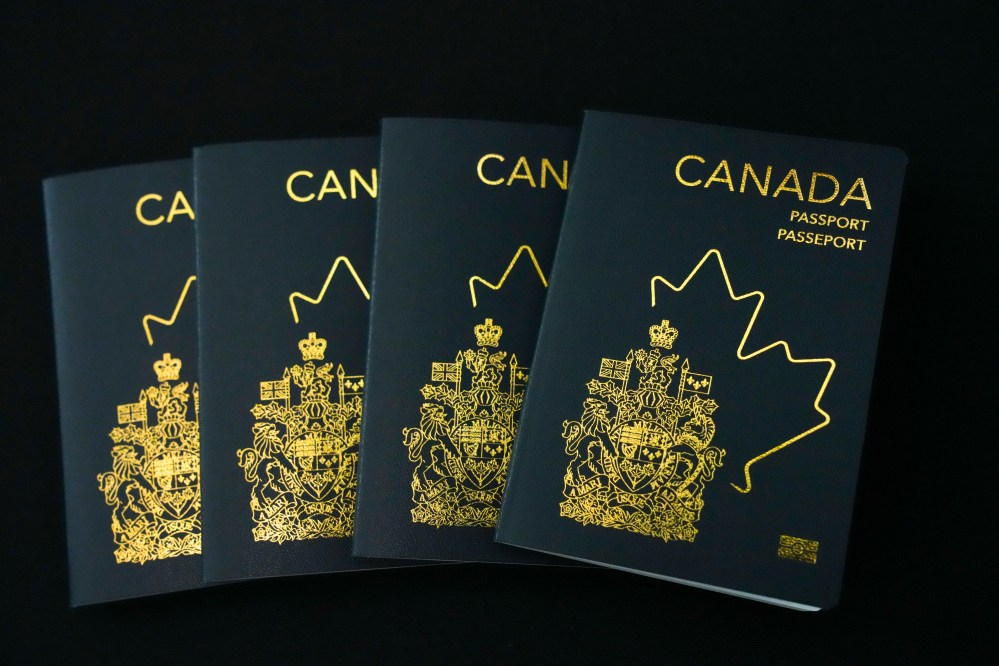
That Harper-era law said Canadians who were born abroad could only pass down their citizenship if their children were born in Canada.
The Liberal government under then-prime minister Justin Trudeau, which did not appeal the 2023 ruling, faced a deadline to either pass legislation on new citizenship by descent rules or see the rules thrown out with no alternative.
Government officials, including then-immigration minister Marc Miller, told parliamentary committees studying the law that an unknown number of people would automatically become citizens without a legislated alternative in place.
Immigration, Refugees and Citizenship Canada reports receiving more than 12,000 citizenship by descent applications between Dec. 15, 2025 and the end of January.
While the December to January period saw a higher than normal number of applications, a department spokesperson said the government does not expect to see a “significant” uptick in applications.
The parliamentary budget officer estimated about 115,000 people would be eligible for citizenship under the bill.
The department approved almost 6,300 citizenship by descent applications between Dec. 15, 2025 and the end of January. Only 1,480 of them were approved under C-3; the remainder were approved through other laws.
U.S. citizens accounted for the largest national share of those applications. Nearly 2,500 Americans were approved in January alone.
Jacqueline Bart, a Toronto-based immigration lawyer, said there’s been a frenzy of interest among Americans looking to get a Canadian passport.
She said some of those applicants — including LGBTQ+ individuals and people with children requiring gender affirming medical care — are looking to move to Canada “right away.”
“It’s just been absolutely insane to the point where I can’t keep up with the work. I’m having to refer people to other lawyers,” Bart said.
Bart said while most of the inquiries are coming from lawyers looking for access to a second passport, she is beginning to get more inquiries from non-lawyers in the U.S.
“I think some of our inquiries are kind of spilling over into a more general sphere,” she said. “But the overwhelming majority of my clients are American. I would say maybe five per cent come from other countries, at most.”
While January 2026 saw a higher-than-average number of American citizenship by descent approvals, it only ranked third in terms of U.S. approvals in a single month in the last year. March 2025 saw more than 2,800 approvals out of the United States, while May saw almost 2,700.
The number of approvals from the U.K. — the country with the second highest level of interest in Canadian citizenship by descent — was also above average in January, at 290.
People from France saw 140 approvals in January. Other countries in the top 10 for citizenship by descent approvals include China, Hong Kong, India, Australia, the Philippines, the U.A.E. and Germany — they ranged between 75 and 120 approvals in January.
The vast majority of countries outside the top 10 saw no significant shifts in approval numbers — with the exceptions of Mexico and Belize.
Mexico was the source of 235 approved applications for citizenship by descent in January 2026; Mexican citizens received 610 approvals in all of 2025. Ninety applications out of Mexico were approved in December 2025 — a notable jump over the 2025 monthly average of 50 citizenship approvals.
While Belize accounted for only 45 approvals throughout 2025, it registered 40 in January of this year alone.
The immigration department issued about 82,500 approvals for citizenship by descent throughout 2025, with the United States generating the most — about 24,500 approvals.
The other countries in the top 10 accounted for only a combined 11,600 approvals in 2025.
This report by The Canadian Press was first published April 16, 2026.
Note to readers:This is a corrected story. A previous version made several references to applications rather than approvals for citizenship by descent.