A transgender teen’s case in Ecuador opens path for others seeking legal recognition
Advertisement
Read this article for free:
or
Already have an account? Log in here »
To continue reading, please subscribe:

Digital Subscription
One year of digital access for only $205*
- Enjoy unlimited reading on winnipegfreepress.com
- Read the E-Edition, our digital replica newspaper
- Access News Break, our award-winning app
- Play interactive puzzles
*First annual payment billed as $205.00 + GST for one year. This annual subscription will automatically renew at $233.00 + GST every 52 weeks (10% off the regular annual price of $259.35). Offer available to new and qualified returning subscribers only. Cancel any time.
To continue reading, please subscribe:
Add Free Press access to your Brandon Sun subscription for only an additional
$1 for the first 4 weeks*
- Enjoy unlimited reading on winnipegfreepress.com
- Read the E-Edition, our digital replica newspaper
- Access News Break, our award-winning app
- Play interactive puzzles
*Your next Brandon Sun subscription payment will increase by $1.00 and you will be charged $17.95 plus GST for four weeks. After four weeks, your payment will increase to $24.95 plus GST every four weeks.
Read unlimited articles for free today:
or
Already have an account? Log in here »
Her name translates from Spanish as “beloved.”
“We decided to call her ‘Amada’ because she came into our home to be cherished,” said Lorena Bonilla, whose transgender daughter was recently authorized to change her identity documents under a ruling by Ecuador’s Constitutional Court.
Her case — alongside another decided in March — has opened the door for Ecuadorian adolescents seeking to modify their name and sex in official records. Adults gained that right after years of advocacy efforts culminating in a 2024 reform.
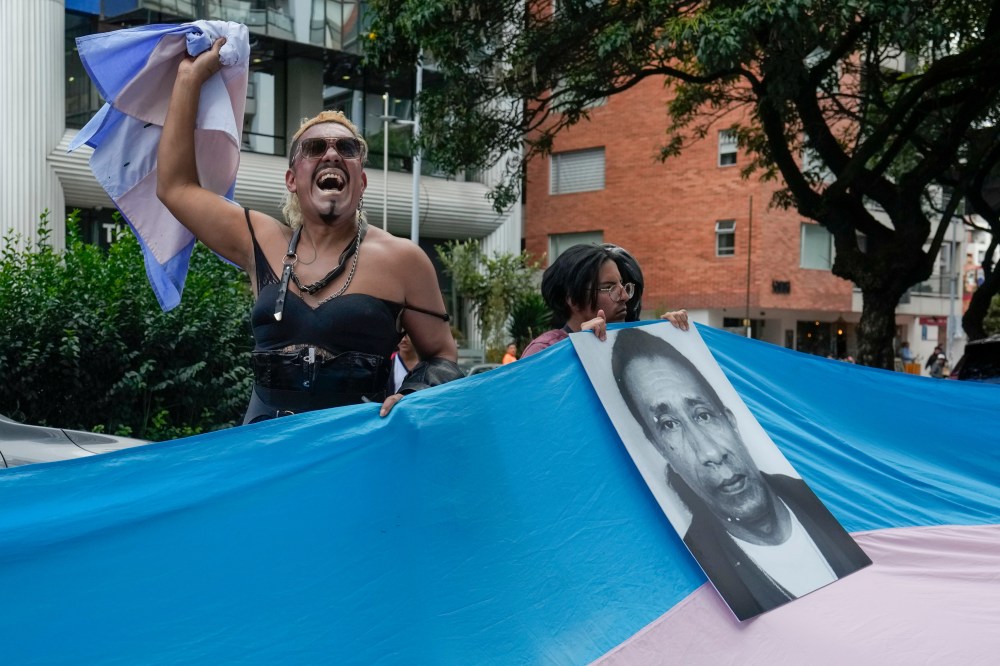
The court’s rulings were welcomed by supporters of LGBTQ+ rights in a region where conservative movements have gained ground in recent months. Yet they also warn of the legal and social hurdles that transgender people continue to face.
“In Ecuador there are still political, religious and social sectors that portray gender recognition for adolescents as a threat,” said Cristian González Cabrera, an LGBTQ+ rights researcher at Human Rights Watch. “That climate can translate into institutional hostility, delays and unjustified denials.”
Bonilla and her daughter, 17, experienced that firsthand in 2018. Their legal battle began when Amada was 9 and school authorities refused to admit her because her legal documents did not match her gender identity.
“We went through 14 schools and none would take her in,” Bonilla said. “We then knew we needed to change her name.”
A court initially granted Amada the right to modify her identity documents. But the civil registry appealed the decision and a higher court later ruled that her passport and ID card should reflect her birth name and sex.
“It was a step backward for our rights,” Bonilla said.
Legal gains, rising pushback
LGBTQ+ rights in Ecuador have largely been shaped by court rulings rather than by lawmakers or government officials. A similar dynamic has unfolded in other Andean countries such as Colombia and Peru.
“The legislative and executive branches represent the country’s broad majorities, yet LGBTQ people are often overlooked,” said Christian Paula, president of the Pakta Foundation, which provides legal support in cases like Amada’s. “Turning to the courts reflects a lack of openness and sensitivity within our institutions.”
Among Ecuador’s most important advances in LGBTQ+ rights, three have come through the courts. They include the decriminalization of homosexuality in 1997, a 2009 ruling that allowed an Ecuadorian transgender woman to change her name, and the legalization of same-sex marriage in 2019.
Those court decisions sparked a backlash from right-wing and religious groups.
In a post on X following the Constitutional Court’s 2026 rulings, André Santos, president of one of Ecuador’s most vocal conservative groups, said the court had overstepped its authority. He has also spoken against school protocols allowing students to use uniforms and bathrooms that align with their gender identity.
The country’s Catholic bishops conference also expressed concern over the court’s action. “Allowing adolescents to make decisions of this nature poses serious risks to their overall development,” it said.
Little political support
President Daniel Noboa has not been as outspoken against transgender causes as some other conservative leaders in Latin America, but his administration has shown little support for LGBTQ+ rights.
As a candidate, he pledged to defend the traditional family. Since taking office, violence and economic instability have overshadowed gender and diversity issues in his political agenda.
“What worries us are his ministers,” said Diane Rodríguez, a lawyer and president of Ecuadorian LGBTQ+ organization Silueta X.
Rodríguez, a trans woman, pointed to officials in the Education Ministry, including current minister Gilda Alcívar, who has rejected the inclusion of what she calls “gender ideology” in education. That climate, Rodríguez said, is reflected in her daily interactions.
From Guayaquil, where she raises a 4-year-old daughter with her partner, a trans man, Rodríguez has faced difficulties at her child’s school.
“We had trouble enrolling her because people see me and assume I’m going to turn children transgender because of how I look,” Rodríguez said.
Throughout her career, she has provided legal support for people facing sex-based discrimination and backed a program providing hormone treatment for trans people. Her work has also focused on raising awareness about violence against her community.
Silueta X publishes an annual record of killings of LGBTQ+ people. Its first report in 2013 documented two killings and the numbers have risen every year. The 2025 publication reported 30 deaths, 21 of them trans women.
From parents to advocates
Amada told her parents that she was a girl at age 3. She asked for a princess-themed birthday party. But Bonilla and her husband — both raised Catholic — assumed she was confused and dressed her as a prince instead.
It took them a few years to understand their daughter and dismiss psychologists who said something was wrong with her or that they had done a poor parenting job.
“Comments can be ruthless and people have no idea what families like ours go through,” said Mauricio Caviedes, Amada’s father. “I hope education on this issue changes so people can understand.”
As they learned more about the trans community, their fight to modify Amada’s identity documents evolved into a broader cause. Bonilla and Caviedes became activists, bringing their kids with them to protests and conferences. They supported other LGBTQ+ causes such as same-sex marriage and founded an organization for families of trans children like their own.
“That became the only way we could fight the state,” Bonilla said. “We were 25 families with transgender children of different ages, the oldest being 12.”

Her family moved to Canada during the COVID-19 pandemic. And while she treasures how welcoming their new home has been for her daughter, she keeps advocating for LGBTQ+ rights in Ecuador.
Amada, now a strong student who dreams of becoming a nurse, was shaped by years of watching her parents support trans friends and community members struggling to access health care without discrimination. She has never appeared publicly on camera, but the visibility of her case feels like a lifelong legacy for Bonilla.
“People think the destiny of transgender people is to become sex workers or live in hiding,” Bonilla said. “But we want every parent to know that one day their child can become whatever they want to be.”
___
Associated Press religion coverage receives support through the AP’s collaboration with The Conversation US, with funding from Lilly Endowment Inc. The AP is solely responsible for this content.
The Free Press acknowledges the financial support it receives from members of the city’s faith community, which makes our coverage of religion possible.